


Welcome to this week’s Brief, our analysis of the most consequential developments in unmanned systems and drone warfare. Each week we track battlefield innovation, emerging doctrine, and the technologies reshaping how states and non-state actors deploy unmanned systems.
Have intelligence requirements, developments we should investigate, or perspectives to share? Contact us at info@dronesense.ai.
Deep Dive: US counter-drone strategy is burning cash...and missing the point
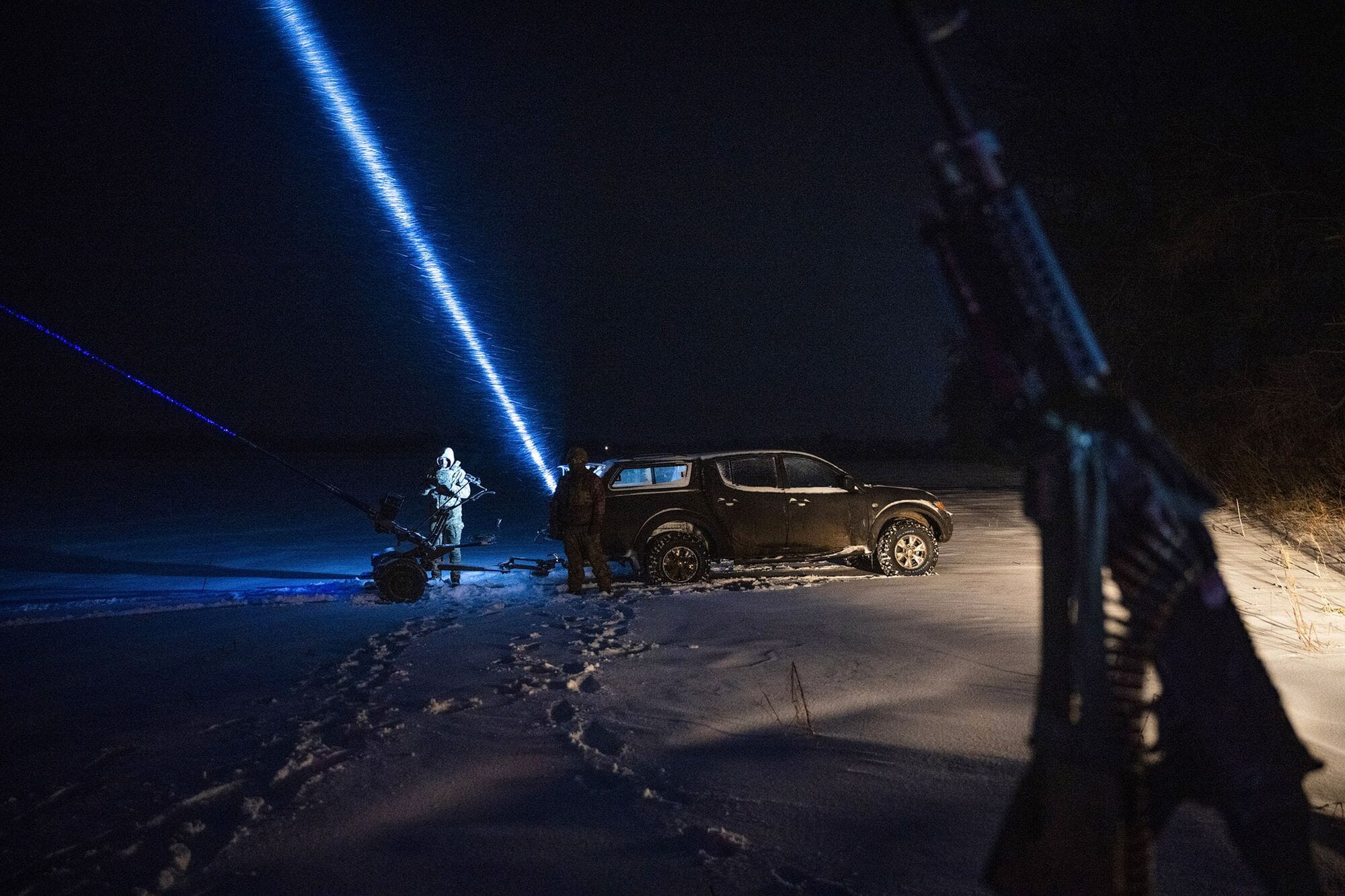
Even before deploying complex strike packages, Iran is exposing widening gaps in U.S. air-defense coverage across the Middle East. Last week, a fibre-optic FPV drone entered a U.S. airbase in Iraq without detection. The drone caused no damage (its operator lacked both precision and a warhead) but its navigational profile was familiar. It matched a threat profile US systems have tracked for months. Yet countering such threats is costing as much as $28–$32 million per intercept.
It took only 22 days for fibre-optic FPV drones to surface in the current Middle East conflict, a capability that Russia and Ukraine required over two years of iterative trial and error to develop. Iran closed that gap without the battlefield trial-and-error phase, which implies deliberate intelligence transfer, not organic learning. And yet those lessons are scarcely visible in the US and its allies' response to Iranian drone attacks.
Using expensive systems such as THAAD, PAC-3, and SM missiles or combat helicopters to counter cheap Shaheeds contradicts the basic principles of efficient counter-drone innovation established in the Russia-Ukraine war. Ukrainian military specialists who recently traveled to the Middle East reported that as many as "7–8 SM missiles, each valued at approximately $4 million, are being fired at a single incoming drone."
The result: tens of millions of dollars spent to neutralize drones costing under $70,000. This is despite have access to what is arguably the most comprehensive body of operational counter-drone data in the world via Ukraine.
The wave of US counter-drone initiatives, including Merops interceptor drones and Anduril's $20 billion contract for a distributed detection network, aim to close this cost gap. But the effort remains fragmented, raising the risk of repeating a familiar pattern seen in American: high-cost solutions for low-cost threats.
But the approach remains fragmented and slow, threatening to repeat the same mistake made in American drone development programs: expensive solutions engineered for cheap problems.
Instead of choosing proven, affordable methods that may guarantee a combative edge in wars of attrition, the US’s counter-drone instinct is prioritizing another batch of advanced technologies for which threat actors are already brainstorming more economical solutions.
This instinct exposes that access to premium drone data does not equal performance. Years of operational data curated by Ukrainian operators under live-fire conditions against the same Shahed variants now targeting Gulf assets already exist and have been actively shared with allies. None of it appears to have informed the architecture of the American response so far.
The US’s massive counter-drone budget needs to translate into an effective counter-drone strategy that is in touch with today’s threat realities and possibilities of the future. The emergence of fibre-optic FPV drones was foreseeable, and may have been mitigated with earlier adaptation. Iran's next move could well involve higher-volume strikes using different drone variants, the likes of which the US and its allies have had every opportunity to prepare for.
On Our Radar
Do asymmetric advantages apply to high-value drones?
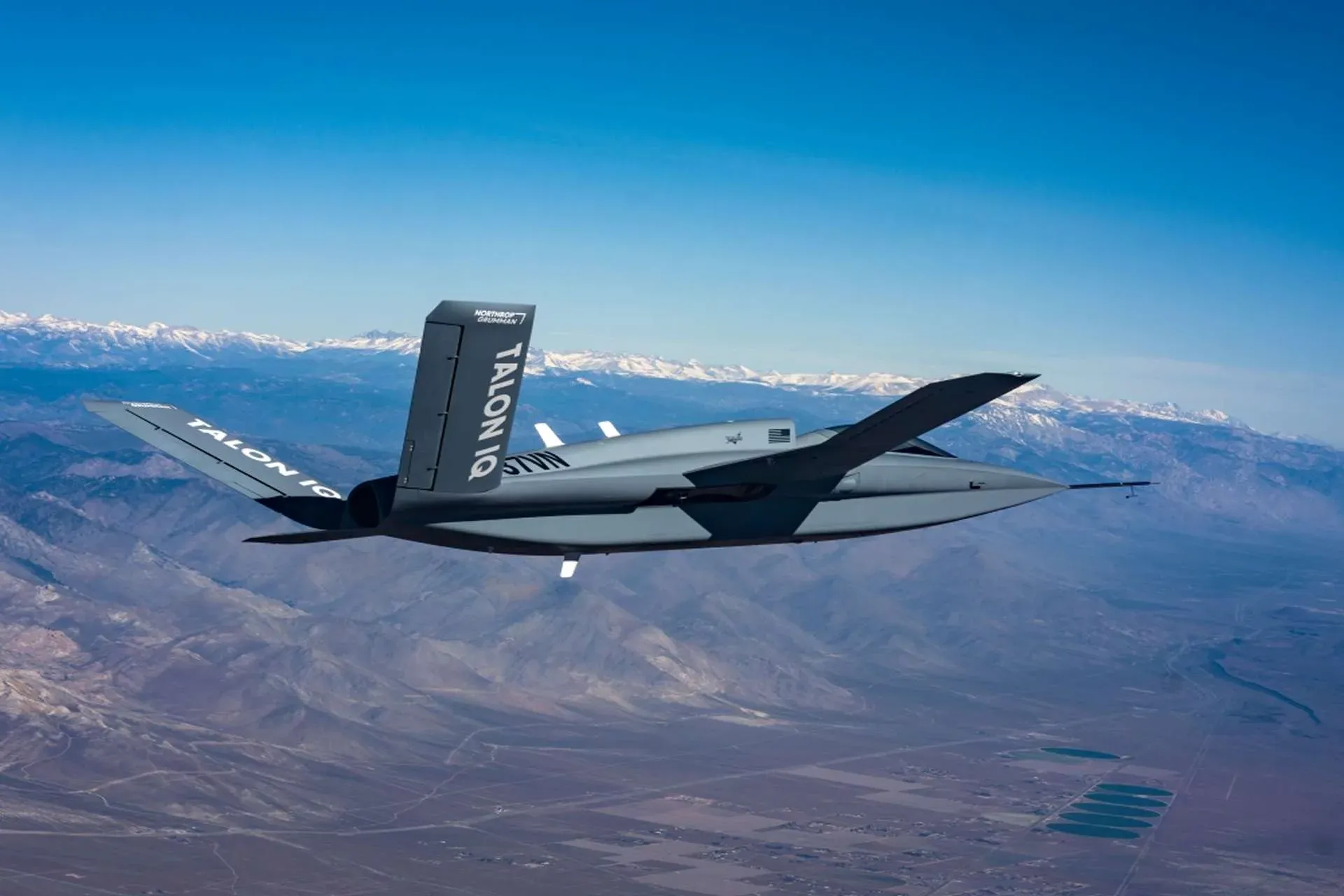
The loss of more than a dozen MQ-9 Reapers in operations against Iran exposes the core vulnerability of high-value drone platforms. At $16 million each and sourced from a permanently closed production line, every loss is effectively irreplaceable. The US Army's autonomous UH-60Mx and Airbus's AI-commanded Valkyrie loyal wingman now signal a pivot towards expendable, attritable systems, reinforcing the belief that asymmetric advantages only belong to those platforms that are cheap enough to lose. (ABC News)
Battle-hardened drone operators emerge as a global mercenary market
India's National Investigation Agency (NIA) arrested six Ukrainians and one American at three airports on March 13, charging them under anti-terror legislation for smuggling drones from Europe into Myanmar via India's restricted northeastern border. The group is accused of training ethnic militias in Myanmar and India’s northeast in drone combat. The operations, which were triggered by a Russian intelligence tip-off, reflect a broader trend: experienced drone operators are increasingly monetizing battlefield expertise in active conflict zones, from the Sahel to Latin America, and now Myanmar. (The Independent)
Fewer launches don’t mean less capability
The Pentagon's claim that Iranian drone launches have fallen 83% since the start of operations captures current activity, not underlying capacity. Iran's strikes have followed a deliberate escalatory sequence: military installations first, then logistics hubs, then energy infrastructure. Target sequencing of that precision is not typical of an adversary constrained by supply. A reduced launch tempo may instead reflect recalibration, stockpiling, or repositioning toward the Strait of Hormuz. (War on the Rocks)
Drone swarm bet ignites as war becomes a proving ground
Swarmer, a drone swarm autonomy software company founded in 2023, surged roughly, 200% in two days of Nasdaq trading after pricing its IPO at $5 per share and raising $15 million. Its software has supported over 100,000 combat missions in Ukraine since April 2024, generating the operational data used to train its autonomous decision-making models. The scale of the market's response suggests that active conflict is emerging as the most credible form of product validation available, and that Ukraine combat data now commands a premium no laboratory trial can match. (Tech Funding News)
Despite rhetoric around domestic drone supply chains, US import ban gets diluted
The FCC's exemption of four non-Chinese drone models from its December import ban marks a shift toward model-by-model conditional approvals. Each requires Pentagon national security clearance and a credible component onshoring plan. DJI, which controls more than half of US commercial drone sales, cannot replicate the pathway because the review extends to its entire component supply chain. The FCC chair has framed the ban as an instrument of industrial policy to build American drone dominance. However, DJI's pending 9th Circuit challenge could force the agency to publicly substantiate its national security claims. (Reuters)
Drone delivery boom opens new cybersecurity risks
Drone delivery is expanding rapidly across US cities, with new commercial rollouts spanning food delivery and retail logistics networks. As these systems scale into dense, connected environments, exposure at the control layer, including GPS spoofing, signal jamming, and data link interception, could create pathways for hostile actors to hijack or redirect civilian drone fleets, potentially turning distributed fleets into tools for disruption or attack. (WSOC TV)
Innovation Corner: Micro-drones for detection avoidance
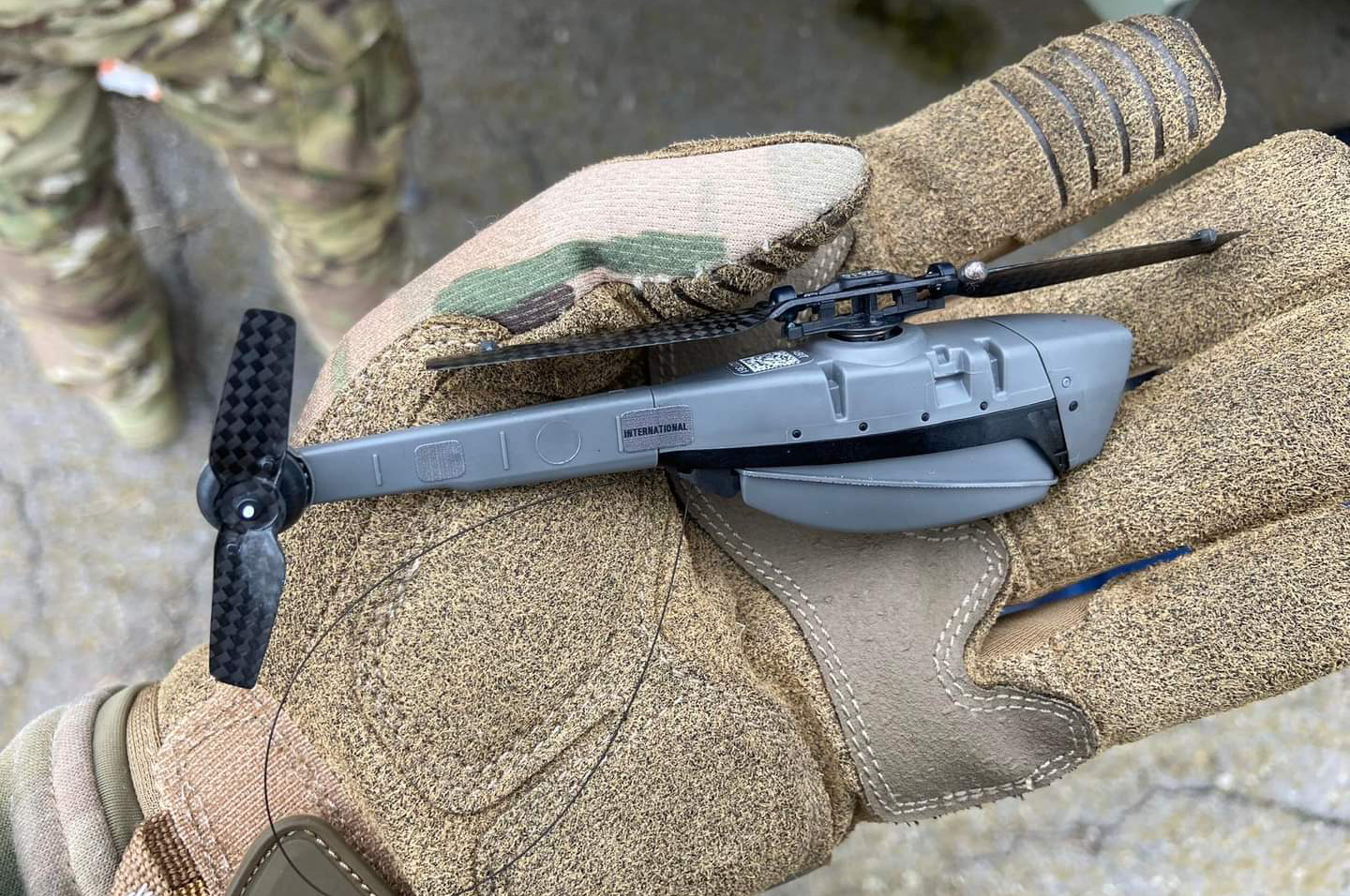
Russian Telegram channels have reported the development of an ultra-lightweight, multi-rotor loitering munition called ‘Vector X-120.’ The microdrone approximately weighs 38g with a flight range of 2km at 50km/h. The goal is likely to evade the Ukrainian detection systems by reducing size and mobility signatures.
Although its deployment on the front line remains unconfirmed, the intended use cases likely range from precision anti-personnel strikes of ground forces (particularly, drone operators) to covert ISR missions in confined environments.
What We're Reading
- US Tests AI Pilot on Armed Talon IQ Drone to Prove Interoperable Combat Autonomy. (Army Recognition)
- US and allies move to build missiles and drones closer to Asia's flashpoints. (Reuters)
- Pakistan’s President says the Taliban crossed a ‘red line’ with drone attacks on civilians (AP)
- Chad warns Sudan it will retaliate after drone strike on mourners kills 17 (BBC)
- Russia prepares to arm its shadow fleet (EUalive)
- Kim Jong Un and daughter unveil new tanks to repel drones (Bloomberg)
- Ukraine’s Drone Strikes vs. Russia So Far in 2026 – Bigger Swarms, More Explosions (KyivPost)
- Fire at Czech Drone Maker Supplying Ukraine Investigated as Sabotage. (United24 Media)
- Saipem's FlatFish underwater drone successfully completes test campaign with Petrobras. (Saipem)
- DJI Revokes Operator's Certificate After Agricultural Drone Used To Lift Person. (DroneXL)


