


Welcome to this week’s Brief, our analysis of the most consequential developments in unmanned systems and drone warfare. Each week we track battlefield innovation, emerging doctrine, and the technologies reshaping how states and non-state actors deploy unmanned systems.
This week we also begin dedicated China coverage, reflected in its own section, as Iran and Ukraine pull attention away from key drone developments out of Beijing.
Have intelligence requirements, developments we should investigate, or perspectives to share? Contact us at info@dronesense.ai.
Deep Dive: Supply chain resilience is Tehran's quiet Trump card
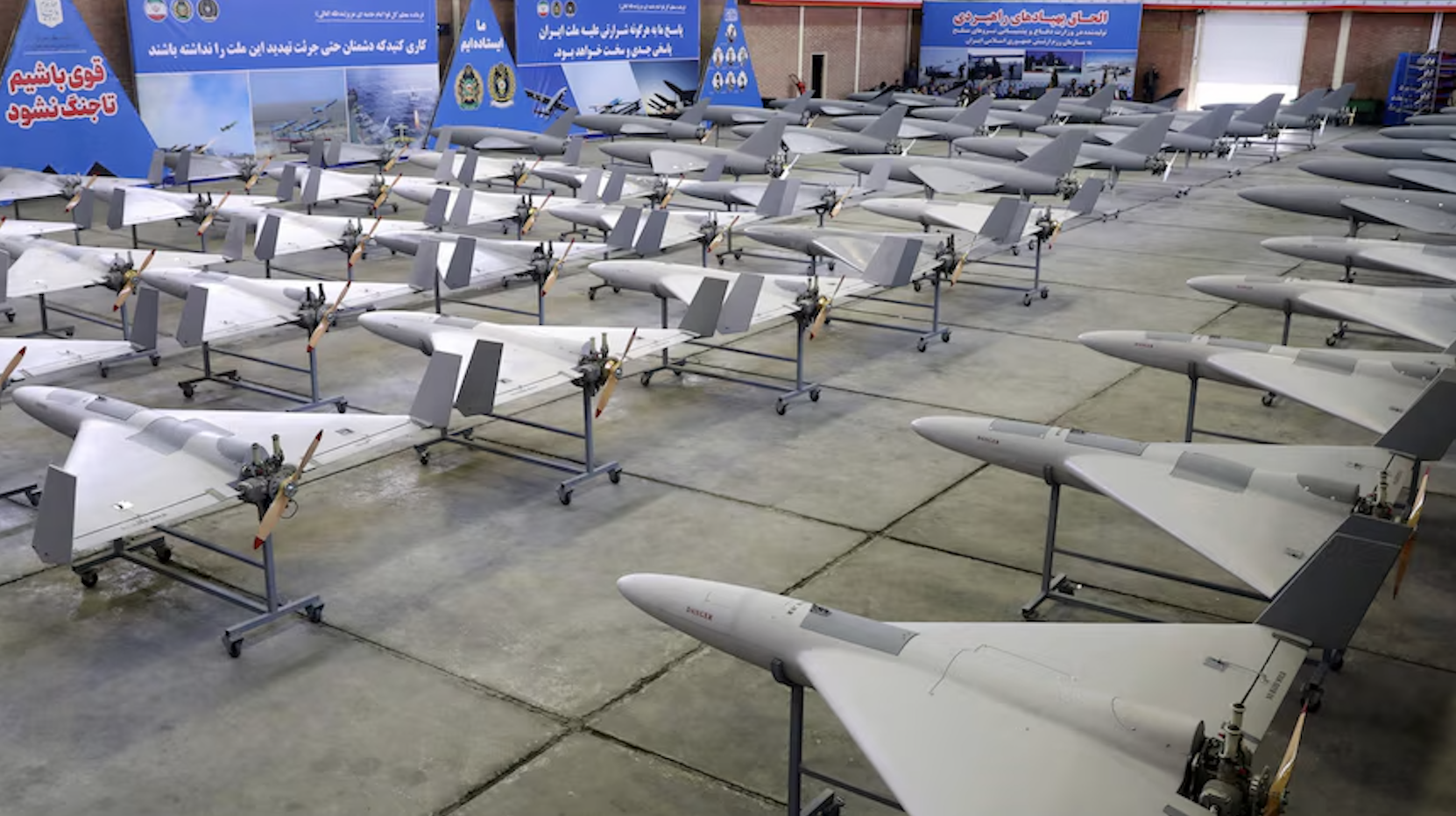
Iran has spent years building illicit supply routes resilient enough to sustain a war-grade drone economy. That capacity has survived the harshest sanctions and export controls imposed on any modern state. Despite over 2,500 strikes by the US-Israel alliance and a notable drop in attack frequency since early 2025, experts estimate Iran still holds up to 80,000 operational One-Way Attack (OWA) drones in active inventory. Production has not stopped. It has adapted.
This resilience is rooted in a decentralized, symbiotic relationship between Iran, Russia, and China, known as the 'Axis of Evasion.' Geographical proximity, shared hostility toward Western-led systems, and mutual economic need built an ecosystem where no single node is indispensable and no single disruption is fatal. That is what makes traditional technological denial an inadequate response.
Drones became the binding thread. Since 2021, Iran and Russia have co-opted established smuggling routes across Asia to traffic dual-use and restricted Western components into their drone programs. While Western countermeasures focused on China, Iran quietly built overland alternatives through South and Central Asia, securing not just components but technology transfer and skilled technical labor, all the inputs needed to sustain production without Western supply chains.
But having just one backup plan for Iran that has ranked at the top of the US hit list for years was not sufficient, so it built insurance. Iran wired its proxies into existing networks. The Houthis, Hezbollah, and Iraqi militia groups function as active nodes, exchanging knowledge and developing independent capabilities that can be shared during conflict. This deepens an already distributed network, making disruption at any single point far less effective. The result is a grey market drone ecosystem whose true scale remains unknown.
Components have passed through dozens of countries, often without the knowledge of the original manufacturers. Western analysts cannot accurately assess combined Iran-proxy production capacity, leaving policymakers to plan against a threat they cannot fully measure.
That ambiguity defines the core challenge. Overestimating adversarial capacity bleeds resources through excessive preparedness. Underestimating it creates exploitable gaps in targeting doctrine and export control design. The question is which failure is less affordable.
China Watch: "Swarm and shield," Beijing unveils a full combat stack
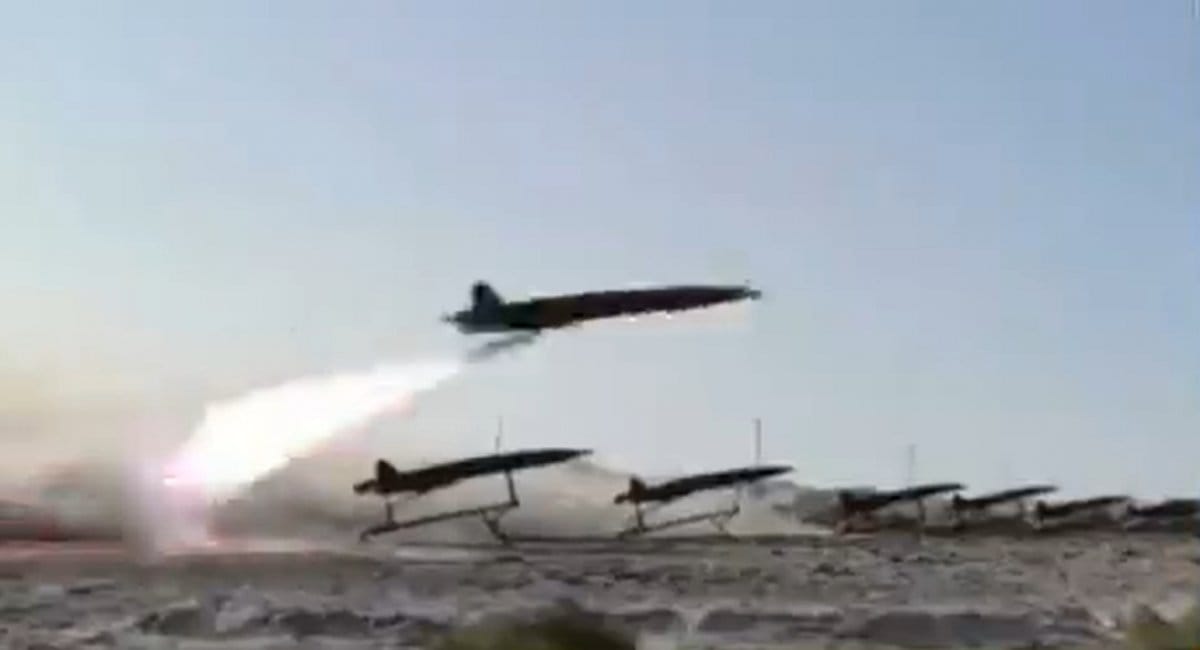
This week, China advanced a full three-layer drone warfare stack: high-volume offense, autonomous mass coordination, and hardened point defense. The TM-300 strike drone entered mass production, carrying a 100 kg payload at Mach 1.8 over 1,200 km, with test footage confirming swarm launches of at least seven units.
Simultaneously, CETC's Atlas system enabled one operator to coordinate 96 fixed-wing drones through an autonomous reconnaissance-to-strike kill chain. The Guangjian-11E and Guangjian-21A laser platforms sealed the defensive layer by intercepting low-altitude threats at 50 to 80 meters.
All three programs serve one doctrine: mass precise saturation that collapses layered point-defense. No peer competitor, including the US, has publicly fielded this as an integrated stack.
On Our Radar:
Turkey Secures Strategic Drone Foothold in Central Africa
Kinshasa has contracted a Turkish firm to build a $67 million drone base in Kisangani, adding Turkey to the list of external actors shaping the DRC's military architecture. The location provides aerial coverage over the northeastern provinces where M23 pressure is most acute and conventional force projection is logistically constrained. Turkey's defense infrastructure footprint in Africa now extends from the Sahel to Central Africa, and the DRC deal is its most strategically significant position yet. (Business Insider Africa)
UGVs Are Now a Counter-Drone Asset, Not Just a Logistics One
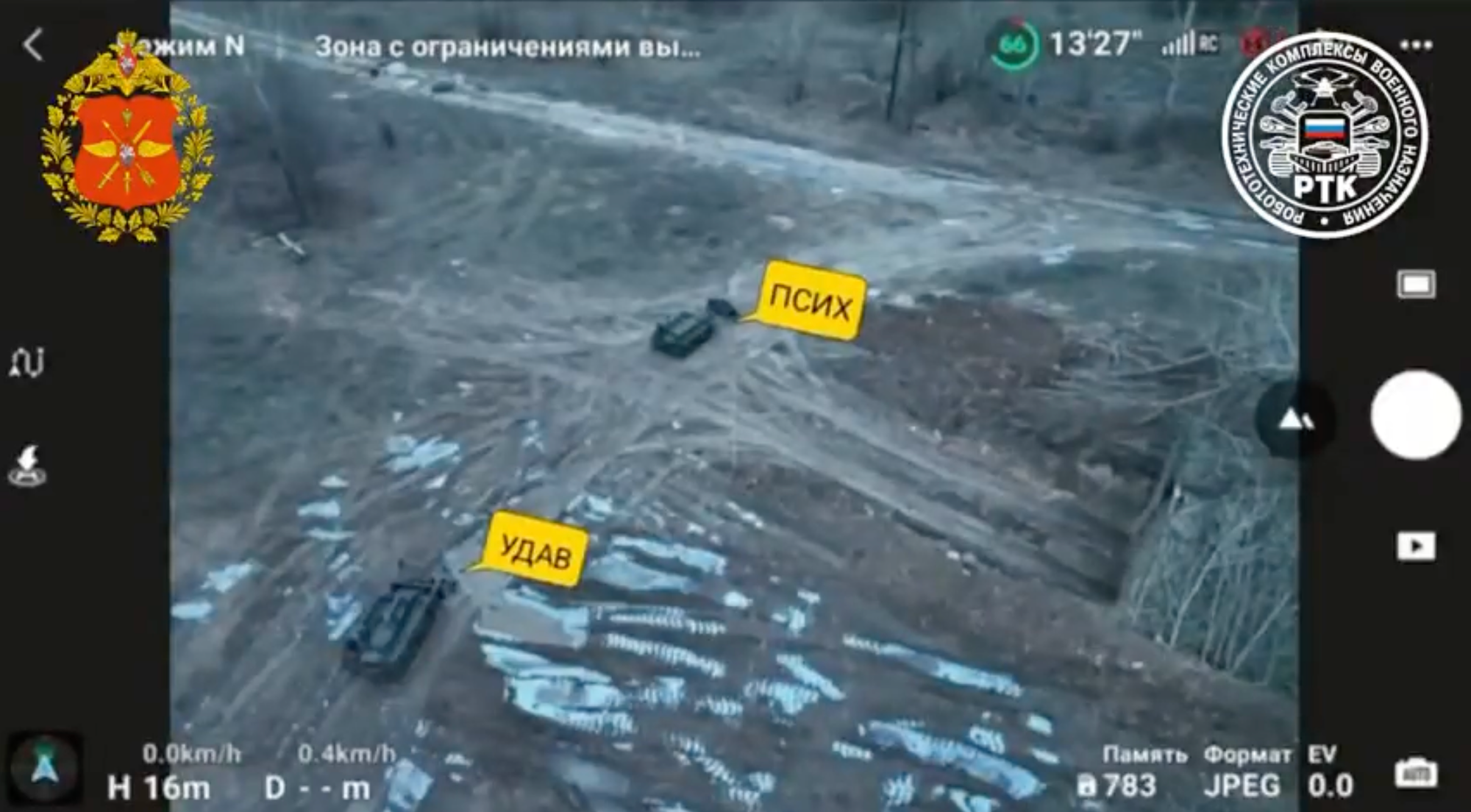
Russia is testing courier unmanned ground vehicles (UGVs) with electromagnetic sweep capability for mine countermeasures. China's canine platforms are being upgraded for shared autonomy in urban combat. Ukraine has moved most frontline logistics to UGVs after FPV attrition closed the manned resupply option. The doctrinal shift is now confirmed across three separate militaries: ground autonomy and aerial autonomy are a single integrated problem. (Telegram)
US Drone Marketplaces Risk Coordination Failure
The Army launched a UAS digital storefront and the Navy unveiled a separate MUSV marketplace within days of each other. While the speed of USG procurement efforts are real, the risk increasingly is that parallel frameworks produce duplicated investment and fragmented industrial capacity at the exact moment the Drone Dominance program requires consolidation. (DefenseScoop)(Breaking Defense)
Russia Deepens Drone Export Footprint in Emerging Markets
While Russia's overall arms exports have fallen since 2022, Moscow is successfully leveraging drone technology to expand its market share across emerging economies, particularly in Africa and Asia. A recent trade mission to South Africa, a market, where Chinese suppliers hold 85% of drone import share, alongside India's concurrent $25 billion Russian defense package, shows a clear strategy: target key non-aligned states where cost and capability outweigh Western sanctions pressure. (United24)
US Drone Training in Africa Is Outmatched Before It Starts
The Army's new regional drone training network, launching at African Lion 2026, offers methodology. Ukraine and Russia are offering operational experience from an active high-intensity conflict. African states with live security requirements will make the obvious choice. The US programme is valuable for doctrine transfer, but it will not determine which platforms African militaries procure or whose training pipelines they trust for warfighting. (Defense Post)
China Open-Sources a Maritime Drone Targeting Solution
Researchers from China's Naval Aeronautical University have published the first publicly available dual-mode (visible/infrared) ship detection dataset, covering over 2,000 vessel images across all-weather and night conditions. The dataset directly addresses the targeting accuracy gap that Iran's failed February strike near the USS Abraham Lincoln exposed. Releasing it as open-source research accelerates global development of maritime drone targeting capability while requiring no official acknowledgment of military intent. (SCMP)
Hardware Innovations and Tactical Adaptations
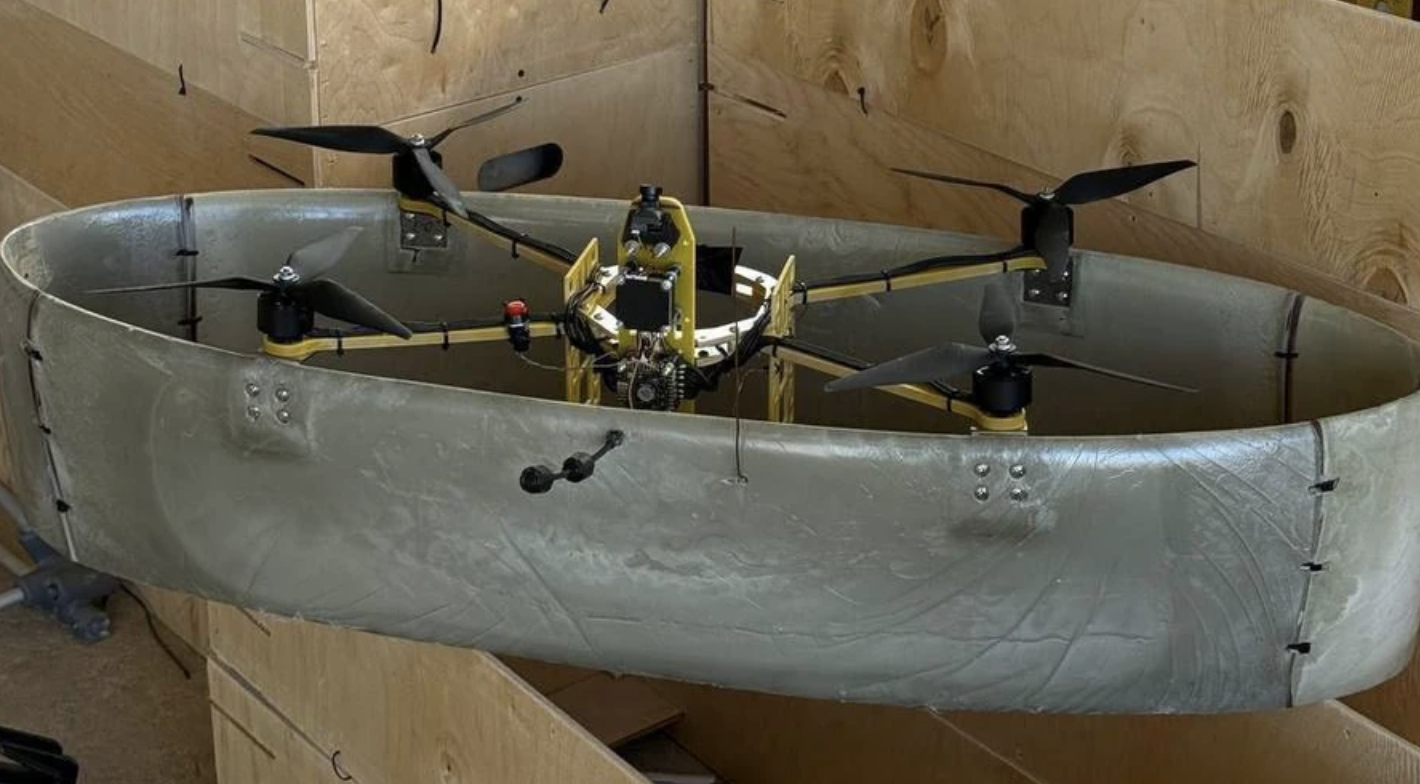
- Ring-Wing FPV: Russian firm Ushkuynik has begun serial production of FPV drones with a ring-shaped wing casing, a design likely intended to counter kinetic counter-drone guns. The design shift also underscores the efficacy of these guns in short-range operations, particularly against EW-resistant fibre-optic drones.
- Styrofoam Interceptor: Russian company Polet has developed the 'Sokol-1', a low-cost interceptor drone made of styrofoam with a flight speed of 150 km/h, designed to counter Ukrainian strike drones in high-speed missions.
- CRPA on Ukrainian UAVs: A recovered Ukrainian FP-1/FP-2 aircraft-type UAV revealed a CRPA anti-jamming antenna (ACH-5706) and a Starlink terminal, a combination that strongly suggests efforts to upgrade EW measures on existing drones for BLOS operations.
What We're Reading
- China Deploys Jet Drones Near Taiwan Strait: The deployment of the WZ-8 supersonic reconnaissance drone, capable of Mach 3, signals a shift from observation to active targeting preparation. (Tovima)
- As drone use rises, India back to Tunguska Shield: India is pulling its 2K22 Tunguska air defense systems out of strategic reserve, a tacit admission that its modern systems are ill-equipped for the low-cost drone threat. (ET)
- Ethiopia Directly Intervenes in Sudan: Addis Ababa is now providing direct air cover and drone support for the SPLM-N, transforming the conflict from a proxy war to a direct intervention. (Sudannabba)
- Ukrainian drones have crossed into NATO territory: The incident, involving Estonian and Latvian airspace, was likely a navigation error, but it forces a conversation about NATO's Article 5 threshold in the context of autonomous systems. (DW News)
- U.S. Navy Installs More Counter-UAS Systems On Destroyers: The Navy is accelerating the rollout of the SEWIP Block 3T system, a ship-borne electronic warfare suite specifically designed to counter coordinated drone swarm attacks. (Aviation Week)
- U.S. Deploys Autonomous Drone Speedboats in Combat for First Time: The deployment of four MARTAC T38 Devil Ray USVs in the Red Sea marks the first operational use of autonomous surface vessels in a live combat zone. (National Today)


