


Note: Subscription is FREE.
Russia’s jet Geran UAVs are gaining more ways to reach a target, and even more specialized ways to damage it.
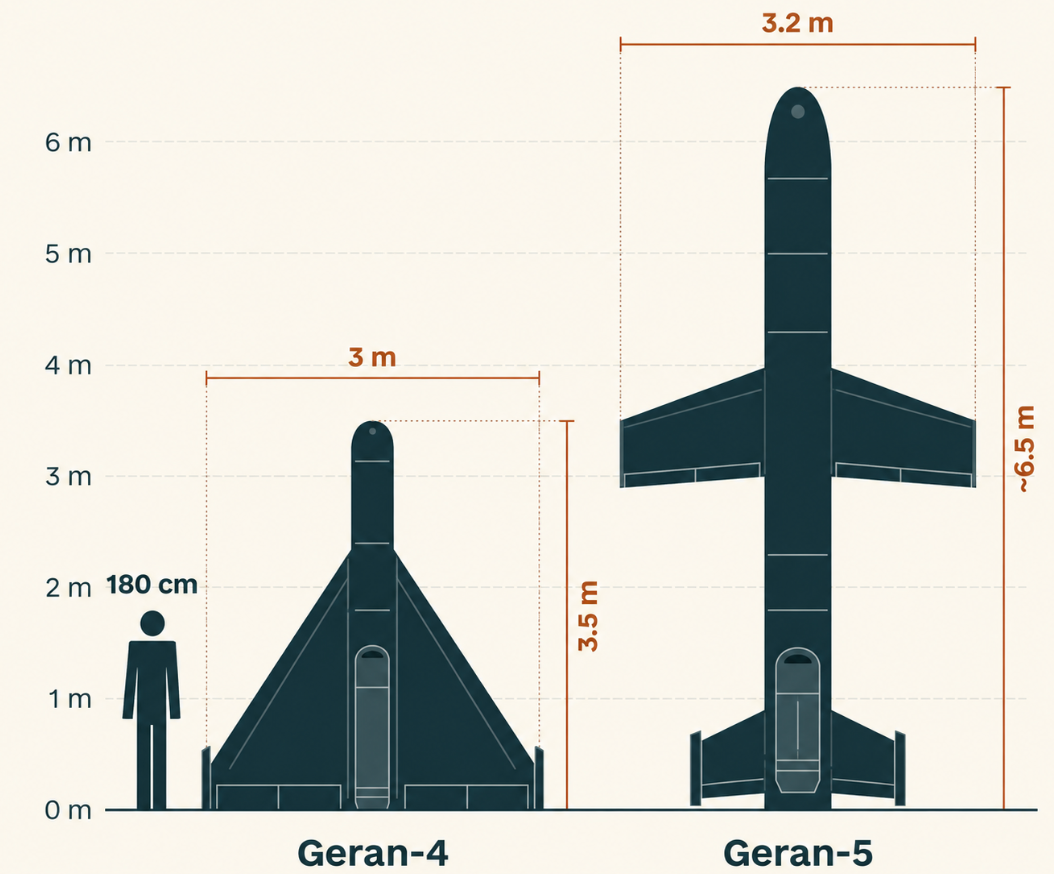
Geran-5 entered combat in January 2026, followed closely by Geran-4 in May. For Moscow, both platforms introduced faster strike options as Ukraine expanded interception of slower piston-engine Gerans to 98%.
Unlike their predecessors, iterations in Geran-4 & Geran-5 are fast, specific and make generous use of advanced components.
The hardware changes, recorded since their first deployment earlier this year, swiftly address emerging requirements in response to Ukraine's countermeasures: keeping navigation accurate, guiding the final approach and rendering damage to specific structures. Understanding this progression in iterations gives insights into how Russian developers approach operational problems, respond to countermeasures, and prioritize technical improvements. The sequence of modifications can also reveal which limitations Russia considers worth addressing, and which trade-offs it is willing to accept.
To analyze this, we tracked 14 hardware and production changes to date in Geran-4 and Geran-5 jet drones, with distinct physical revisions counted separately within a redesign.
Why the initial designs needed more than jet engines
The success of earlier Gerans (2 & 3 models) as a low-cost long-range strike system was gradually wiped out by Ukraine's calibrated interception architecture that used even cheaper interceptors to take out these one-way attack (OWA) drones.
Kyiv announced dozens of Shahed interceptions by drones during the July 4, 2025 attack, alongside plans to expand production and crew training. This directly threatened Russia’s ability to sustain successful strikes as defensive capacity steadily grew.
Its answer to this Ukrainian capacity-building was higher speed, which offered shorter engagement opportunities and challenged interceptors built around slower targets.
Geran-5: combining speed with strike reach
Note: Subscription is FREE.


