


Welcome to this week’s Brief, our analysis of the most consequential developments in unmanned systems and drone warfare. Each week we track rapidly accelerating battlefield innovations, emerging doctrine, and the technologies reshaping how states and non-state actors deploy unmanned systems.
Have intelligence requirements, developments we should investigate, or perspectives to share? Contact us at info@dronesense.ai.
Deep Dive: UGVS Are Changing Boots-On-The-Ground Calculus Faster Than Anticipated
On April 13, Ukrainian President Zelenskyy claimed that for the “first time in the history of war,” Ukraine has successfully captured a Russian position using only unmanned platforms. The mission, which included an array of Ukrainian unmanned platforms such as Ratel, TerMIT, Ardal, Rys, Zmiy, Protector, and Volia, did not use a single human soldier for direct assault. The Russians had to surrender to remote-controlled robots, signaling a new era of trench warfare.
The operation fielded as a layered combat stack, involving air and ground unmanned platforms tasked with a specific activity in the chain of command. The goal was to build and sustain constant pressure on the enemy from all domains to compel capitulation. Seizure followed next, and this is where traditionally infantry has played an irreplaceable role.
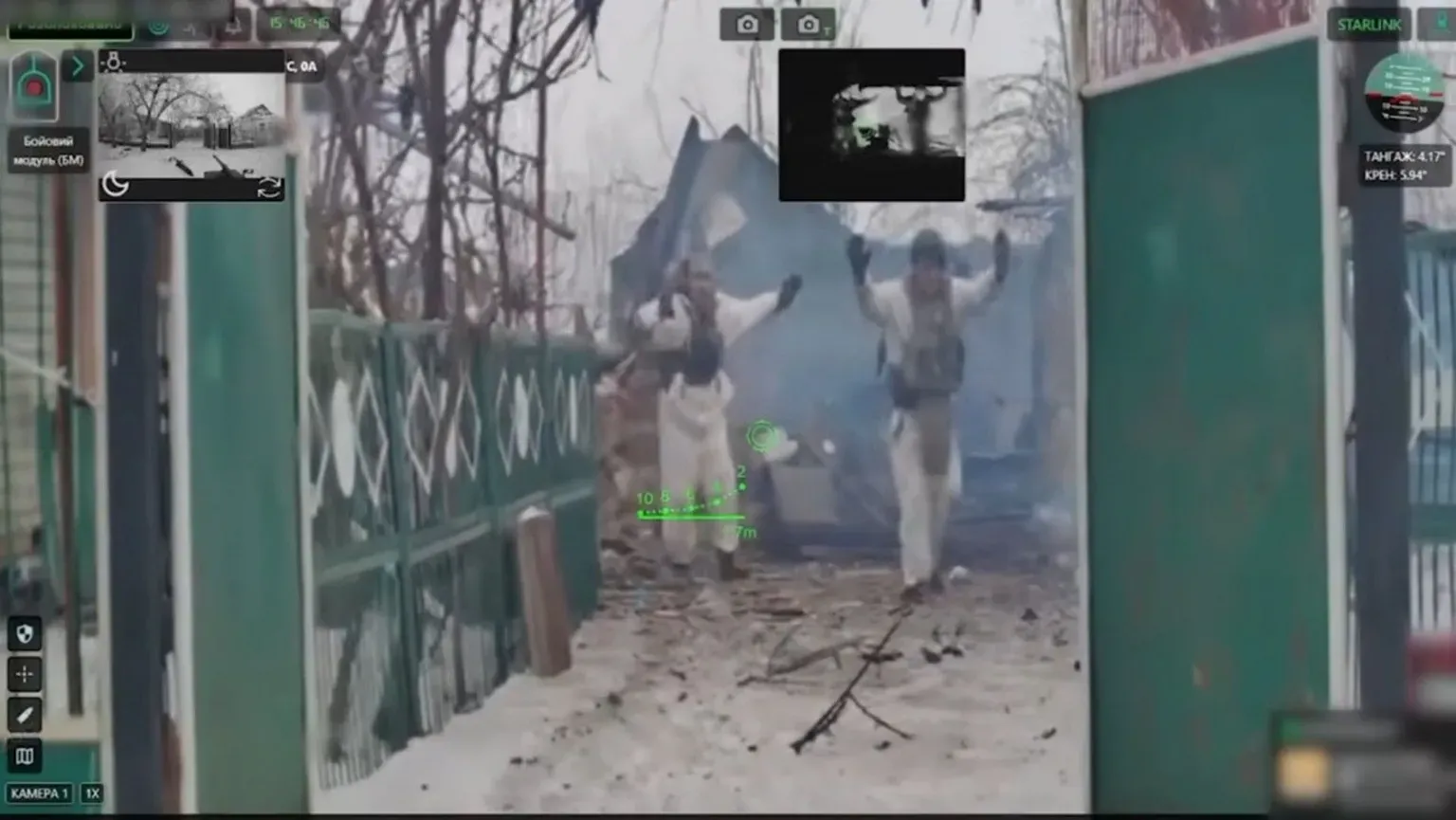
What made this possible was how Ukraine prioritized strategic stacking of unmanned platforms over undue emphasis on discrete systems to optimize phasic performance. While reconnaissance UAVs mapped the position and tracked every defender, FPV kamikaze drones struck bunker entrances next. Similarly, UGVs played a crucial role in leading high-casualty ground assaults. Some UGVs were loaded with antitank mines to crack open reinforced dugouts, while others were retrofitted with automatic machine guns to counterfire and ensure forward mobility.
The goal was to maintain the momentum from all combat sides until the enemy gave up. The final authority in the killchain, however, always resided with a human operator, indicating that fully autonomous systems with adequate contextual knowledge remain work in progress.
The multi-domain combat stack has also placed a newfound significance on armed UGVs, with Tencore director expecting demand to hit 40,000 UGV units in 2026. Three push factors explain why Ukraine scales UGVs now.
First, acute manpower shortages make every lost soldier a strategic liability. Aerial drone saturation has pushed the effective kill zone to 20-25 km from the front. Sending infantry into that range produces near-certain casualties. A UGV entering the same zone costs proportionally less.
The risk-reward ratio makes the choice straightforward. Ukraine's defense ministry logged over 9,000 UGV missions in March 2026 alone, and 24,500 across Q1.
Second, UGVs carry a tactical edge that UAVs cannot match. Ground robots approach targets in complete silence and traverse terrain that aerial assets cannot reach. Third, war necessity accelerated design improvements at a pace the industry had never seen before. In 2024, UGVs mostly hauled ammunition. By early 2026, they held front-line positions for 45 consecutive days.
As Russia and Ukraine race to achieve a ‘drone wall’ system where unmanned platforms ensure attrition and seizure, while human soldiers are reserved for consolidation of territory, two issues persist. The durability of unmanned systems still requires humans to step directly on the ground to maintain hold of a territory. Malfunctions, maintenance and real-time adaptation stemming from contextualized understanding of events still need physical human intervention that machines cannot compensate for.
China Watch: Emerging MALE Drone Market
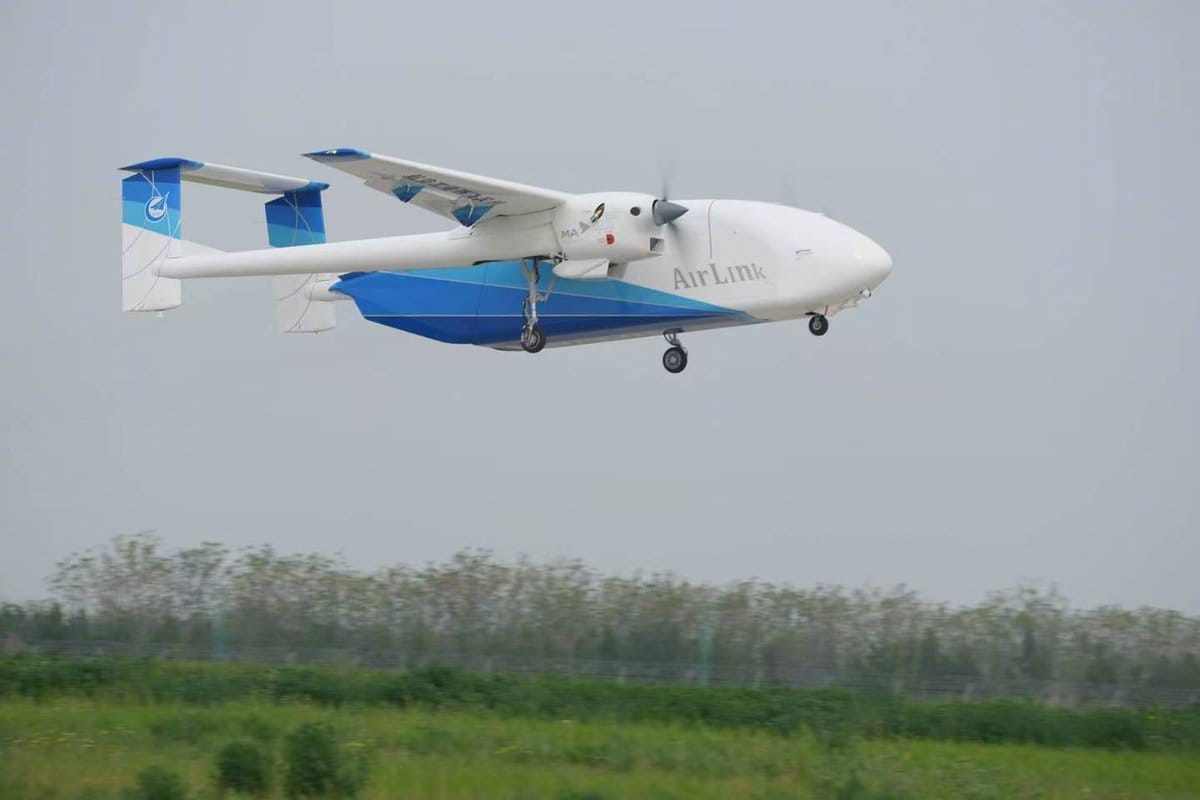
On 15 April, AVIC's Xi'an Aircraft Industry Group completed the maiden flight of the HH-200 autonomous cargo drone in Shaanxi, just days after the maiden flight of Norinco's 7-tonne Changying-8 (CY-8) drone. As with most Chinese cargo drones, HH-200 has dual-use capabilities and can carry 1,500 kg for 2,360 km at 310 km/h. It is made from composite materials that reduce airframe weight by 20% to optimize flight range.
China has recently tested multiple Medium Altitude Long-Endurance (MALE) cargo drones signaling a compressed development cycle for China’s large autonomous cargo sector with faster transition between prototype and production phases. The purpose is likely both market-oriented and strategic. Most drones are designed to target high-frequency operations from short, unpaved strips, reinforcing China's drive to build distributed logistics capacity. This enables Beijing to carry out missions in hard-to-access terrains, such as islands, that have limited conventional airport infrastructure.
The PLA Ministry of National Defense spokesperson recently confirmed that the PLA's unmanned combat system advances were generating "widespread attention" from Taiwan and would enhance capabilities to "deter and strike separatist forces." This is the clearest on-record linkage between newly tested cargo drones and cross-strait strike doctrine, signalling that the CY-8's and HH-200’s dual-use design is perceived as a deterrent instrument by China.
On Our Radar:
Japan builds low cost drone, but key China dependencies create risk
Japan's push to mass-produce low-cost drones based on Ukraine war lessons is undermined by deep Chinese component dependencies. The $450 ACM-01 Shiraha uses a domestically assembled wooden airframe, but its motors, batteries, and flight controllers are sourced overwhelmingly from Chinese suppliers. Tokyo is institutionalizing a mass drone warfare doctrine while structurally dependent on the one country a Taiwan contingency would put it directly against. (Diplomat) (United24) (Japan Times)
Starlink outage and Anthropic cutoff highlight software supply chain risks for drone ops
Drone operations are waking up to dependencies on commercial software infrastructure that governments do not control. The Pentagon's reliance on SpaceX for drone connectivity and Anthropic for AI inference was exposed when both vendors became unavailable: Starlink outages repeatedly disrupted Navy unmanned vessel tests with no secondary datalink in place, while the Anthropic blacklisting severed AI pipelines in active programs and took weeks to recover from even with advance notice. Russia experienced the same lesson when Ukraine cut its Starlink access and has accelerated its own LEO satellite program specifically to remove that dependency. (Reuters) (United24)
UK funds AI-led innovation hub in Ukraine as countries compete with acceleration
The UK is funding Ukraine's new "A1" AI center for access to the only battlefield on earth where GPS-denied navigation and autonomous swarm coordination are being validated under live electronic warfare at scale. Western defense primes have been developing these capabilities in labs for years; Ukraine is proving which approaches actually work against real Russian jamming, and DSTL gets that data in near real-time. Beijing has accelerated its own military AI integration programs specifically in response to the performance gap Ukraine's systems have exposed, making GPS-denied autonomous navigation the defining technology competition in drone development right now. (United24) (Business Insider)
Civil air defense poses a serious problem and lucrative opportunity for dual-use C-UAS tech
The FAA has cleared a high-energy laser for domestic airspace use for the first time, opening a C-UAS procurement pipeline that commercial vendors could not legally bid into until now. The immediate trigger is a $600 million counter-drone surge, including $100 million for FIFA World Cup protection across 11 US cities, with the 20-kilowatt AMP-HEL as the first system cleared under the new framework. For vendors like AeroVironment, Epirus, and Raytheon, this creates a domestic civilian-infrastructure protection market that did not exist 60 days ago, with the Pentagon requesting $580 million in directed energy R&D for FY2027. (Military Times) (DefenseScoop)
Ukrainian drones hit three Baltic States in apparent "redirection" attack
Russian GPS spoofing redirected three Ukrainian strike drones into NATO territory within 48 hours, crashing them in Estonia, Latvia, and Lithuania rather than their intended Baltic port targets. The most serious incident struck the chimney of Estonia's Auvere power station in Ida-Viru County, triggering an emergency government session and a nationwide alarm alert. None were intercepted as engaging drones near the Russian border is legally and tactically constrained, leaving the alliance without a clean answer if Russia continues using spoofing to redirect Ukrainian munitions into allied territory. (Defense News)
First confirmed kill of air-drone from sea drone offers view into future of layered autonomous operations
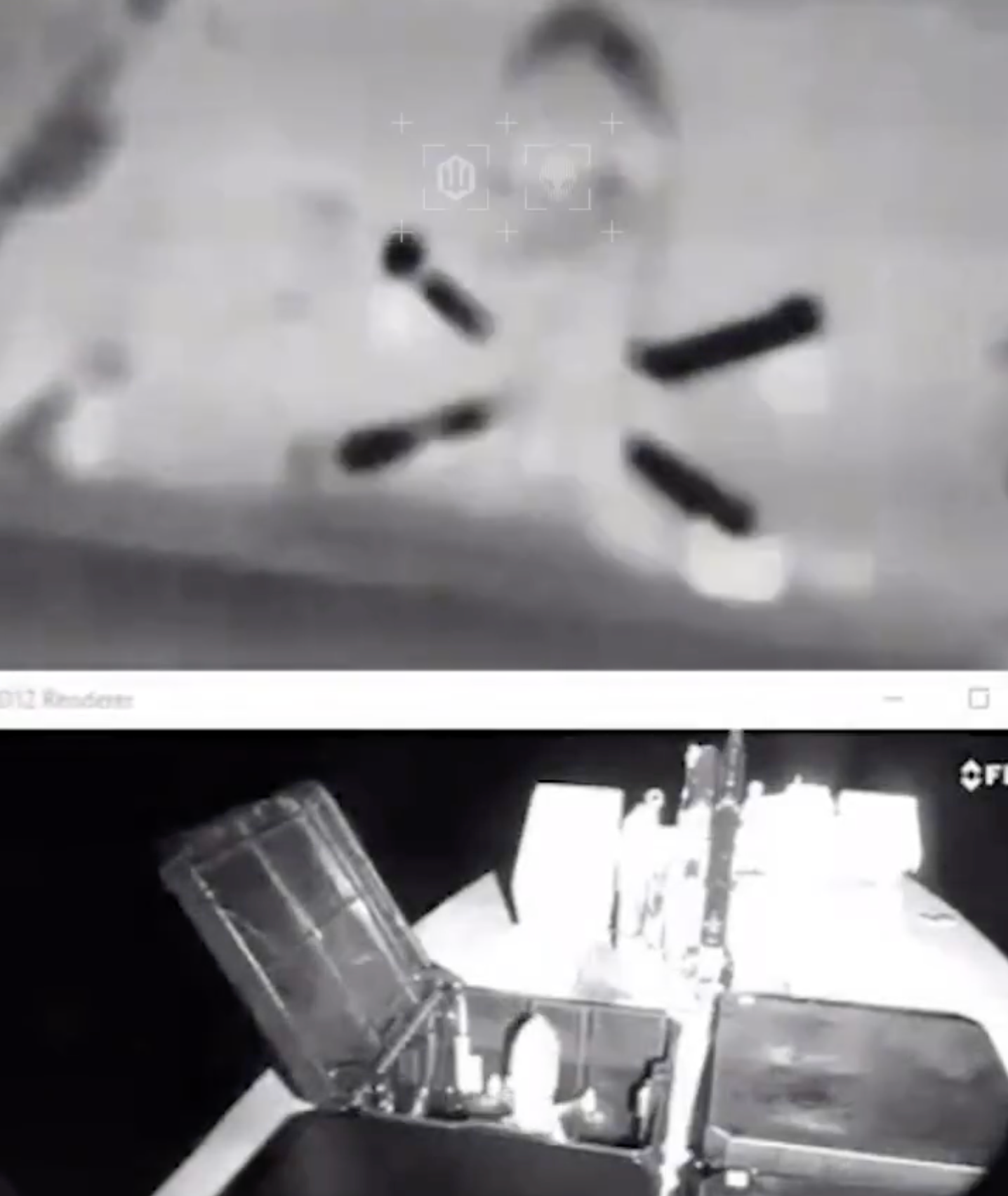
Ukraine has recorded the first sea-to-air drone kill in combat, with the 412th Nemesis Brigade using a Magura-class unmanned surface vessel to launch an interceptor that destroyed a Russian Shahed in flight. A USV operating 30-50 km offshore can engage Shaheds in their approach corridor before they reach the coast, pushing the interception perimeter seaward without presenting fixed ground infrastructure Russia can strike. With one platform performing surface strike, ISR, and air defense in the same operational context, naval drone flotillas can function as self-contained, multi-role defense nodes rather than single-mission assets. (United24)
Hardware Innovations and Tactical Adaptations
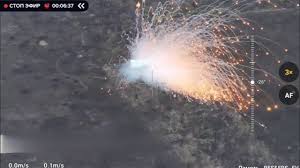
- Graphite-Bomb Drones: Russian sources have claimed that the Ukrainian units in the Donetsk region are using drones equipped with ‘graphite bombs’ for nighttime strikes. Graphite bombs are specialized munitions designed to disable electrical infrastructure rather than destroy it physically. Reports indicate that the unidentified munitions had no visible markings or identifiers, suggesting that the technology was likely experimental. The use of graphite signals a new mission profile for drones: disruption or damage of Russian infrastructure using non-kinetic methods to mitigate attribution.
- ‘Mini-Van’ UGVs: Russian forces are deploying heavy unmanned ground vehicles (UGVs) called ‘Chelnok’ to enhance logistical throughput, reduce sortie frequencies and scale up (de)mining missions on the frontlines. Chelnok is an all-terrain amphibious model built on ultra-low-pressure tyres and a wheeled chassis to reduce the risk of triggering anti-tank mines. It has an operational endurance of 6 hours and reaches speeds of up to 50 km/hour on land and around 5 km/h in water. But Chelnok’s sheer size makes concealment difficult and easily detectable by enemy drones
- ‘Crewless’ Rocket Launcher: Russian soldiers reportedly integrated a North Korean-made 107mm multiple launch Type-75 rocket system onto a UGV. This new configuration of crewless rocket artillery enables Russian operators to launch rocket salvos remotely, without exposing personnel to frontline risk. The Type-75 system is derived from China’s Type-63 launcher, and is capable of releasing high-explosive fragmentation and cluster munitions within an effective range of 8.5 km, extending the original attack range of the UGV.
What We're Reading
- Pakistan drone technology MoU China PTUT: The agreement signals deepening technological integration between Islamabad and Beijing, potentially accelerating Pakistan's domestic drone manufacturing capabilities. (Daily CPEC)
- Rheinmetall wins €300mn drone order from German armed forces: The deal comes after the CEO compared Ukraine's drone industry to playing with 'Legos', highlighting the tension between traditional defense contractors and agile battlefield-tested startups. (FT)
- French Drone Manufacturer Delair to Establish African Hub in Morocco: The move underscores Morocco's emergence as Africa's premier defense-tech hub and a strategic gateway for European defense firms seeking continental presence. (Morocco World News)
- Ukraine Private Defense Units Intercept 400km/h High Speed Jet Drone for the First Time: The successful interception demonstrates the rapid evolution of Ukrainian counter-drone capabilities against increasingly fast and sophisticated Russian aerial threats. (United24)
- Sudan drone strikes kill nearly 700 in three months: The escalating use of armed drones highlights the devastating impact of low-cost aerial warfare on civilian populations in asymmetric conflicts with no air defense infrastructure. (France24)
- 'Korean Reaper' MUAV: Inside South Korea's First Strategic-Class Drone: The unveiling marks a significant milestone in South Korea's push to develop indigenous strategic reconnaissance and strike capabilities independent of US platforms. (Sedaily)
- IDF to buy thousands of FPV drones: The procurement reflects a doctrinal shift within the IDF, recognizing the tactical necessity of FPV drones for close-quarters and urban operations. (Jerusalem Post)
- Serbia's president tells military to create units armed with attack drones: The directive underscores the growing recognition among smaller nations of the critical value of drones in modernizing armed forces on a limited budget. (Reuters)
- DroneDash and GEODNET Launch GEODASH Aerosystems for AI-Driven Precision Agriculture: The partnership demonstrates the expanding commercial applications of AI-driven drones beyond defense, offering scalable precision spraying without pre-mapped fields. (Morningstar)


