


Welcome to this week’s Brief, our analysis of the most consequential developments in unmanned systems and drone warfare. Each week we track battlefield innovation, emerging doctrine, and the technologies reshaping how states and non-state actors deploy unmanned systems.
Have intelligence requirements, developments we should investigate, or perspectives to share? Contact us at info@dronesense.ai.
Deep Dive: Is speed the new category shift in drone-on-drone combat?
Ukraine's FPV interceptors have proved very effective against Russian drones, with combat success rates exceeding 60% and nearly 950 anti-Shahed intercepts delivered per day by late 2025. In response, Russia deployed a jet-powered drone called Geran-3 closely based on the Iranian Shahed-238. This drone, with a flight speed of 600 km/h over a 2,500 km range, was fast enough to outpace Ukraine’s highly successful low-cost interception stack. By early 2026, Russia had developed another faster and more lethal variant, Geran-5.
Unlike its predecessors, Geran-5 is a jet-powered drone with a larger conventional-airframe variant carrying a 90 kg warhead, signaling that jet propulsion has moved from an experimental response to a deliberate strategic doctrine.
In combat, speed does more than just outrunning interceptors. It collapses the detection-to-intercept window that layered air defense systems are built around. The cost-effective interception stack Ukraine developed since 2022, relying on light aircraft, helicopter patrols, and mobile ground teams, becomes largely irrelevant at jet speeds.
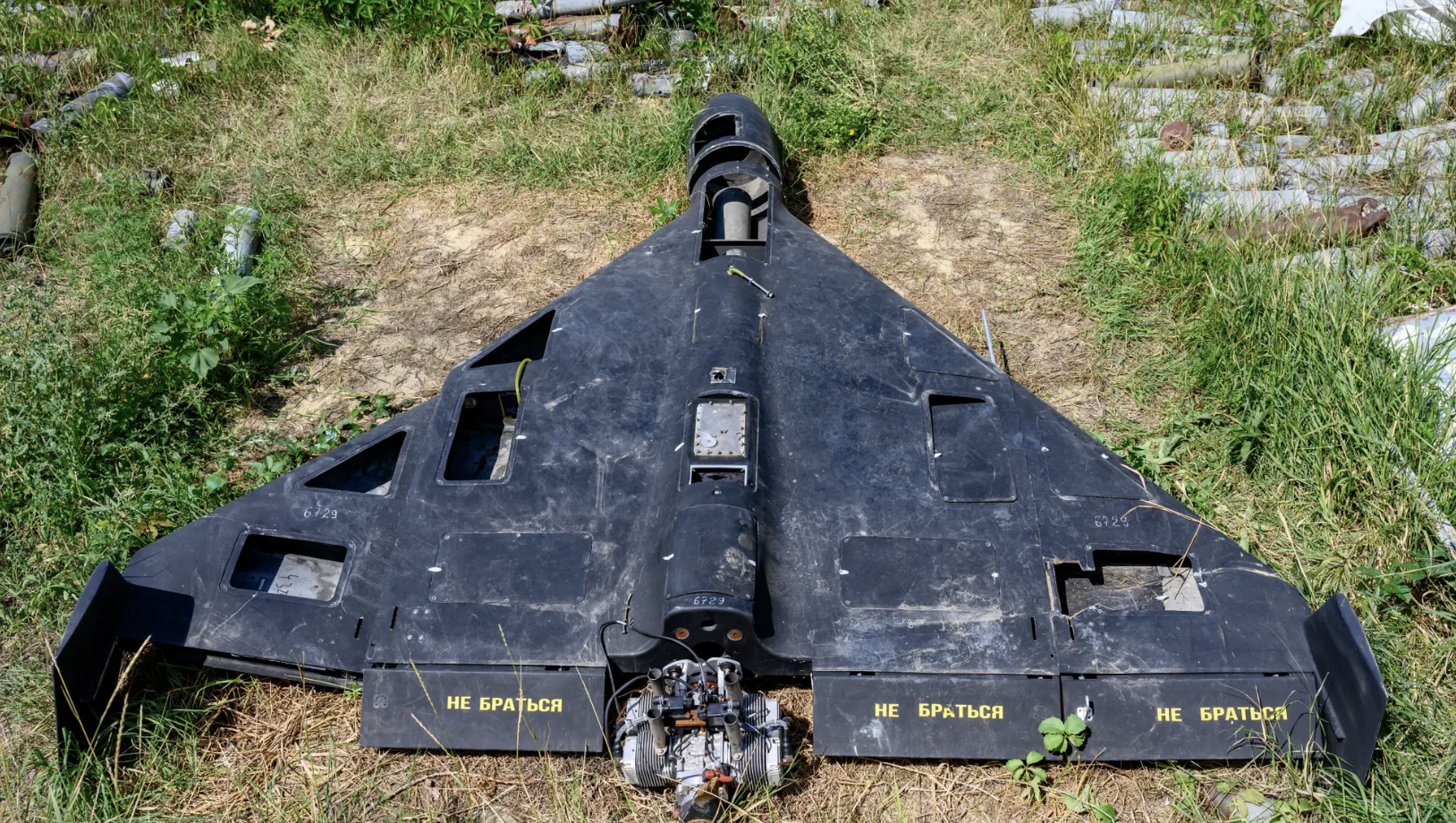
Iran's Hadid-110 extends this logic by pairing a compact jet engine reaching 510 km/h with a radar-evading airframe designed to delay detection until it is already closing on its target. In the current Middle East conflict, Iran realized early on that using jet drones alongside slow-moving Shaheds would exploit the saturation gaps in air defenses, increasing the chances of a successful strike.
The reason is that high-speed jet drones exploit the gaps in the seams. They are as hard to detect as a regular Shahed, making it difficult to have a timely missile interception suited for a high-speed chase, while also being faster than most interceptor drones that are optimized for Shahed’s slow speed and maneuvers.
Despite its advantageous position, jet drones have been used selectively. Russia holds the most combat-tested jet drone capability, but faces a steep cost ceiling. According to 2025 reports, Geran-3 cost Russia approximately $1.4 million per unit as compared to $20,000 to $50,000 for Geran-2. While the cost of production likely reduced as manufacturing expanded, jet drones remain more expensive than other variants and are quite susceptible to supply chain risks.
The jet engine supply crunch is a major reason preventing large-scale deployment of this platform. Ukraine’s mini turbojet drone, Palianytsia, has been successful at striking deep into Russia in recent months. However, the shortage of jet engines threatens to break that momentum. While Russia sources most of its jet engines from China, which produces them at scale, Ukraine has relied on a handful of European producers that struggle to expand capacity without a large government order.
The United States found a workaround in Anduril's Roadrunner-M, a reusable twin-jet interceptor, aboard Gerald R. Ford strike group destroyers, but at approximately $500,000 per unit presents an unfavorable cost ratio against cheaper threats.
As of April 2026, Ukraine's turbojet availability is capped at low hundreds per month against a demand of several thousand, leaving Czech manufacturers PBS Group and ZofiTech as the only meaningful suppliers. Those constraints extend further upstream, where aerospace-grade carbon fiber production cannot be rapidly surged and rare earth magnets, critical to both guidance and propulsion systems, are subject to Chinese export controls. As speed becomes a determining factor in drone combat, hardware competition will intensify.
China Watch: Beijing tightens reins over domestic drone use
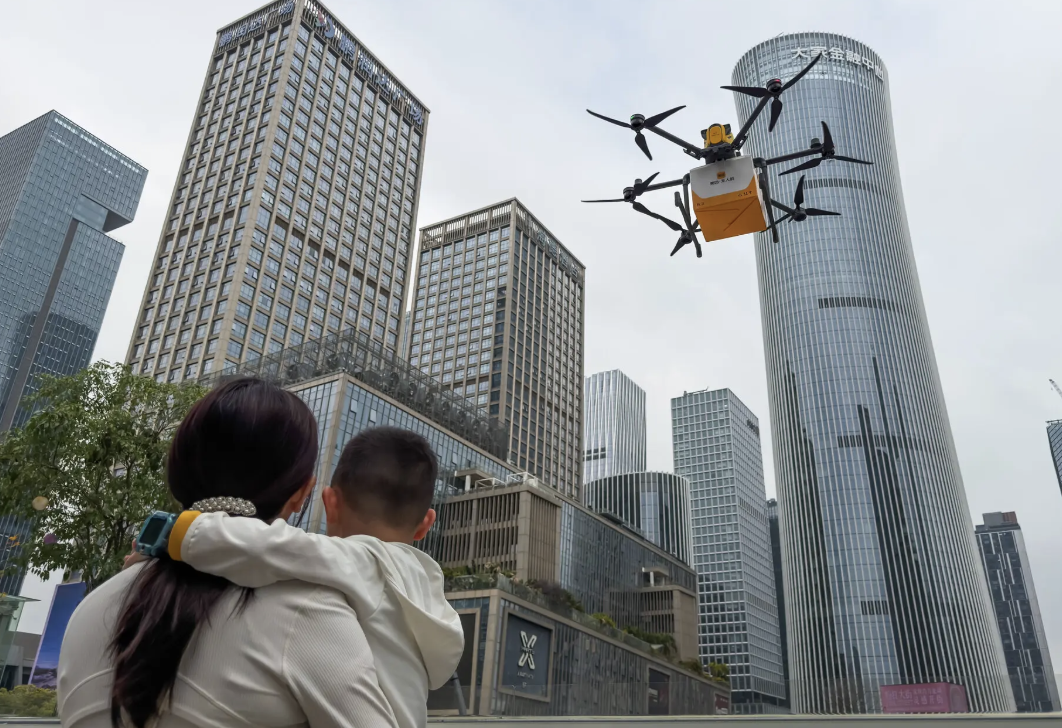
Beijing has passed new drone regulations banning the sale, lease, and import of drones and 17 designated ‘core components’ to any individual or organization without prior public security approval. The laws aim to bring ‘order’ to China’s low-altitude economy and will be effective from 1st May 2026. Under new rules, civilian drones must be registered with the State using owners’ real identities, and transmit a continuous data stream (identification, location, speed and status information) from power-on through the entire flight to provide real-time visibility over operations.
China’s attempt to establish complete oversight on domestic drone use signals a growing national security concern of civilian technology becoming a foreign intelligence asset. Incidents of drones getting hacked to surveil and collect intel on critical infrastructure have exposed real gaps in internal security architecture across the world.
The use of fiber-optics has exacerbated existing detection challenges. For the Chinese, the scale of the problem is entirely different, with nearly 2 million registered drones by the end of 2024. The balance will lie in ensuring that strict controls do not deter domestic consumers from adopting unmanned technologies, even as dual-use concerns rise.
On Our Radar:
States Race to Transform Infantry Weapons Into Counter-Drone Machines
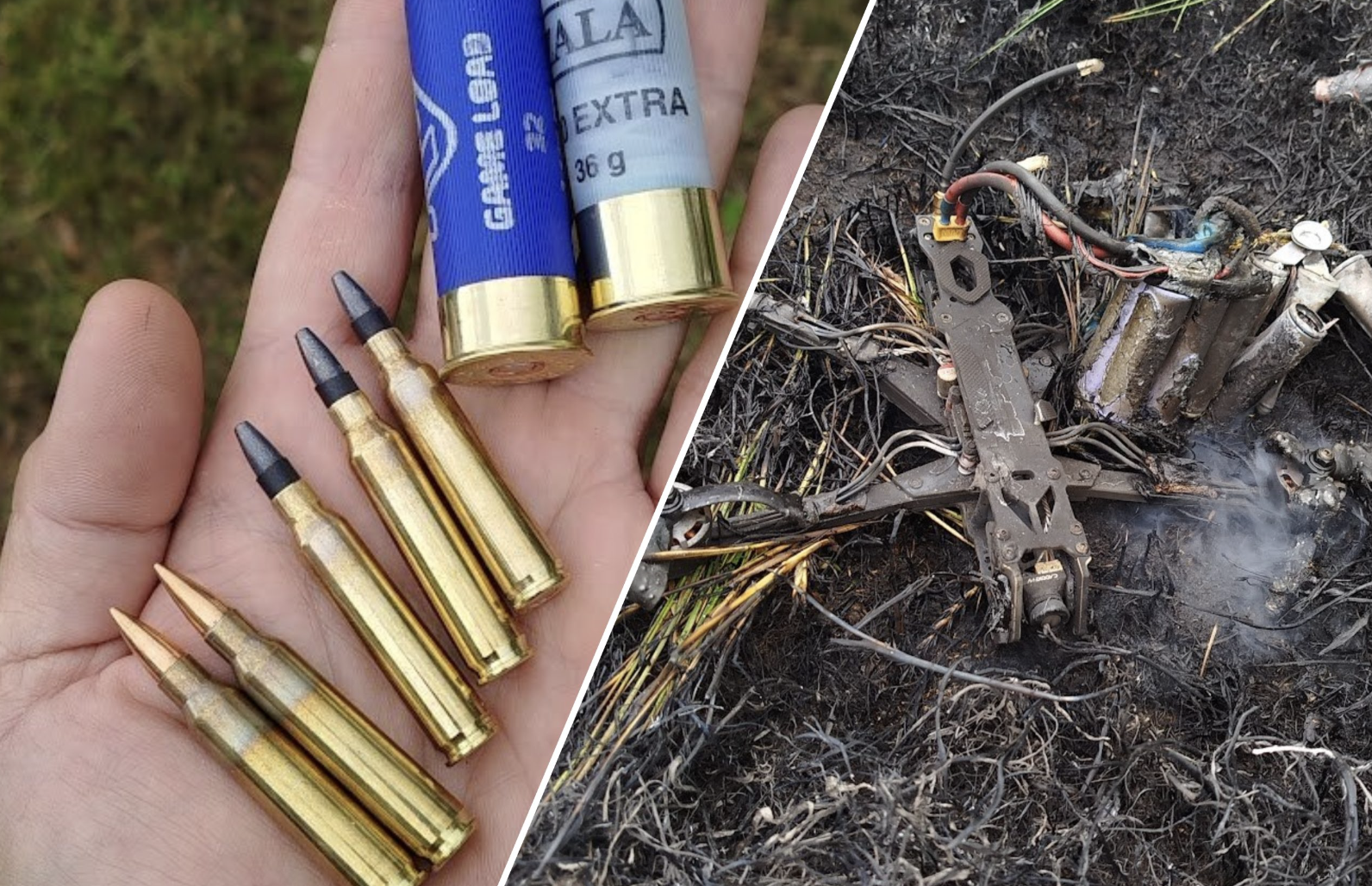
Small drone threats are evolving standard infantry-level weapons into counter-drone systems. The U.S. forces recently trained with the 5.56mm L-variant Drone Round while Kalashnikov Concern ran tests on a 5.45mm multi-projectile cartridge designed to engage FPV drones. The trend signals a strategic effort to develop a last-resort, highly accessible capability for ground soldiers to counter small drones at short ranges. The approach also indicates that dedicated anti-drone magazines may become standard-issue across NATO and Russian formations within 2–4 years. (Army Recognition)
Chinese UUVs Ramp Up Surveillance Campaign in Southeast Asia
Indonesian fishermen recovered a 3.7-meter Chinese Underwater Unmanned Vehicle (UUV) near the Lombok Strait inside Indonesia's Archipelagic Sea Lane II. The drone carried hydroacoustic and oceanographic sensors with no ordnance, consistent with an acoustic profiling and seabed mapping mission. In Southeast Asia, the Lombok Strait is one of the few alternative deepwater routes for submarine transit after the Strait of Malacca. Chinese UUVs have previously surveilled Indonesian waters in 2019, 2020, and 2026, systematically collecting maritime information that analysts claim has dual-use applicability in conflict scenarios. (Militaryni)
Ukraine Deploys 30% More Strike Drones Than Russia
Ukrainian forces deployed strike drones at a 1.3:1 ratio against Russia as of April 8, with UAV strikes accounting for 96% of 33,988 confirmed Russian casualties in March. The frontline ratio is the direct product of the defense-industrial base Brave1 has been building. In 2025, the Defense Tech Valley summit secured $100 million in investment, and the 2026 edition in Lviv is themed around joint production agreements with US and European partners. Ukraine's shift from aid recipient to combat-proven defense exporter signals that battlefield performance has become the primary global procurement benchmark. (United24)
US Choose Direct Energy & Acoustic Interceptors For Counter-Drone Protection
The Pentagon and the FAA have signed an agreement to deploy high-energy lasers across the US-Mexico border to counter illegal drone incursions that have crossed over 1,000 monthly reported cases. The deal has arrived following two recent incidents that closed El Paso airport for 10 days and downed a government drone, exposing major institutional coordination gaps and security vulnerabilities in the US border infrastructure. As criminals adopt fiber-optic drones to evade traditional detection methods, the US is bolstering alternative countermeasures, including acoustic interceptors such as Talon Avionic’s SECTR, to recalibrate its security architecture to the new threat environment. (Reuters)
The US is 3D-Printing Its Way to Swarm Drone Dominance
The USAF awarded Beehive Industries a $29.7 million contract on April 9 to qualify the Frenzy 8 engine (100-300 lbs thrust) for swarm-class UAS and small cruise missiles under the Family of Affordable Mass Munitions (FAMM) program. The FAMM has received $620 million in combined FY2026 funding, indicating that additive manufacturing has become an enabling mechanism. Beehive projects 3,000-5,000 Frenzy engines annually by 2027, a production tempo that conventional turbine supply chains cannot replicate. The Air Force's FY2027 FAMM funding request of $973 million reflects that expendable additive-manufactured propulsion is now a durable procurement category and the US industrial response to peer-adversary drone scaling. (Defense Post)
Hardware Innovations and Tactical Adaptations
- Remote Mining: Russian combat engineers have identified a UAV-delivered Ukrainian mining system known as STICKS, which enables rapid and precise remote mining of areas under active fire. Reports indicate that STICKS integrates a microcontroller using both a magnetic sensor and an accelerometer. It has a self-destruct feature programmable from 5 to 60 days, with an automatic sequential mode for multi-mine release. The innovation cements the versatility of UAVs in cross-domain operations.
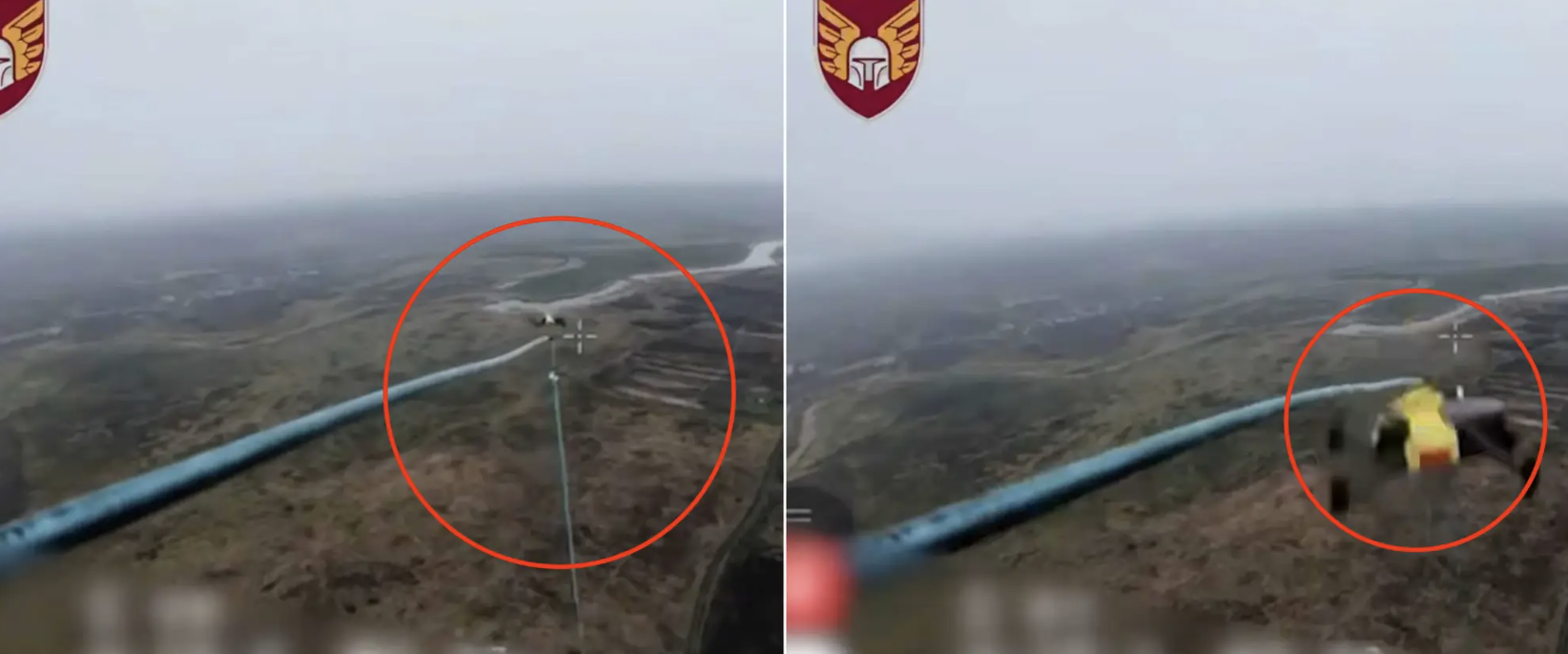
- Drones with Fishing Rods: Videos on social media show that some Ukrainian drone pilots successfully damaged incoming Russian drones by retrofitting their FPVs with fishing rods. The rope attached to the rod is maneuvred to get entangled in the propellers of the enemy’s drone, causing it to lose control and crash. The effectiveness of this simple trick underscored blindspots in small, slow drone missions while reinforcing the belief that battlefield ingenuity is critical in wars of attrition.
- Domestic Satcom Connectivity: Russia’s key drone units under the Rubicon Center are increasingly equipping their drones with domestic Spirit-030 satellite dishes located 36,000 km above Earth to fill in the gap left by Starlink’s shutdown. While the connectivity through Spirit dishes has been useful in tactical missions, Russia continues to struggle to find a replacement for Starlink terminals that enabled its drones to conduct long-range strikes in Ukraine without timely detection.
What We're Reading
- Japan teams up with Ukraine to build $2,500 Shahed Interceptor under PM Takaichi’s hardline national security agenda. (United24)
- Russian satellite imagery input guided Iranian attacks on Gulf countries with hackers collaborating on cyber operations. (Reuters)
- Sanctions cut off the supply of Dutch components to Russian Shaheds even as new US, Chinese & Japanese parts continue to feature. (Kyiv Post)
- American Zeus missiles will be integrated into Ukrainian drones amidst companies rush to earn the "battle-tested" tag for their platforms. (Militaryni)
- Pakistan prioritizes sea denial missions and kamikaze strikes with its low-cost naval drone, Mudamir-LR, with hopes of export orders. (Army Recognition)
- The US Navy’s $200 million drone MQ-4C Triton’s disappearance in the Persian Gulf raises fears of reverse-engineering by adversaries. (Business Today)
- Ukraine's anti-trust body rejected an application by a UAE firm to purchase a stake in Ukraine’s top drone maker, Fire Point, for $760 million. (Reuters)
- US-based firm XDOWN reduces deployment time to two seconds with the new STUD drone for rapid response missions. (Interesting Engineering)
- Russia plans to increase its Unmanned Systems Forces by 60% to 165,500 by the end of 2026. (Kyiv Independent)


