


Welcome to this week’s Brief, our analysis of the most consequential developments in unmanned systems and drone warfare. Each week we track rapidly accelerating battlefield innovations, emerging doctrine, and the technologies reshaping how states and non-state actors deploy unmanned systems.
Have intelligence requirements, developments we should investigate, or perspectives to share? Contact us at info@dronesense.ai.

Deep Dive: Satellite Restrictions are Inducing Ukraine to Change How it Builds Drones
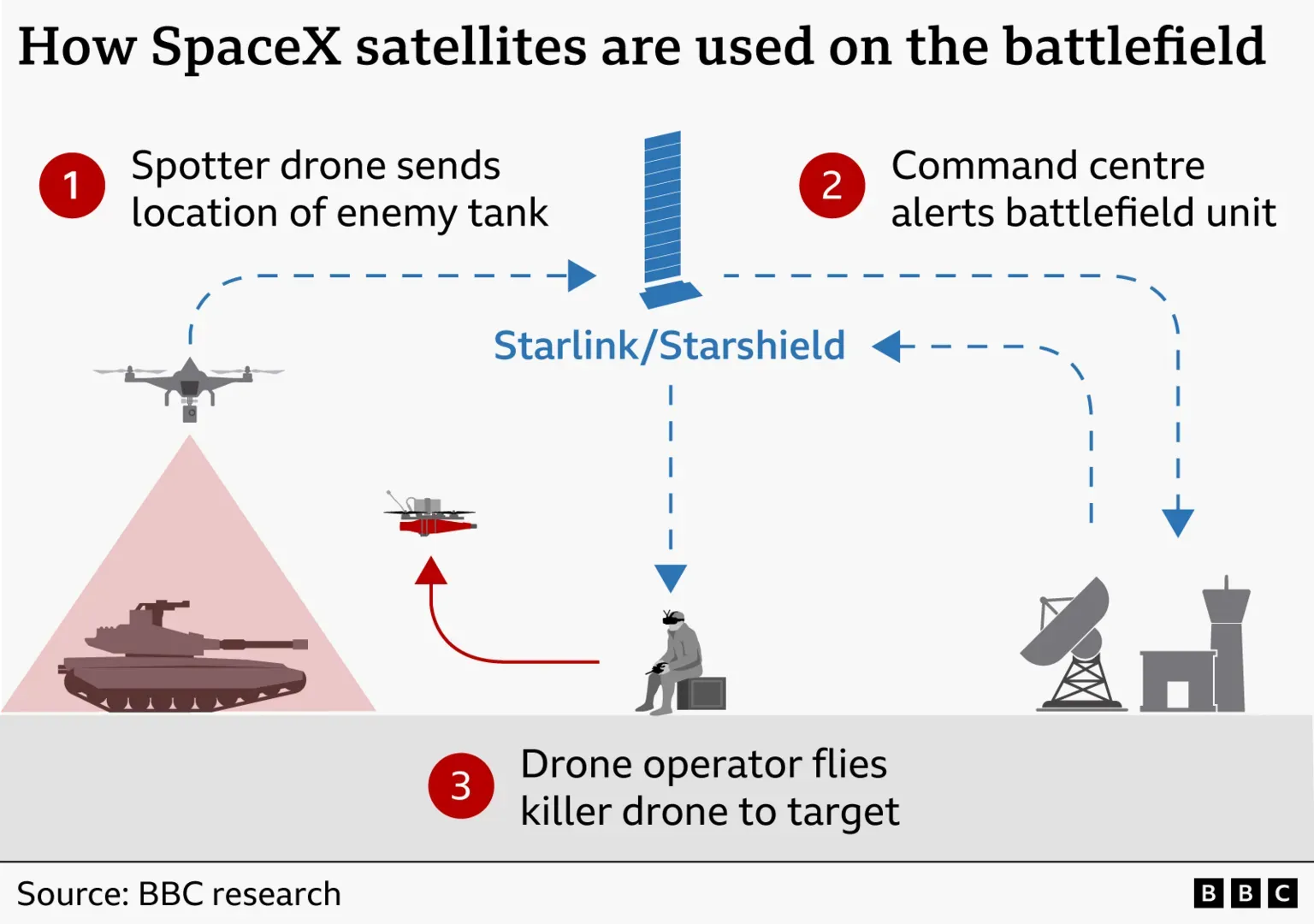
Starlink restrictions, a week ago, disrupted Ukrainian missions in 2 main ways: (a) by resulting in 10-20 seconds connection loss in strike drones that made them harder to control and forced cancellation of attacks, and (b) by weakening the control reliability of satellite-connected interceptors against Russian jet drones flying above 400 km/h.
Both failures appear to have spurred Ukraine to change its drone designs for future missions.
Although connectivity above 400 km/h was restored on October 24, the 59th Brigade has been requesting radio-linked and automatic-mode alternatives, while developers are reconsidering airborne-launch interceptor projects. Uncertainty over future access is now redirecting procurement, birthing new workarounds and stalling new platforms after service returns.
Some of these solutions have started with moving the satellite terminal off the drone. Sting interceptors are a good example because they already connect remote pilots to a fixed ground station through satellite internet, even as a separate radio link controls the interceptor. Since the terminal stays stationary as the drone accelerates, those operations can escape the movement restriction.
And if satellite service fails more broadly, another available internet connection could reconnect pilots to the station while preserving the aircraft link, likely sparing commanders from replacing drones or retraining crews.
But that flexibility depends on crews having another connection available. Without one, though, developers could preserve selected functions onboard so the drone can continue through an outage. Following fixed coordinates would still leave the pilot unable to receive imagery or transmit an abort command, narrowing the missions crews can complete.
There is another problem. Preserving more functions onboard often consumes battery or payload space, leaving crews with less range or a smaller warhead. Yet whether crews can switch connections or must replace their drones could depend on design choices made long before the restrictions began.
We compare Ukraine’s reported adaptations and existing designs to assess which mission capabilities they are preserving, and what crews could sacrifice to keep them.
China Watch: Stealth drone launchpoints, Drones join submarines, Cargo drones tests repeat operations & more

- China’s GJ-21 stealth reconnaissance and strike drone has completed its first takeoff and landing aboard the Type 076 amphibious assault ship Sichuan, moving the ship’s fixed-wing drone ambitions into flight testing. The announcement follows preparations around a vessel equipped with an electromagnetic catapult and arresting gear (EMALS), a combination that gives an amphibious ship an aviation role well beyond helicopter operations. The trial strongly indicates that the PLA Navy is broadening where it intends to launch drones in future conflicts, reducing its dependence on conventional carriers and fixed land bases.
- In parallel, a Chinese naval aviation unit paired a crewed anti-submarine patrol aircraft laying sonobuoys with a drone conducting magnetic-anomaly searches, testing how the two platforms combine their observations during a submarine hunt. The division of labor lets the drone conduct closer search work while the patrol aircraft maintains a broader acoustic picture, potentially keeping both the suspected contact and its surrounding area under observation. Keeping those searches connected is likely to reduce the opportunity for a submarine to escape between initial detection and follow-up localization. An acoustic contact would narrow the area the drone needs to examine, but only if its location reaches the drone before the submarine moves beyond that search area.
On Our Radar:
Ukraine’s Aerial Rescue Drones Are a Flashy Last Resort
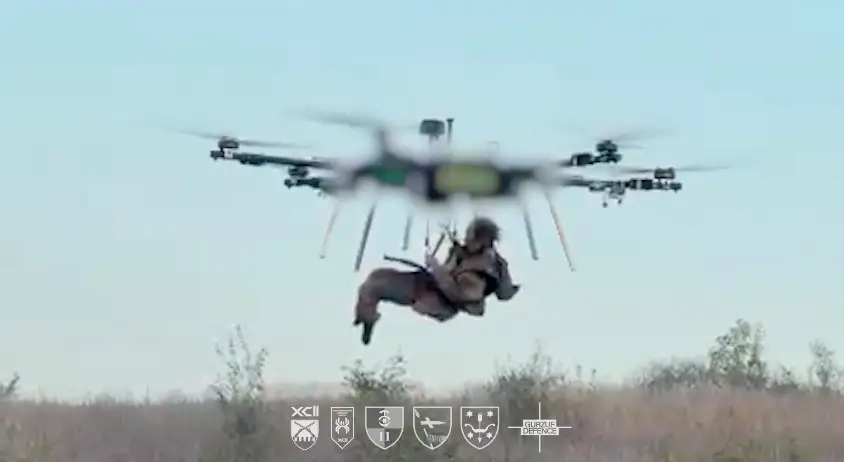
Ukraine is building heavy-lift drones to extract casualties from positions where minefields and persistent drone surveillance have closed both the foot route and the ground-robot route. In the first publicized aerial evacuation, two unmanned ground vehicles had already been lost trying to reach the soldier; the drone attempt required a harness delivered in advance, three escort drones, and two hours of suppressive fire before a hexacopter carried him 15 kilometres to the rear. That is why Brave1 frames the capability as a last resort: it opens a route only after every safer option has failed, and for the whole flight the drone is a large, slow, exposed target itself. (Business Insider) (Reuters)
Russia’s Next Air-Defense Problem May Be Cheap Cruise Missiles
Ukraine shot down 55 percent of Russia’s jet-powered Gerans in September and more than 90 percent of the propeller-driven ones. The difference is speed, and the Filin starts where the jet Gerans top out. Ukrainian intelligence details a ground-launched cruise missile claimed at 800 km/h and 1,200 kilometres, built from 3D-printed parts and standardized Chinese electronics so Russia can make it by the thousand. The Banderol, already fielded against southern ports and grain terminals, shows what that production run will be aimed at. Every one that gets past the interceptor layer costs Ukraine an F-16 sortie or a Western missile it cannot replace. (Business Insider) (HUR War&Sanctions)
Pentagon Demand Exposes a Dwindling U.S. Explosives Base
The Pentagon has committed to 60,000 attack drones under its Drone Dominance program, nearly all of them meant to carry a warhead. Every pound of the HMX and RDX that arms them comes from a single Tennessee plant built during World War II, and the wait for its product runs one to two years, the Wall Street Journal reports. Odin Energetics, a new venture, says it can already make about a tenth of that plant’s output in container-sized factories that take six months to stand up. Airframes can be ordered by the tens of thousands in a year. The chemistry that makes them weapons cannot, and that is now the binding constraint on the whole program. (The Wall Street Journal)
Turkey Tests the edges of Maritime Drones Usage as Sea Sensors, Weapons, and Threats
Turkey’s Navy used its TURNAs-26 exercises to put uncrewed systems into three tasks normally bound to a warship: finding a threat, reaching it, and defending against it. An Aksungur dropped sonobuoys for submarine detection, a Bayraktar TB2 guided the explosive PİRANA drone boat into a surface strike, and TCG Beykoz fired its TOLGA system against aerial and surface drones. Together, the demonstrations show a fleet beginning to use drones as its eyes below the surface, its reach across it, and a threat its crews must defeat, giving Turkey a more complete naval mission set than a single platform test could. (The Defence Blog) (Hürriyet)
Carrier Control Boosts MQ range to 2,100+ Miles
USS Ronald Reagan, underway in the Pacific, took command of an MQ-25A Stingray on the ground at Boeing’s Illinois facility, linking through the ship’s new Unmanned Air Warfare Center and a low-Earth-orbit satellite network. Until now a carrier’s drones have been limited to the reach of its own radios, which kept them within a few hundred miles of the ship. A satellite link means the carrier can run aircraft that launched from shore or from another deck and never came near the flight line. The aircraft never left the ground, but the link it was controlled through is the one every carrier drone after the Stingray will inherit. (U.S. Navy) (Janes)
Technical Intel:
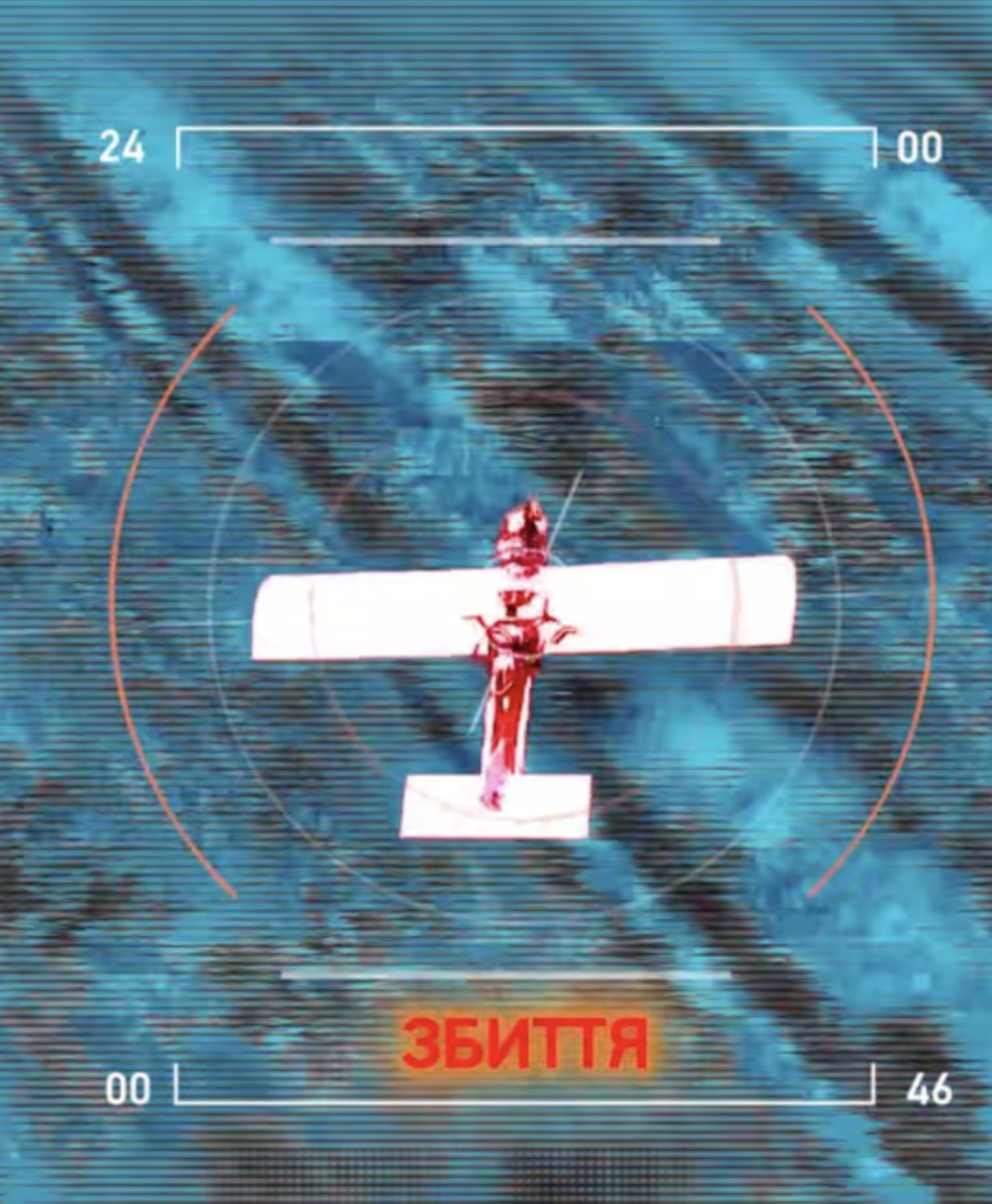
- AI Detection on Albatros-M5: Russia is using Albatros-M5 reconnaissance drones equipped with onboard neural networks that analyse imagery during flight to identify concentrations of personnel. Two such drones were recently intercepted by Ukrainian forces near Zaporizhzhia. The system also carries day and night cameras and has an endurance of up to 4.5 hours. Onboard detection will likely reduce the volume of imagery requiring manual review, allowing operators to identify potential targets faster during reconnaissance missions. But how effective this is will likely depend on how reliably the software differentiates personnel from other objects, particularly when troops are dispersed or concealed.
- 3-Point Navigation on Geran UAVs: Russia has modified its Geran drones with two additional sensors mounted in the left and right wings, which operate alongside the central inertial navigation module. Together, they form a 3-point measurement arrangement likely intended to improve estimates of the drone's movement during autonomous flight. The modification is expected to reduce accumulated navigation errors when Ukrainian electronic warfare (EW) disrupts satellite signals. This will enable Geran UAVs to maintain more accurate flight paths without continuous GNSS corrections. Despite this, Inertial navigation can still accumulate errors over time, which leaves longer flights still dependent on additional navigation references.
- Combined Control & Video on FPVs: Ukraine is reportedly modifying its FPVs to transmit control commands and video through the same Caddx Ascent GT PRO digital module to remove the need for separate radio-control receivers and antennas. Russian EW specialists have encountered these configurations on captured drones and faced difficulties detecting them with existing equipment. Combining both links reduces the number of separate radio systems that Russian detectors can identify, potentially complicating early warnings and attempts to locate approaching FPVs. But both control and video now depend on the same communications system, meaning disruption of that link could simultaneously remove the operator's visual feed and ability to control the drone.
- Magnetometers on Gerans: Ukraine has recovered Russian Geran drones equipped with magnetometers installed in their tail sections and vertical stabilizers. The sensors measure the Earth's magnetic field, providing an additional heading reference that does not depend on satellite signals. This will likely help Gerans to maintain their orientation when Ukrainian jammers interfere with GNSS navigation and improve the accuracy of their inertial systems. But, magnetic measurements cannot independently establish a drone's position, while interference from onboard electronics and nearby metal components could still reduce heading accuracy.
- Reconnaissance & Strike FPVs on Molniya: Russia is now using its Molniya drones to carry 2 smaller FPVs, 1 configured for reconnaissance and 1 for strikes. Carrying both drones enables Russia to transport them closer to Ukrainian positions without consuming batteries during the initial flight. This will preserve more power for reconnaissance and engagement. Tactically, this arrangement could likely shorten the time between locating a target and launching an attack. But concentrating 2 drones on 1 carrier creates a single point of failure.
- Electronic-Jamming Module on Gerans: A new electronic-jamming device was recovered from Russian Geran drones. Its operating frequencies, targets and effectiveness have not yet been disclosed, but it was likely intended for onboard protection. In that case, the module could interfere with nearby radio-frequency systems, potentially complicating the detection or interception of Gerans. But the evidence does not establish whether it targets drone-control links, navigation signals or other electronic systems. Its effectiveness would also largely depend on transmitter power, antenna coverage and whether Ukrainian counter-drone systems operate within the frequencies it can disrupt.
What We're Reading:
- U.S. Prepares Drone-Forensics Tools for Mexico Investigations: Milenio reports that State Department-funded CBP and FBI programs plan to acquire tools to extract, decrypt, and decode data from recovered drones. (Milenio)
- Colombia Adds CUAS Systems to Presidential Protection: Colombia’s Presidential Military House has acquired the portable EDM4S SkyWiper jammer for its security detail, a point-defense measure that does not cover fiber-optic FPVs. (Infodefensa) (El Colombiano)
- Singapore Tests Chinook-Launched FPVs: The Republic of Singapore Air Force trialed rear-ramp FPV launches from CH-47F Chinooks to extend aircrew visual coverage and last-mile surveillance during Exercise Wallaby. (Singapore Ministry of Defence) (Aviation Week)
- Denmark Builds a Counter-Drone Command Layer: Systematic says Denmark has contracted for a SitaWare-based command system intended to combine counter-drone sensor and operational data with Terma’s national detection network. (Systematic) (Terma)
- Thailand Fields a Rifle-Mounted Counter-Drone System: Janes reports IWI installed its Arbel fire-control system in existing Thai military M4s, enabling anti-drone use with standard 5.56 mm ammunition. (Janes) (Israel Weapon Industries)
- Korea Tests a Drone-Robot Rail-Inspection Chain: Korea Railroad Research Institute demonstrated a drone cueing a rail-and-road quadruped robot to inspect obstacles and identify track wear, cracks, and spalling. (Korea Railroad Research Institute) (DongA Science)
- Ukraine Reports a 40-Kilometre Amphibious UGV Resupply Run: Ukraine’s Defence Ministry says a Ukrainian-developed ground robot delivered provisions and ammunition over land and water in a reported first logistics mission. (Ministry of Defence of Ukraine)
- Quantum Systems Establishes a Japan Subsidiary: The German drone maker has opened Quantum Systems Japan and a Tokyo office while signing cooperation memoranda with Mitsubishi Chemical and Panasonic. (Quantum Systems) (Jiji Press)


