


Welcome to this week’s Brief, our analysis of the most consequential developments in unmanned systems and drone warfare. Each week we track rapidly accelerating battlefield innovations, emerging doctrine, and the technologies reshaping how states and non-state actors deploy unmanned systems.
Have intelligence requirements, developments we should investigate, or perspectives to share? Contact us at info@dronesense.ai.

Deep Dive: Has Iran Found a Cheaper "Hack" for Drone Swarms?
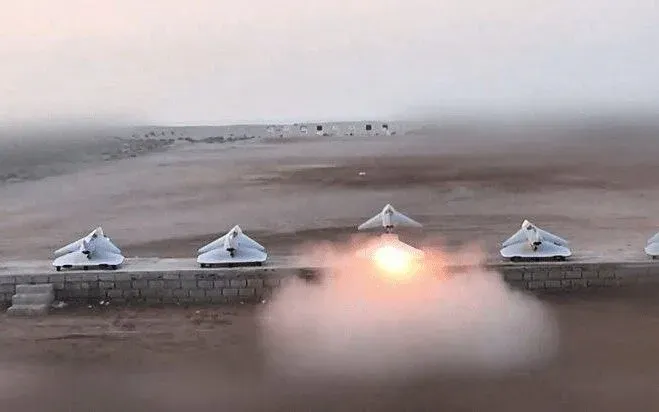
Two things appear increasingly clear: the US cannot control where Iran will strike back, or how it might do it. This week’s drone strikes on ships at the Egyptian port of Damietta, the Iraqi militia’s close to 30 attacks on Saudi oil facilities, and the Houthis’ revival of the Red Sea blockade all allude to a single conclusion; in the past few months, Iran has most likely transferred more drone knowledge to its proxies across the Middle East than it probably did since 2024. Other than an obvious capability boost, it gives Iran a bit of a superpower in this conflict.
The more of its groups know how to use drones, the more distributed the attacks become and the harder they are to anticipate or intercept.
Amid a barrage of US strikes that supposedly damaged much of Iran’s military infrastructure, the regime appears to have figured out a way to improve its jet-powered stealth drones. The upgraded Hadid-110 can reportedly fly faster, lower and with a smaller radar signature than its predecessor. The timing is unlikely to be coincidental. Iran has long transferred more than just drones to its partners. It has exported manufacturing know-how, operational tactics and increasingly the ability to independently employ and adapt these systems.
What appears to be changing is how Iran is approaching deterrence in the age of drones. As more groups develop sovereign drone capabilities, Iran's deterrence becomes distributed rather than centralized. The simplicity of shooting Shaheds in the sky underpins this entire concept. Any future retaliation no longer needs to originate from Iran itself. It can emerge from Iraq, Yemen, or Syria—as we are observing—expanding both the number of launch points and the uncertainty surrounding where the next strike package might originate.
If attacked in parallel using drones from different launch points, the strategy also creates an operational effect that resembles swarming without requiring advanced swarm drones.
Individually, many of these groups may not possess mature autonomous swarm capabilities for years. But collectively, simultaneous attacks launched by multiple proxies from different launch points can generate many of the same problems that defenders face during swarm attacks. They will be forced to respond across several axes at once. If a cheaper alternative to swarming is what Tehran is aiming for, then the US and Gulf states would find themselves in a pickle regardless of whether this war ends in the next few weeks or not.
A cheap swarming strategy using drones would stretch defenders’ air defense assets to their limits, even if Middle Eastern countries expedite calibrating theirs to unmanned threats. Protecting high-value infrastructure across land and sea would then be an even bigger operational and financial nightmare than it is now.
There is more. Iran’s fastest jet-powered drone, Hadid-110, offers a glimpse into how this model may be accelerating the regime’s own innovation cycle. Despite sustained strikes on its military infrastructure, Tehran continues to field upgraded systems that appear to reflect operational lessons from multiple battlefields.
Russian employment of faster jet-powered drones against Ukraine, Houthi maritime operations and Iraqi militia attacks all generate practical experience that can feed back into Iran's own development process. Instead of relying solely on domestic testing, every proxy effectively becomes another source of operational data. Improvements can then be incorporated into newer systems and redistributed across the network.
That ultimately makes Iran's drone enterprise harder to dismantle than its factories alone. A distributed production base introduces redundancy if facilities inside Iran are damaged (a lesson they have learned), while a distributed knowledge base is even more difficult to degrade.
Manufacturing sites can be destroyed. Operational expertise, design lessons and tactical innovation cannot be eliminated as easily once they have spread across multiple partners. Even if future US or Israeli strikes succeed in degrading Iran's domestic infrastructure again, reversing a drone ecosystem built on shared knowledge rather than centralised production is likely to prove considerably more difficult.
China Watch: Tonne-class Civilian Drone, Everest Drone Hub, and Mid-flight Charging Trials
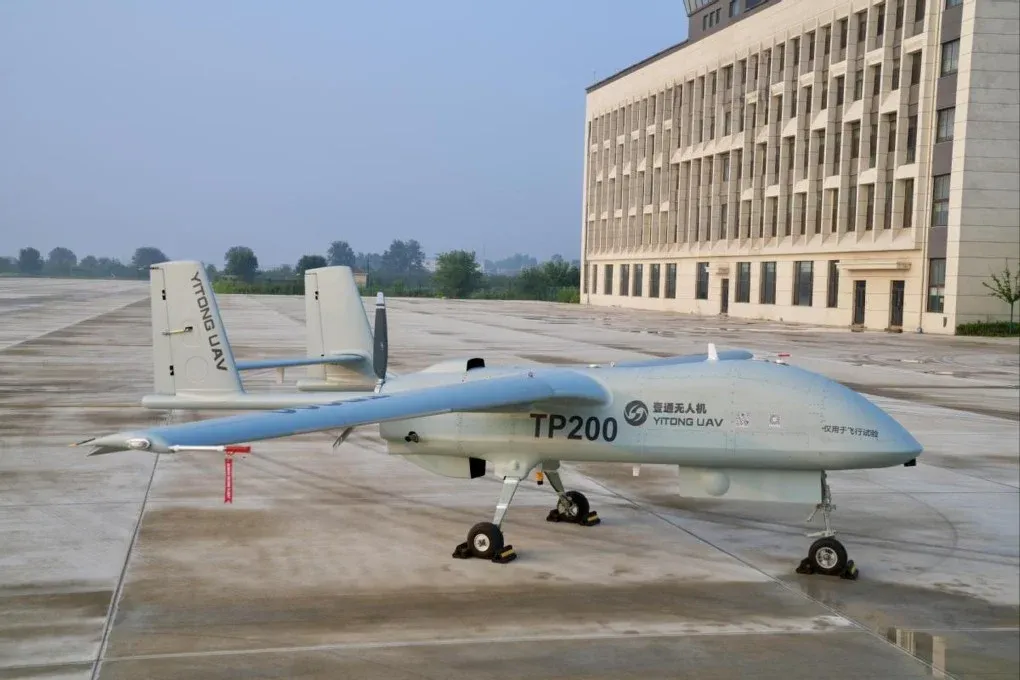
- Beijing has completed operational trials of its first tonne-class civil drone, the TP200, which reportedly has a range of 3,000 km and an endurance of up to 24 hours. The UAV is designed for maritime patrols, island resupply missions, and land surveying, while also supporting near-shore search and rescue, persistent coastal monitoring, and rapid response during extreme weather events.
- The system is built entirely with Chinese components, including its hardware and software, reflecting Beijing’s push for greater domestic control over unmanned technology supply chains. Its carbon-fibre composite materials and portable ground stations are also produced domestically, further reducing reliance on foreign inputs.
- The demand for Chinese agricultural drones is likely to grow in countries with ageing farm workforces, particularly in Southeast Asia. The majority of frontline drone operators in agriculture are elderly farmers, many of whom struggle to maintain yields amid labour shortages and rising operational demands. Chinese agricultural drone adoption is being driven by 2 key factors: AI-assisted piloting that reduces the technical burden on users, and manufacturer-led training that enables smoother integration and troubleshooting.
- As a result, traditional labour-intensive activities, such as manually walking fields to monitor rice irrigation levels, are increasingly being offloaded to drones. But adoption challenges remain, particularly around user-friendliness, battery endurance, and supporting infrastructure. Limited availability of docking stations and automation systems could constrain wider deployment, creating challenges that other countries seeking to import Chinese agricultural drones may also face.
On Our Radar:
Are There Any Winners in a Drone War?
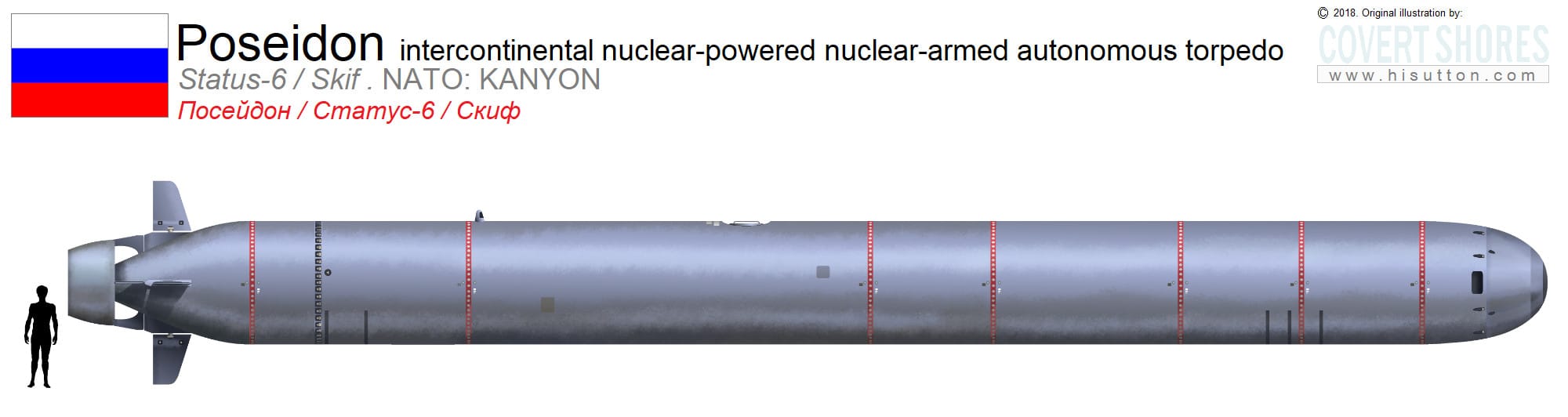
The drone war has entered a phase of mutual infrastructure attrition in which both sides are dismantling each other's economies faster than either is gaining ground, with each side now simultaneously striking small targets like petrol stations, intermediate ones like logistics and manufacturing hubs and mega industrial and energy infrastructure. The effectiveness of these attacks is holding, and the next wave of innovation, from Russia's "near completed" Poseidon nuclear torpedo UUV to drone-based cruise middles, both sides are raising the cost of competing without really raising the odds of winning. (Meduza) (RIA Novosti) (USNI Proceedings)
Dealing with Drone-Attack Disinformation:
Google Earth, the satellite imagery reference that drone analysts depend on to rapidly confirm strike damage, came under direct threat last week when Google integrated its Nano Banana 2 AI image generator into the platform, allowing users to fabricate geospatial scenes on top of real coordinates before pulling the feature within 48 hours after OSINT researchers demonstrated it could produce fake nuclear sites in Iran, bomb craters in Russia, and destroyed U.S. military bases indistinguishable from verified imagery. As disinformation around drone attacks becomes cheaper and more advantageous to produce, the authoritative ground truth that analysts reach for first is now the most valuable surface to corrupt. (BBC) (FT)
How Long Will Military Exhibitions Survive?
Russia's St. Petersburg naval parade has been canceled for the second consecutive year, reducing Navy Day to Putin addressing officers beside a photograph of a submarine, following a Victory Day in May that proceeded without military hardware for the first time in decades. Russia has not chosen to scale back its military exhibitions; it has been forced to, because a predictable, publicly announced, fixed-location display of military assets is now more useful to the adversary targeting it than to the state staging it. (Atlantic Council) (Kyiv Independent)
Drone Players Become Hard Targets:
Russia's missile strike on a US drone production facility in Kyiv is the latest in a string of evidence that the definition of a legitimate military target has expanded to include anyone in the supply chain. Andrey Cherezov, producer of the AI-enabled Ovod kamikaze drone, just survived an assassination attempt days after EU sanctions named him, and the head of a second sanctioned Russian drone company critically injured in a separate shooting in Tula the same week. Across the world, an Ecuadorian prosecutor investigating drone-enabled attacks on fishing vessels was fatally shot in the same period, suggesting that targeting logic is extending beyond traditional combatants. (Meduza) (Izvestia) (Military.com)
Countries Bet on Autonomy for Re-Industrialization:
The UK has joined dozens of countries implicitly or explicitly naming drones and related production as a key pillar of reindustrialization strategies. While politicians are betting this will integrate defense spending requirements and domestic growth mandates, the next industrial base is built on autonomous systems, not around them. Highly automated drone manufacturing generates fewer jobs per dollar invested than virtually any other industrial sector, meaning both governments may be promising their publics a reindustrialization that delivers capability without the economic multiplier they are counting on. (China News) (Moskovskiy Komsomolets)
Supply Chain Limits Hit NATO Procurement Efforts:
NATO's $40 billion Drone Edge and $50 billion in Ankara summit procurement commitments are outpacing increasingly outpacing inputs what inputs can deliver. Military-grade wire, cable, and connectors require 12 to 24 months to requalify for new platforms, and only a handful of approved manufacturers produce the specialized components that modern autonomous systems run on. When several defense programs scale simultaneously that narrow supplier base cannot expand overnight, meaning the first platforms to arrive under the Drone Edge initiative will be waiting for qualified wiring harnesses, not the other way around. (Defence Blog)
Hardware Innovations and Tactical Adaptations
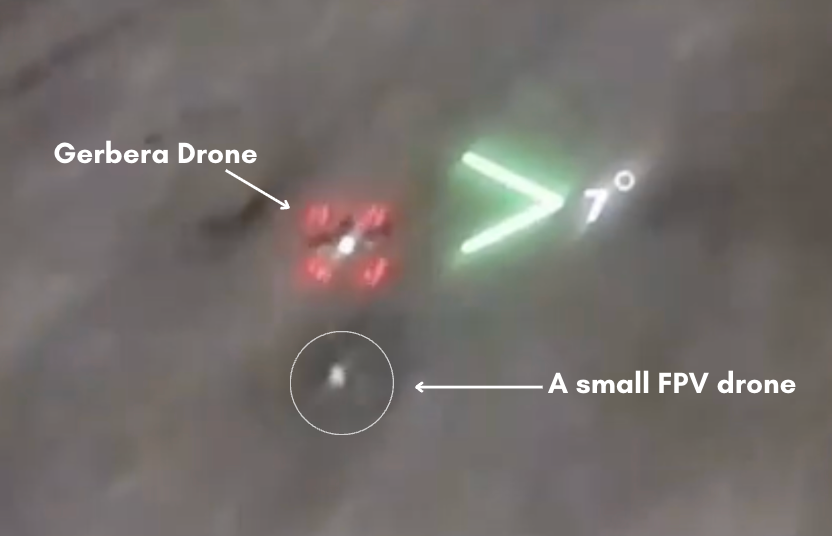
- FPVs on Gerbera Decoys: Ukraine has recently released footage showing an FPV-sized quadcopter trailing a Russian Gerbera drone at a fixed distance. The mothership concept is not new to Gerbera, with Russia appearing to have tested it since the start of this year in at least two incidents recorded in February and May. But this is the first observed instance of an FPV trailing alongside a Gerbera rather than being mounted on it. The change could indicate that Russia is experimenting with different mission formations or assigning more distinct roles to each platform.
- Gerans with Larger EW Stack: Ukraine recently recovered a Russian Geran-2 UAV modified to accommodate a larger 32-element CRPA satellite-navigation antenna. Previous Geran variants were observed using 16-element antennas, indicating that Russia is likely prioritising navigation resilience as a key component of its drone strike stack. However, a larger antenna array does not automatically provide immunity against real-world jamming. Performance still depends on array geometry, signal-processing capabilities, operating frequencies, signal strength, and integration with the drone’s inertial-navigation system. The trade-offs also include increased space requirements, additional weight, higher power consumption, and greater cost associated with the antenna.
- Armed Decoys: Russian soldiers have recovered an armed variant of a Ukrainian fixed-wing decoy UAV referred locally as ‘Maya.’ The new variant has a simple design, featuring a broad wing, twin tail booms, a small piston engine and a pusher propeller. Earlier Maya airframes imitated more valuable long-range strike drones to force Russian air defences to reveal their positions or expend ammunition. But more recent intercepted examples have carried warheads of around 5 kg, with one fitted with a Starlink terminal. Russian Telegram channels are also claiming that an increasing number of Ukrainian decoys are now being armed, most likely to encourage the use of expensive interceptors.
What We're Reading
- US LNG Facility Struck by Drone; US Retaliates: A drone strike on US-owned LNG infrastructure in Egypt, triggering fires and US counter-strikes against Iranian targets, marks the first time drone warfare has directly hit American civilian energy infrastructure. (Yonhap)
- Romania Expels Russian Diplomat After Drone Incursions: Romania's expulsion of a Russian embassy employee following repeated drone incursions into its airspace is the first NATO member to respond to Russian drone violations with a diplomatic rather than purely military measure. (Yonhap)
- Telefónica Explores Small AI Models for Military Drones: Telefónica's development of Small Language Models for autonomous drone operations signals that the compute requirements for battlefield AI are falling fast enough that a telecommunications company is now a credible entrant in the military autonomy market. (El Economista)
- Israeli Firms Combine AI, Net to Counter Drones: Axon Vision and ParaZero's integration of AI detection and net interception into a single counter-UAS system addresses the gap between identifying a drone and stopping it without kinetic collateral damage, a problem that has made urban C-UAS one of the field's hardest unsolved challenges. (Defence Blog)
- Latvia Prepares for Drone Incursions, Automates Defense: Latvia's integration of interceptor drones and advanced radar software to automate eastern border defense is the most explicit acknowledgment by a NATO frontline state that drone incursions are now frequent enough to require a machine-speed response rather than a human one. (TV Net)
- Morocco Buys Dutch Drone Boats for Naval Defense: Morocco's acquisition of two Dutch unmanned surface vessels for anti-submarine warfare and mine countermeasures makes it one of the first African states to field autonomous naval platforms, extending the USV proliferation that began with the Ukraine war into a theater where no peer conflict is driving demand. (The Defense Post)
- UAV Navigation Evolves VECTOR for USVs: UAV Navigation's release of VECTOR 9.2 with enhanced autonomous USV interoperability and third-party AI integration reflects the broader convergence of air and sea autonomy onto shared software stacks, reducing the engineering cost of multi-domain operations for any operator already running the platform. (Defensa)
- US Bans Foreign Humanoid Robots for Security: The FCC banned imports of foreign-made humanoid and quadruped robots, citing national security and supply chain risks. This extends the logic of the Huawei and DJI restrictions to the next hardware category before a single foreign-made humanoid has been deployed in a sensitive US environment, although there is still no credible replacement for the Chinese supply chain. (AP)
- US Army Tests Missile-Armed Drone with Autonomous Targeting: The Army's successful test of its Long-Range Precision Munition, using networked drones for autonomous target identification and strike, is the first confirmed US demonstration of a fully autonomous kill chain from sensor to shooter, removing the human decision point that US doctrine had required. (Defence Blog)


