


Top Headlines:
- China is moving beyond massed drones toward 'intelligent' heterogeneous swarms that can coordinate disparate platform types across air, land and maritime domains.
- The WZ-X points to a Chinese priority on endurance and persistent surveillance, with its unusually large flying-wing design optimized for long-range operations.
- Chinese J-20 fighter jet designers signal the emergence of large-scale drone wingman squads for the next-generation jets. The idea is to make into command nodes for large autonomous drone formations, shifting combat aircraft toward system-level control.
- Recent international defense exercises, particularly the Russia-Mongolia-China bilateral exercise and the China-Laos 'Peace Train', suggest these events are now testbeds for unmanned interoperability, linking drones, robots and conventional forces across complex missions.
- Emerging Chinese drone research papers and patents signal a shift in priorities from basic autonomy toward persistence, fault tolerance and self-reorganization. There is a clear push for systems that can keep operating after disruption.
- Shenzhen’s dense “1-kilometer” supply chain could give Chinese drone developers a major iteration advantage, compressing the path from component sourcing to field-ready prototypes.
Chinese Military & Capability Developments
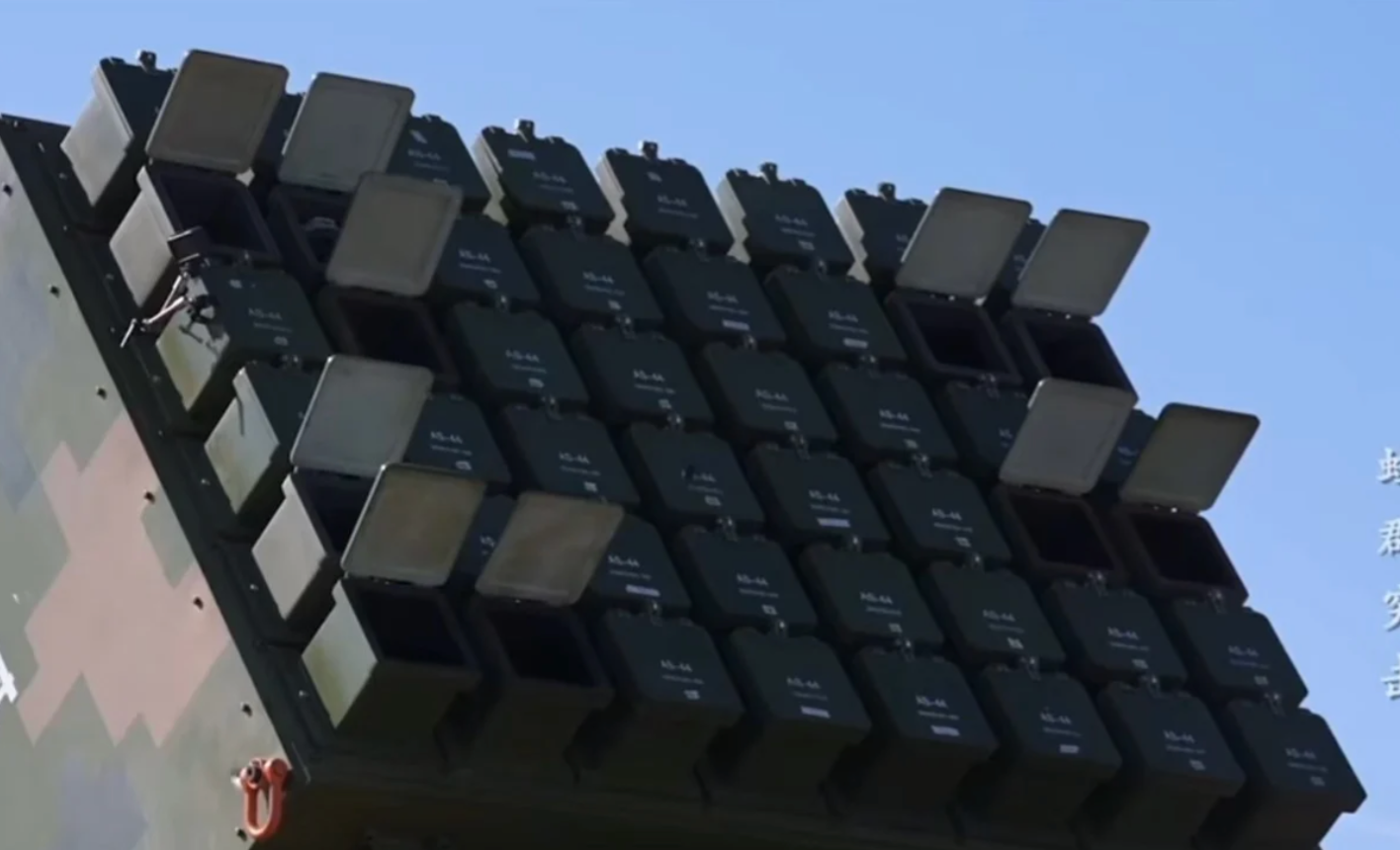
China is testing heterogeneous unmanned systems that connect air, land and maritime platforms into a single combat network. China’s Electronic Technology Group Corporation (CETC) describes mature formations of similar drones as the foundation for networks that can then link different cross-domain drones.
These drones will be capable of reconfiguring themselves, closing gaps after individual platform losses and continuing to operate during communications disruption and heavy electromagnetic interference.


