


Welcome to this week’s Brief, our analysis of the most consequential developments in unmanned systems and drone warfare. Each week we track rapidly accelerating battlefield innovations, emerging doctrine, and the technologies reshaping how states and non-state actors deploy unmanned systems.
Have intelligence requirements, developments we should investigate, or perspectives to share? Contact us at info@dronesense.ai.
Deep Dive: Ukraine's New FPVs Will Now Hunt the Jammers
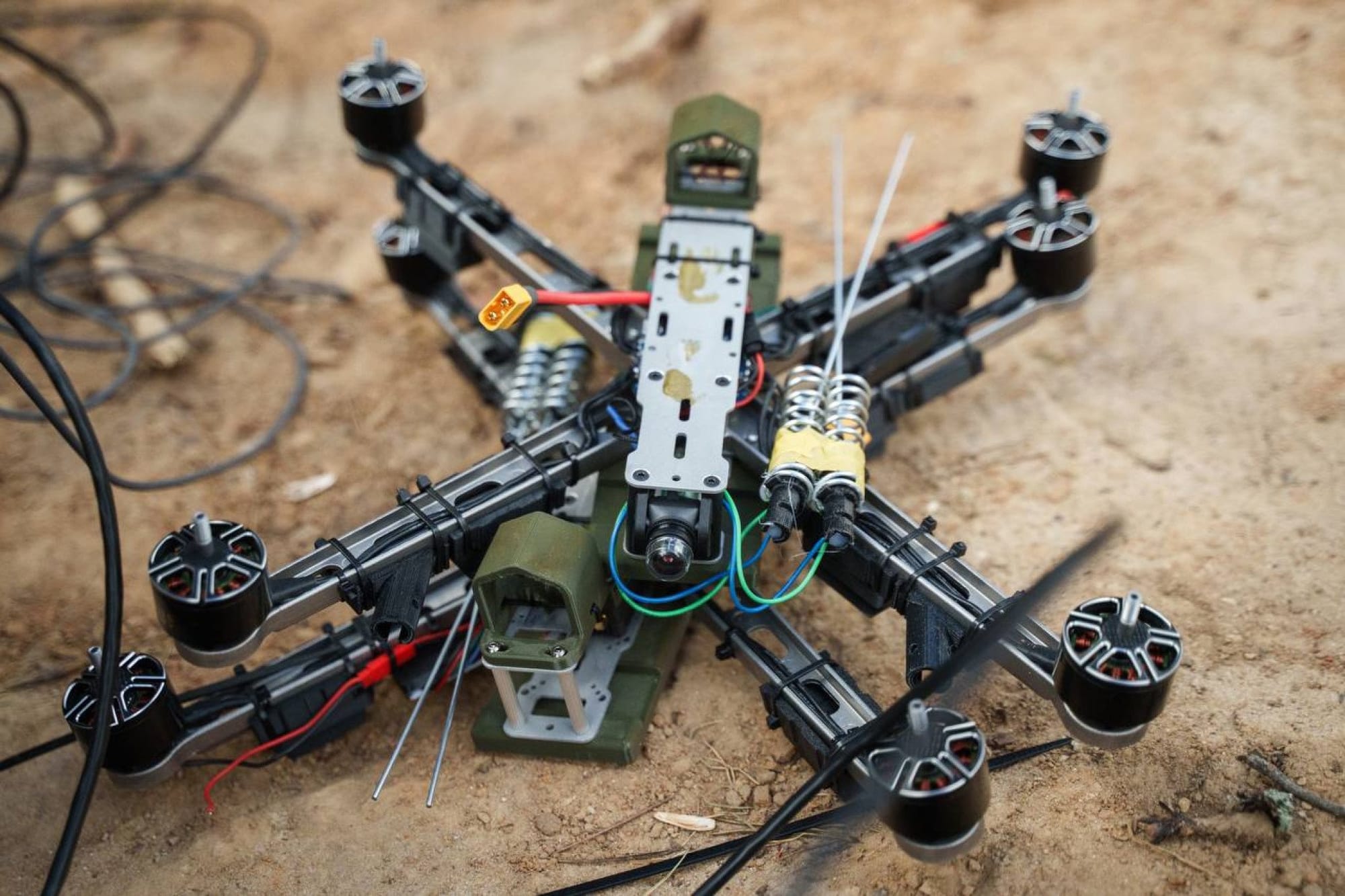
Ukraine has introduced a new class of FPV strike drones to address two problems that have constrained its battlefield position until now: the mid-strike gap and Russia’s evolving EW tactics. The Russian EW systems and logistics hubs, which typically sit 15 to 20km behind the frontline, are often beyond the operational reach of a standard FPV drone (5-10km). Overcoming this limitation, the new platforms are designed to fly up to 25km under various EW jamming conditions that Ukrainian soldiers regularly encounter in the conflict.
This extended range effectively puts Russian EW nodes within strike distance of frontline units. Any damage to these nodes threatens to degrade jamming coverage across Ukraine's entire drone fleet simultaneously, impacting Russia’s ability to halt incoming Ukrainian long-range drones. The strategic suppression of EW architecture appears to be the most operationally significant mission this new segment of FPVs can unlock, directly closing Ukraine's mid-range strike gap.
Recent experiments by Ukraine suggest that mothership tactics will likely scale considerably once these longer-range FPVs reach the front. Deploying 25km EW-resistant FPVs from a carrier platform pushes the combined strike reach well past 50km, extending the traditional kill-zone. This is reflected in Ukraine’s goal to cover the 100-150km zone from the borders with short-range strike drones within the next 1 or 2 months.
It is further possible that some of these drones may carry built-in Starlink terminals or alternative satellite communication technologies rather than standard RF antennas, which would likely render Russian ground-based jamming ineffective at depths. In line with its past behavior, Russia will most likely replicate these new FPVs to create its own alternatives. A major challenge for it lies in accelerating the deployment of domestic alternatives to Starlink connectivity, such as Sfera broadband constellation and Gonets communications network. Both programs, however, have suffered chronic funding delays, but battlefield necessity will likely compress those development timelines considerably.
Supply chain bottlenecks are the most immediate risk to scaling production of these FPVs to meet actual wartime needs. Long-range flight profiles often demand larger battery packs sourced primarily from Chinese and South Korean manufacturers. EW-resistant communication modules, from frequency-hopping radios to satellite terminals, carry few qualified suppliers outside those geographies. Although Ukraine's domestic manufacturing push covers airframe production, it leaves power systems and communication hardware as exposed dependencies. Vendors entering this supply chain should expect demand concentration, compressed qualification timelines, and sustained price pressure.
The arrival of longer-range wireless FPVs will likely push fiber-optic drones into a narrower but durable role. Fiber-optic systems deliver unjammable precision for single high-value strikes, and that advantage persists regardless of wireless range improvements. Both classes will likely operate together in coordinated packages against layered Russian defenses, making interoperability, integration and sequencing among platforms more crucial for complex mission success.
China Watch: Drone Sales Ban and Stealth HALE Platforms
- Under the new Chinese drone rules that took effect on 1st May, individuals in Beijing can no longer purchase or sell drones due to security reasons. The ban functions in parallel with a mandatory registration scheme, as China bolsters its low-altitude airspace security against drone threats. The downstream implementation of these rules, however, will be difficult. Even if drone sales are restricted in Beijing, it remains unclear how authorities would prevent individuals from purchasing drones elsewhere and bringing them into the capital.
- Several Chinese e-commerce platforms, including Alibaba Group Holding’s Taobao, and physical retailers like DJI, cleared out their inventories in the weeks leading up to the ban. Heightened scrutiny of civilian drone use within China risks compounding the revenue losses Chinese drone manufacturers have already faced amid tightening regulations in Western markets. Alternatively, this will likely induce companies to reorient their attention to markets with relatively underdeveloped or freer legal frameworks.
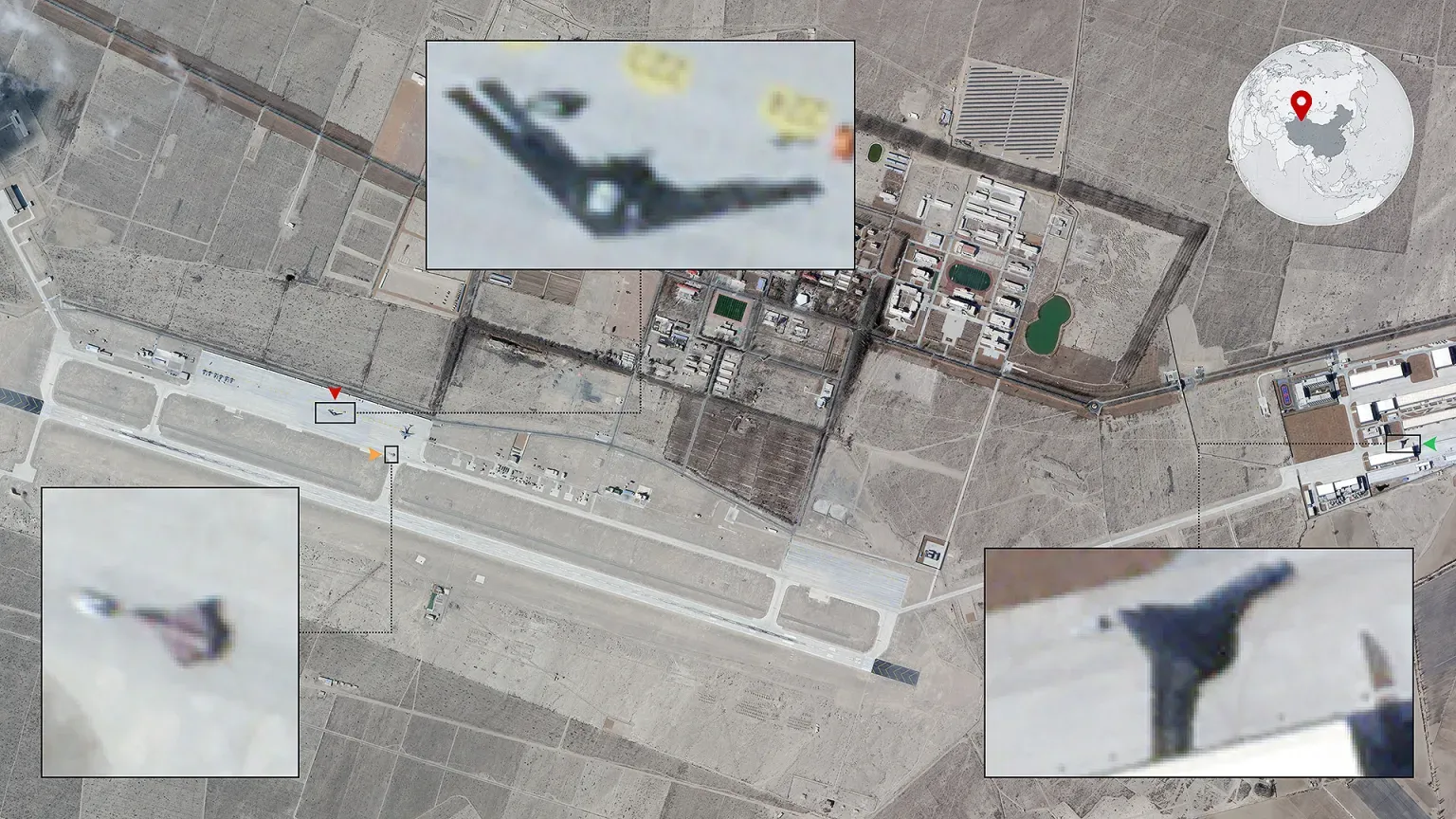
- In another development, China’s two massive stealthy high-altitude, long-endurance (HALE) drones were spotted for the first time together outside their hangars at the Malan airfield. One of them, WZ-X, has a wingspan that rivals the width of a B-2 Spirit stealth bomber. The other drone features a cranked-kite design suitable for ISR missions at extended range. Both drones likely have long-range heavy combat capabilities with multi-role flexibility and reflect Beijing’s growing efforts to achieve advanced Collaborative Combat Aircraft (CCA) capabilities.
On Our Radar:
Fiber-Optic Drone Tactics Spread from Ukraine to Hezbollah and the Sahel
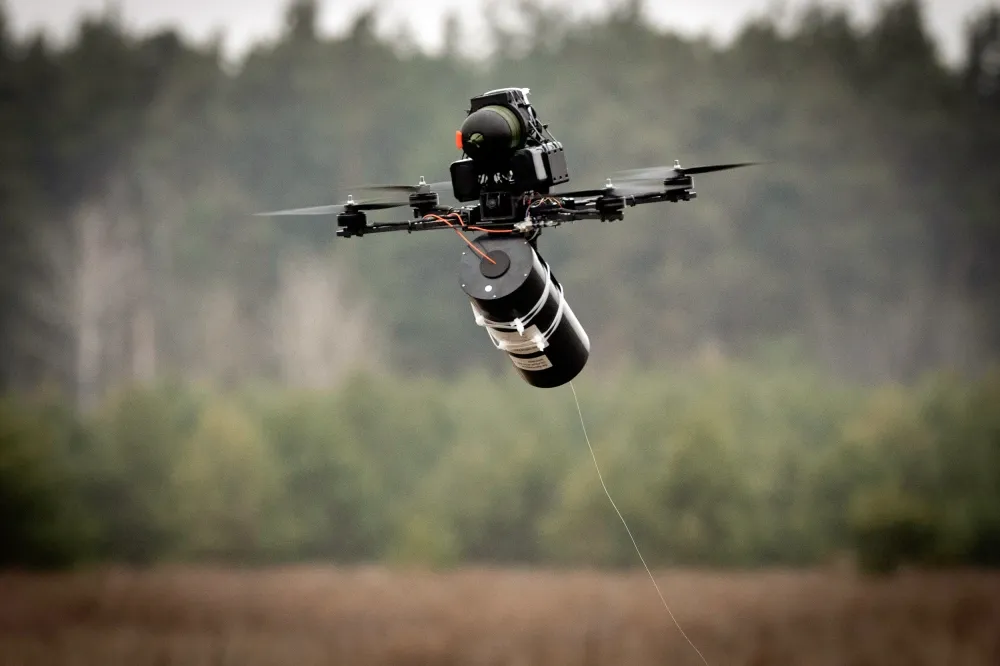
Hezbollah has begun deploying fiber-optic guided drones against Israeli forces in southern Lebanon, while insurgent groups in Mali independently adopted the same technology within the same week. Both trace directly to tactics pioneered in Ukraine, confirming that wire-guided, jam-resistant systems are no longer confined to peer-state conflicts. The physical cable eliminates the RF attack surface entirely, forcing defenders to abandon electronic countermeasures for kinetic interception alone, a far harder problem to scale. (ADF)
DOD Cascades Autonomous Systems Across Every Operational Level
This week the Pentagon announced a new sub-unified command for autonomous warfare, SOCOM embedded AI decision support into its special operations architecture, the Army tested expeditionary 3D printing alongside drones at Balikatan, and the Navy advanced unmanned surface vessels for contested logistics nodes. Each initiative addresses a different operational problem, but together they indicate the Pentagon is restructuring force design around autonomous systems rather than bolting them onto existing formations. One area that's seeing early emphasis: contested logistics. Both the Balikatan exercises this past week and new Navy's USV procurement efforts are direct responses to the vulnerability of extended supply chains in a potential Indo-Pacific conflict. (DefenseScoop) (Nextgov) (Defense News) (Janes)
India and Taiwan Export Surges Suggest Emerging Non-Aligned Drone Supply Chain
India is projecting a major export surge following combat validation of its systems in the 2025 Pakistan conflict, while Taiwan's Q1 drone exports have already exceeded last year's full-year total on the back of AI imaging and flight control investment. Both are filling the supply gap created by Western restrictions on Chinese-origin hardware: India targeting Global South markets where Turkish and Chinese platforms have dominated, Taiwan positioning its AI components as critical inputs for US and allied manufacturers. Combat validation is the key differentiator for India, shifting its platforms from untested alternatives to proven systems in buyers' assessments. (IDRW) (Focus Taiwan)
Iranian Drone Strikes Force Silicon Valley to Halt Middle East AI Investments
Iranian strikes on regional data centers have forced Silicon Valley firms to pause multi-billion dollar AI and cloud infrastructure investments in the Middle East, in the first time drones have disrupted a major civilian technology investment cycle. Data centers vulnerability to low-cost strikes creates a target class at the intersection of commercial and national security interests. The episode signals to adversaries that attacking AI infrastructure may degrade a competitor's long-term economic development and military edge more cost-effectively than targeting weapons systems. (Ars Technica)
Russia Is Shooting Down Its Own Drones and Claiming Them as Ukrainian Trophies
Russian mobile air defense units are increasingly shooting down their own UAVs due to poor coordination, then claiming the wreckage as Ukrainian to collect performance bonuses. The incentive structure rewards confirmed kills regardless of origin, creating perverse pressure to misidentify friendly platforms and corrupting the damage assessments commanders rely on to evaluate their own air defenses. The pattern reflects a broader tension in Russia's rapid drone scaling: the pace of deployment has outrun the command-and-control architecture needed to manage a dense, multi-unit unmanned environment without fratricide. As the fleet expands, the deconfliction problem will compound before it is resolved. (Yahoo News)
Hardware Innovations and Tactical Adaptations
- Mesh radio modems for long-range strikes: Russia has successfully used mesh radio modems to enable its long-range strike UAVs, linked to other relay drones, to be remotely controlled by operators. By integrating high-distribution communication networks on its strike platforms, which are optimal for sustaining C2 links under strong EW conditions, Russia likely aims to bolster its capability to strike deeper into Ukraine remotely. Success in maintaining the communication link with drones for long-range strikes will directly contribute to developing Russia’s capability for adopting mothership tactics.
- 360° Visibility: Multiple Russian Geran-2 strike UAVs were found retrofitted with secondary cameras to expand multi-angle visibility of incoming Ukrainian interceptor drones and ensure timely countermoves against high-speed FPVs. Anecdotal evidence indicates that Geran-2 UAVs are manoeuvring more and adopting evasive tactics when approached, likely due to the amplified visibility of the intercepting platform.
- UGV Drilling: Russia is equipping its courier UGVs with small drilling systems to create holes in the ground, where support pillars are subsequently placed with protective netting strung between them to build an anti-drone corridor. As Ukraine ramps up attacks on Russian logistical lines and the Russian army struggles with high casualty rates, offloading highly dangerous tasks to ground drones indicates a strategic pivot by Russia to preserve manpower for more critical missions.
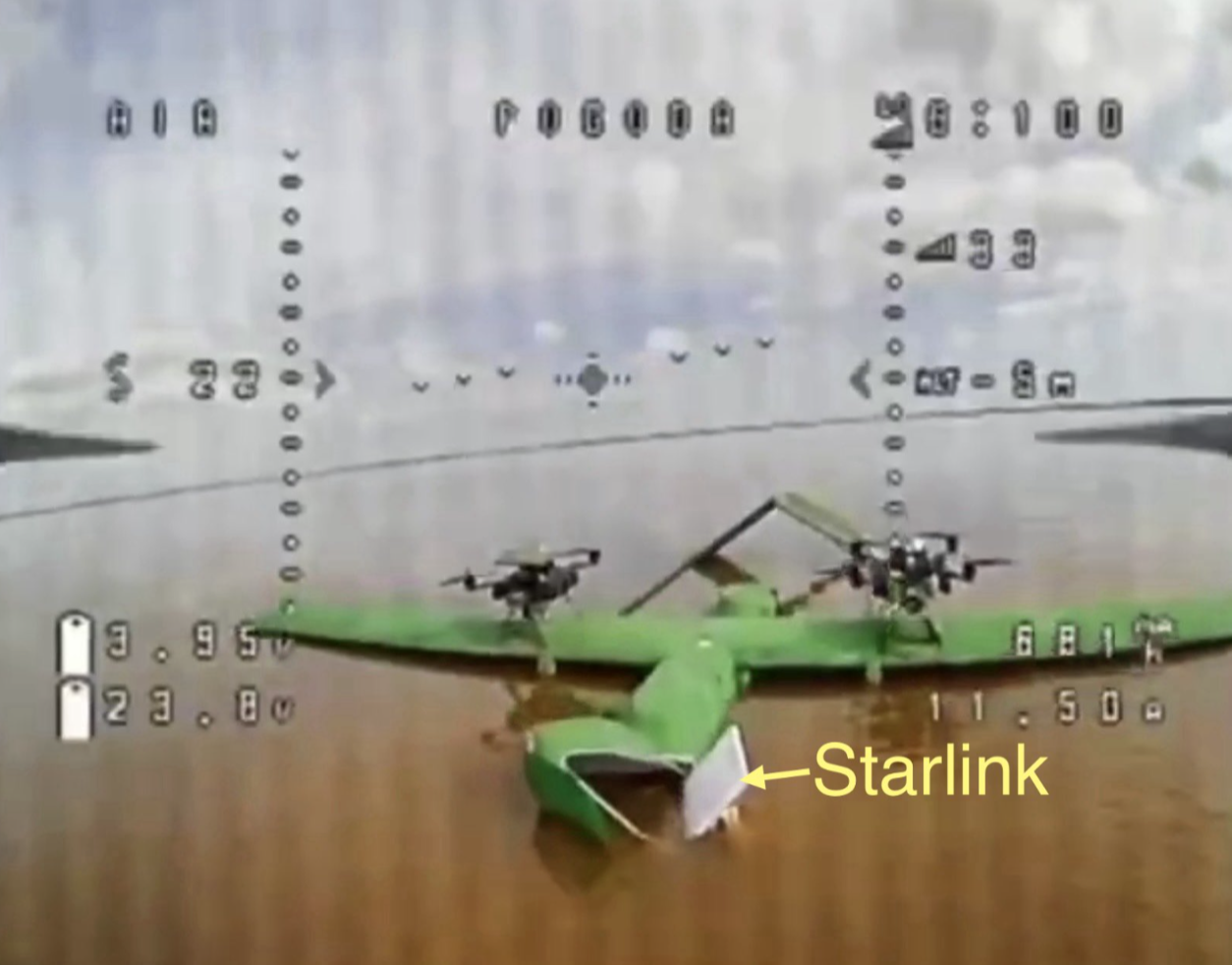
- FP-1/2 Mothership Configuration: A downed Ukrainian long-range FP-1/2 drone was captured with two small FPVs mounted on its wingspan. One of the smaller drones appears to be fitted with a flat antenna resembling a compact Starlink terminal, suggesting that the FPV drone might have operated with direct satellite communication rather than relying on the FP 1/2 as a signal relay. The configuration signals a potential attempt to conduct a multilayered strike mission deep inside Russian territories. This also partially explains why the recovered drone was painted green, as camouflage experiments increase with advances in visual detection systems.
What We're Reading
- Report Details Russia's Expanding Combat Robot Fleet: A new report identifying 32 distinct Russian ground robotic systems reveals that Moscow's unsanctioned combat robotics sector is scaling faster than Western intelligence assessments have publicly acknowledged. (Defence Blog)
- Ukraine Deploys Autonomous Robots Amid Manpower Shortage: Ukraine's accelerating deployment of autonomous drones and ground robots to compensate for manpower shortages is progressively eroding human-in-the-loop. (The Cipher Brief)
- Varjo Showcases C-UAS Simulator: Varjo Technologies partnered with AVS to develop a mixed-reality C-UAS shotgun simulator, providing realistic FPV drone threat training without the cost or risk of live-fire exercises. (Janes)
- Poland Tests Norwegian Acoustic Drone Detector: Poland is evaluating Norway's Discovair G2+ acoustic drone detection system as part of its Eastern Shield defense initiative, adding a passive, non-emitting detection layer to its border air picture. (Defence Blog)
- Ukraine Counters Russian Shahed Drones: Ukraine is deploying specialized interceptor drone teams and developing automated guidance systems and jet-powered interceptors to neutralize the persistent threat posed by Russian Shahed-136 loitering munitions. (Infobae)
- U.S. Army tests Askari's hand-launched drone interceptor: The testing of Askari's hand-launched interceptor reflects the Army's push to equip dismounted troops with immediate, organic defenses against tactical drone threats. (Defence Blog)
- Police turn to indoor drones: The deployment of indoor-specific drones allows tactical teams to safely clear buildings and assess threats in confined spaces before committing personnel. (FOX19)


