


Welcome to this week’s Brief, our analysis of the most consequential developments in unmanned systems and drone warfare. Each week we track rapidly accelerating battlefield innovations, emerging doctrine, and the technologies reshaping how states and non-state actors deploy unmanned systems.
Have intelligence requirements, developments we should investigate, or perspectives to share? Contact us at info@dronesense.ai.
Deep Dive: Why is the Gulf still failing to stop Iranian Drones?
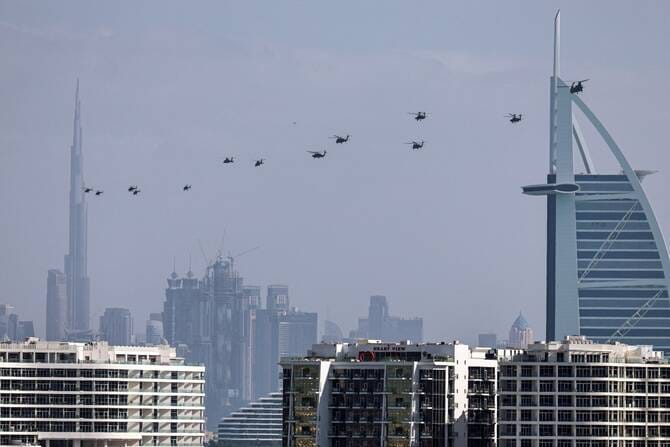
Iran unveiled its first Shahed drone in 2012. The Houthis used similar drones to strike Aramco facilities in Saudi Arabia in 2019. That was 7 years ago, which is exactly the time the Gulf states had to update their procurement logic to reflect the new threat environment and operational realities of the region. That clearly did not happen. Traditional air defenses in the Middle East were not recalibrated to face drone threats, even as Iran scaled its assembly lines and shipped UAVs to its proxies and partners.
The core failure sits in adaptation. Gulf militaries chose to absorb the 2019 warning and kept investing in a force design shaped for higher-end air warfare. Even as drone attacks in the Russia-Ukraine conflict exposed a different problem set: persistent pressure, fixed targets, and repeated low-cost raids that reward endurance and volume, the Gulf states found it easier to maintain the status quo of letting external partners (who may lack experience in drone combat themselves) dictate defense strategies.
The context changed, but the strategies remained the same. This mismatch produced an expensive defense posture around a low-cost offense. Patriot and THAAD batteries can defeat incoming threats at the point of interception, yet each shot consumes scarce inventory, tightening the replenishment burden. With drones, Iran secured not only a favorable cost-exchange ratio but also a favorable production-exchange ratio.
The issue of industrial tempo - the rate at which platforms can be replaced under combat conditions - is deeper. A system that can be spent in days and rebuilt in years carries little endurance in wars of attrition. The Gulf’s defenses assumed that wars would be decisive, not messy and long like the one ongoing for the past 3 months.
The defense architecture is also too top-heavy. Gulf investment has concentrated on the most expensive layer of the stack, leaving measures to carry too little of the load. Physical protection, electronic disruption, gun systems, helicopters, and interceptor drones likely need to absorb a larger share of the workload going forward.
Iran thoroughly exploited this imbalance with mixed missile & drone campaigns. The initial strikes on high-value radars and sensors served 2 purposes: (a) they degraded the detection architecture, increasing the likelihood of penetration by drones/missiles, (b) they drove up the cost of each defensive engagement by raising the pressure on cueing networks. As radar coverage thins, every incoming threat tends to draw a larger response.
Doctrinal inertia likely underpins many of these structural problems and may ultimately shape the current counter-UAS procurement drive underway across the Gulf. For decades, procurement favored systems associated with conventional deterrence and close alignment with external security partners. Money enabled the region to acquire advanced capabilities off-the-shelf, which reduced the pressure to develop the institutional and technical expertise required to build tailored solutions.
As defense companies rush to market new CUAS technologies, the risk of prioritizing high-tech platforms over integrated architectures persists. Ultimately, effective drone defense will depend less on high-performing discrete platforms and more on the ability to integrate them into a coherent architecture. And that kind of adaptation requires indigenous expertise and a hands-on approach to capability development
The more difficult challenge will be resisting the instinct for immediate fixes and committing to the slower process of building indigenous architectures optimized for the Gulf’s operational realities. Although painful in the short term, it would provide the Gulf with a greater capacity to adapt and recalibrate as drone threats continue to evolve.
China Watch: Killer Algorithms & Swarm Attacks
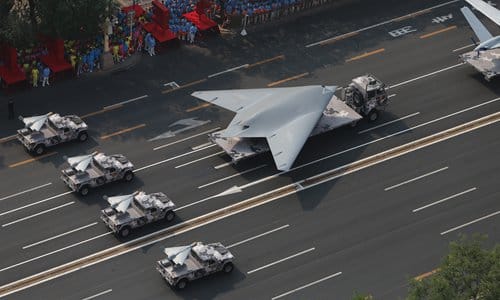
- Chinese scientists have developed a new AI algorithm, Heterogeneous Graph Spatio-Temporal Reasoning (HG-STR), designed to enable drone swarms to search and strike targets in jamming environments. The system maps every object as a node in a heterogeneous graph, with each drone carrying information on its position, speed, remaining ammunition, and previous task.
- The speed and quality of decision-making are optimized by preserving context windows through a compressed memory system. During the trial, a swarm of 10 drones flying over a 100 km × 100 km area decided within 6.6 milliseconds to eliminate a target. But technical challenges remain. The algorithm relies on partial perception and historical data to inform decisions, making performance vulnerable to stale, corrupted, or otherwise degraded information.
- Real-world combat conditions will likely add latency to the compute. The feasibility of this technology outside of a bounded search-and-destroy environment, where targets move, emit decoys, hide in clutter, and fight back with electronic warfare, will likely be very different.
- This week, Beijing also unveiled a new low-cost interceptor drone based on the Russian ‘Yolka’ design, while also testing mounting shotguns on its kamikaze drones during tactical drills.
On Our Radar:
AUKUS Formalizes Undersea Drone Alliance
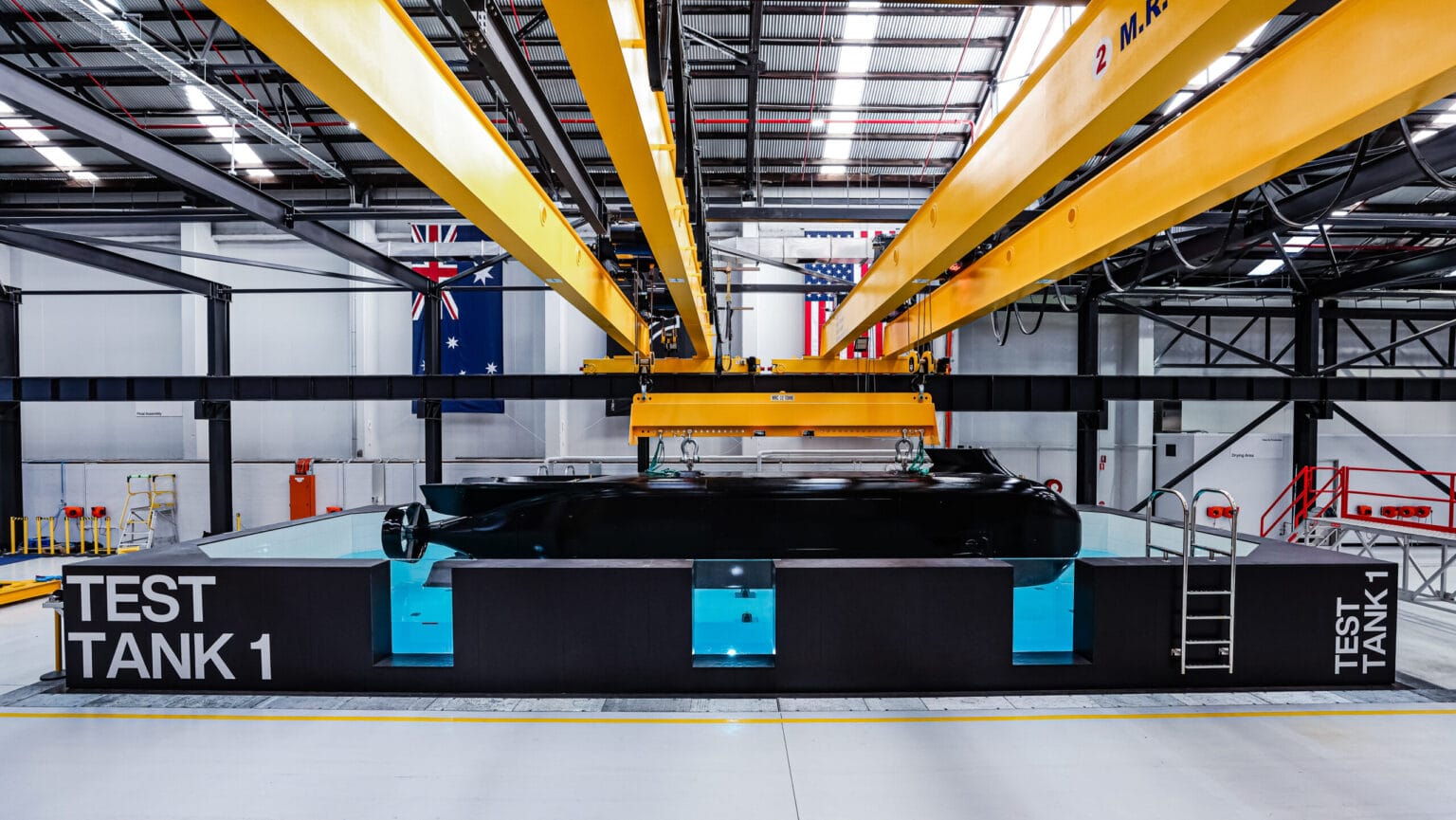
The US, UK, and Australia signed a formal UUV development and procurement agreement under AUKUS Pillar Two this week, targeting operational capability by 2027 – a timeline that compresses what alliance procurement normally takes a decade to produce. The pace reflects a judgment that the Chinese spy UUV and USV incidents documented across the Indo-Pacific represent an active threat rather than an anticipated one, and that a monitoring posture is no longer sufficient. An autonomous undersea surveillance layer operational by 2027 would allow AUKUS to track Chinese submarine movements in the Taiwan approaches before any surface conflict begins, converting a Chinese information advantage that currently shapes blockade planning into a known and counterable variable. (Breaking Defense)
Drones Are Rewriting the Intelligence Environment
Evolve Dynamics this week announced integration of a sub-4 kg RF sensor capable of detecting, classifying, and geolocating all high-priority emitters in electromagnetically complex conditions into its Wolfe-NATO UAV platform, while Ukrainian units are now receiving near-real-time commercial satellite imagery directly on soldiers' phones to cue strikes on targets that visual reconnaissance cannot penetrate through tree cover. In both cases the sensor and the satellite already work; what the systems compress is the path from raw intelligence to an actionable targeting decision, removing the processing and routing steps that slow a human-mediated chain. (Janes, WSJ)
Militaries Struggle to Digest Constant Tactical Change
Ukrainian drone units bury command centers after every relocation because a fixed position is a target within hours; the sniper, a role built entirely on concealment and patience, has been rendered marginal by persistent drone surveillance that removes both. Military institutions are designed to absorb a new capability once, standardize around it, and train to that standard – a cycle measured in years – while the tactical environment drone warfare creates updates in weeks, meaning the gap between current doctrine and current battlefield is structural, not a training lag that more resources will close. (Business Insider, Ryan McBeth)
Drones Enable Extreme Asymmetry
A fiber-optic guided drone struck the machine hall of Zaporizhzhia Nuclear Power Plant's energy block No. 6 this week, the first confirmed jam-resistant precision strike on nuclear infrastructure, and the guidance wire that made it possible costs less than a hundred dollars. That cost point is not incidental: the same commercially derived FPV technology is now documented in the hands of domestic extremists across multiple Western countries, with no meaningful technical barrier separating the actor who struck a nuclear plant from the actor who could. Security architectures that maintain separate detection and response tiers for state and sub-state threats are built on a distinction the technology no longer reliably supports. (RIA Novosti, Lowy Institute)
Autonomy Climbs the Kill Chain
Ukrainian Hornet loitering munitions struck Russian logistics nodes in Crimea this week without direct human targeting input, while an Israeli official publicly described the next confrontation with Iran as AI-vs-AI swarm combat. At the volume and tempo both conflicts now operate at, the engagement window closes before a human confirmation step can complete – a constraint both sides have recognized and acted on independently, without waiting for doctrine to catch up. The legal and rules-of-engagement frameworks still debating whether to permit autonomous lethal engagement are no longer setting the terms; they are documenting what has already happened. (Maariv, Lenta.ru)
Hardware Innovations and Tactical Adaptations
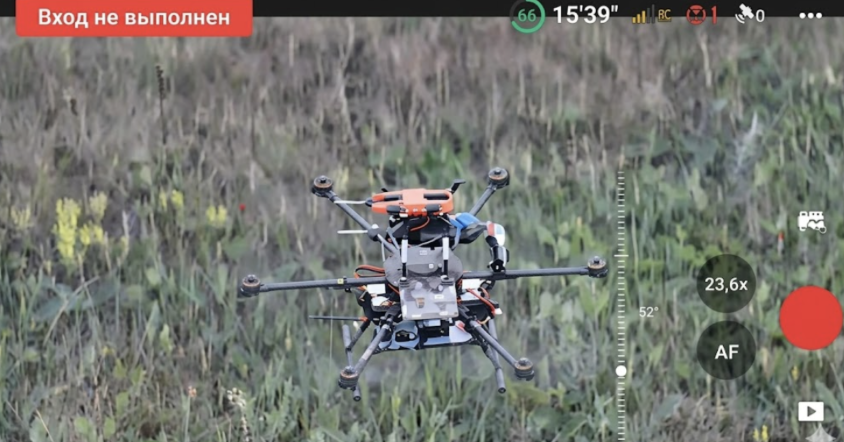
- Jet Drone Swarms: Russia launched its first mass attack this week using jet-powered, high-speed Geran-3 drones, signalling its intention to use more jet drones for long-range attacks. The key reason for this model shift for one-way-attack missions is the higher interceptor survivability of Geran-3 drones. Russia is also reportedly integrating automated manuever capabilities into its pre-programmed long-range UAVs using onboard sensors capable of detecting the physical appearance of an interceptor.
- Fiber-optic Stacking: Ukrainian soldiers are reportedly mounting their high-value fiber-optic ‘Vampire’ UAVs with smaller fiber-optic kamikaze drones to build an unjammable long-range relay-launch platform. The configuration enables the kamikaze drones to travel 30- 35 km into enemy territory. A standard Starlink terminal is also present, most likely to provide redundancy for the control link in case the fiber-optic is severed.
- Combat Swimmers with FPVs: Russian media claims that naval special forces are now equipped with FPV strike drones to enable combat swimmers from the fleet’s anti-sabotage units to deliver precision strikes against Ukrainian USVs/UUVs and to engage saboteurs at their landing sites. The likely trigger for this upgrade is the persistent Ukrainian cross-domain long-range attacks on Russian naval assets. But such a capability is only effective if enemy drones are detected in time, something Russian forces have struggled to achieve recently.
What We're Reading
- Japan Develops Autonomous UUV for Deep-Sea Rare Earth Extraction: If successful, this program eliminates the Chinese processing chokehold not by finding alternative suppliers but by removing the need for land-based extraction entirely. (Nikkei)
- U.S. AFRICOM Tests CURTAIN CALL Drone Swarms to Defeat Coordinated UAV Attacks: The test shows that the US military has accepted that the only cost-effective answer to a drone swarm is another drone swarm. (Army Recognition)
- Armenia Secretly Purchased Chinese CH-4 Rainbow Drones: The covert acquisition suggests Armenia is building a strike UAV capability it did not want to signal publicly, likely in response to Azerbaijan's demonstrated use of armed drones in the 2020 and 2023 conflicts. (Militaryni)
- Smart Tech Deters Warfare, Increases Damage: Precision drone technology is simultaneously raising the cost of initiating conflict and raising the damage ceiling once it starts, a combination that makes deterrence harder to calculate and escalation harder to control. (Infobae)
- US Military Deploys MADIS Low-Cost Interceptors on JLTVs: Mounting a dedicated kinetic intercept layer on a light tactical vehicle acknowledges that drone threats are now a baseline contact expectation, not a specialized scenario requiring a specialized response. (YNA)
- Russia Aims to Secure Regions from Drones: Russia is deploying AI-powered optical turrets across civilian regions as a substitute for the nationwide interceptor drone network it has not built, a stopgap that protects fixed points but leaves the corridors between them undefended. (MK.ru)
- Russia Deploys Handheld AI Drone Hunter: The Yolka's fire-and-forget design is Russia's first attempt to give individual infantry squads an autonomous kinetic intercept option, but at $500 per unit against a $200 FPV, the cost math only works if the hit rate is high enough to justify the exchange. (Times of India)
- US Strikes Iran Drone Facilities After MQ-1 Downing: The strikes on Iranian radar and drone production sites establish a precedent that the US is willing to hold drone manufacturing infrastructure at risk as a deterrence tool, not just intercept the platforms it produces. (YNA)
- France Creates Dedicated AI Robotics Unit Alongside 15,000-Drone Acquisition: The organizational move matters more than the procurement number – standing up a dedicated AI robotics unit signals that France is redesigning command structure around unmanned systems, not adding drones to an existing one. (Le Figaro)
- South Korea's 500,000 Drone Warrior Initiative Draws Criticism: The absence of published doctrine for how that many operators would be organized, tasked, or sustained in conflict suggests the program is a procurement signal rather than an operational concept. (Sedaily)


