


Welcome to this week’s Brief, our analysis of the most consequential developments in unmanned systems and drone warfare. Each week we track rapidly accelerating battlefield innovations, emerging doctrine, and the technologies reshaping how states and non-state actors deploy unmanned systems.
Have intelligence requirements, developments we should investigate, or perspectives to share? Contact us at info@dronesense.ai.

Deep Dive: Are the Houthis Changing their Drone Strike Packages?
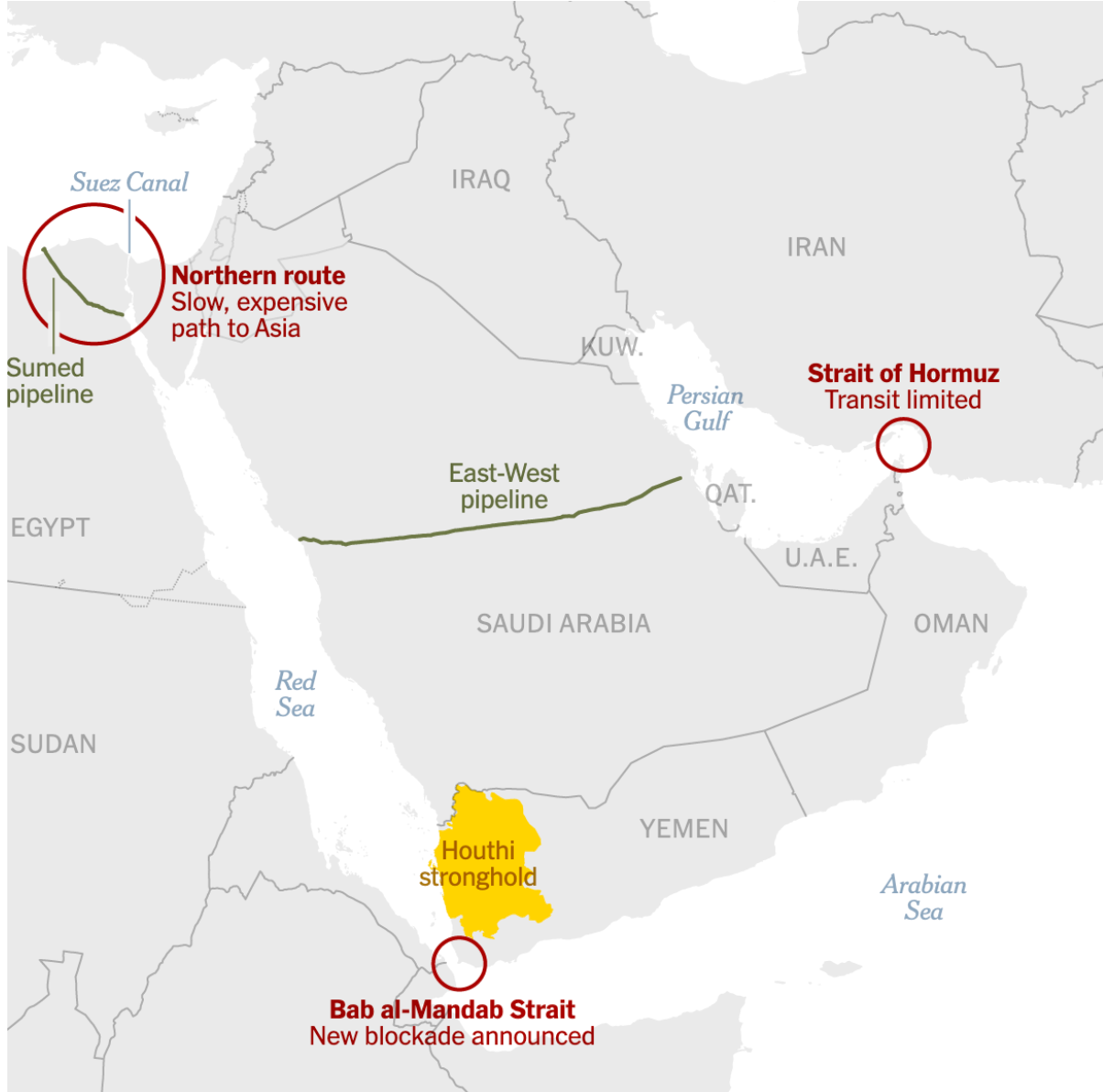
The Houthis entered the Middle East conflict this week with successful strikes on 2 Saudi oil tankers, a critical export terminal and Aramco’s oil facility. Similar to the 2019 and 2024 attacks, their strike package displayed a strategic mix of domestic drones and (cruise & ballistic) missiles to saturate targets’ air defenses and maximize the probability of a hit. But what appears different this time is targeting precision. It is probable that the Houthis are calibrating the ratio of UAVs to missiles in their attack packages or integrating faster, more advanced jet or FPV drones to boost striking accuracy.
This combination of tactical and technical shifts likely stems from the group’s experience using drones against commercial ships, alongside Iran’s own evolution of strike packages across the Gulf. Tehran has demonstrated an ability to adjust its drone and missile mix by introducing jet-powered and higher-payload systems depending on target requirements and resource availability. The interception of a shipment in February 2025 containing DJI FPV drones alongside JetCat P500-PRO-S and P550-PRO-S jet engines also signals that by now Houthi operators could have developed the ability to use real-time video feeds for more precise strikes against point targets.
The prospect of the Houthis integrating jet-powered drones into their assault packages is concerning, given even Ukraine, one of the most experienced actors in drone warfare, continues to struggle against high-speed Russian jet UAVs. Integrating jet engines into their UAV arsenal will essentially allow the Houthis to field drones up to 4x faster than their existing piston-engine models, compressing reaction windows further. This would put Gulf countries and commercial shipping operators in an even more extremely difficult position, as many are still adapting their countermeasures against slower Shahed-type drones.
But whether the Houthis are using faster drones or different ratios, there is likely a time limit to how long this approach can be sustained because both options rely on relatively more expensive kinetic assets. The Houthis remain dependent on foreign suppliers, particularly Iran, to sustain their missile programme. Recent evidence further suggests that North Korean submunitions had been modified for use by the Houthis as payloads in FPV UAVs. This same dependence may extend to more advanced capabilities, such as jet-powered UAVs and FPV drones, which, as seen in Russian models, heavily rely on smuggled components.
On top of this, many of their production and storage facilities have been degraded by on-and-off U.S-led strikes, and with pressure mounting on Iran, sustaining high volumes of these advanced models for consistent precision strikes will be increasingly difficult. If so, these initial strikes could be intended as much for their psychological effect as their military one, signalling that the Houthis can now use drones to strike with greater precision, albeit for a limited period.
The impact of this shift in strategy can already be felt. Risk assessments for Saudi ports have been re-evaluated, with war-risk premiums rising to around 0.75% of a ship’s value, compared to approximately 0.3% before the Houthi blockade announcement. However, most ratings still fail to capture how much more dangerous transit through the region could become if the Houthis redirect greater resources toward expanding their unmanned systems arsenal, particularly after Iran’s successful strikes against advanced Western air defence systems.
Unlike most non-state actors, the Houthis have developed a relatively advanced cross-domain drone arsenal that has already been tested in combat. Their maritime capabilities, much like their UAVs, have evolved through years of iteration, moving from converted patrol boats and fishing skiffs to purpose-built USVs. This gives them a unique advantage: the ability to build on operational experience, integrate new technologies and refine tactics that can then be transferred across Iran’s wider proxy network.
The evolution of Houthi strike packages could provide early indicators of the group embracing combat-proven drone tactics, including fibre-optic-controlled drones, drone-mounted rockets, and cross-domain mothership concepts. Each would build on capabilities they already possess: long-range strike drones, maritime drones, and experience operating under contested conditions.
China Watch: Satellite-proof UAV swarms, Anti-Drone Influence Operation & Scan-fly Clearance Model

- Chinese researchers have published a new vision-based cooperative perception framework, which enables UAV swarms to map disaster sites without GNSS or IMU data, while maintaining localization error to roughly 1.06m even amid heading variations of up to 270 degrees. The system works on an anchor-wingman architecture: each wingman drone runs detection onboard and transmits only compressed feature tensors, 128 KB per aircraft, rather than raw video. Then, a Proj-IoU matching mechanism eliminates more than 50% of overlapping detections between wingmen. The whole pipeline runs at 6.7 frames per second on edge hardware light enough for a small UAV to carry.
- Taiwan this week alleged that Chinese officials colluded with some opposition politicians to derail the island’s expanding drone program. The claims arrive after the KMT and Taiwan People's Party cut NT$470 billion (US$14.57 billion) from a NT$1.25 trillion special defense budget built substantially around drones. Beijing also appear to have separately asked the opposition to open Taiwan's drone sector to Chinese entities, undercutting the island's parallel effort to build a non-Chinese supply chain. If these reports are true, they strongly signal that Taipei's drone build-out is effective enough to induce a dedicated influence operation from China.
For paid subscribers can click here to read our full roundup of Chinese technical developments.
On Our Radar:
Anduril Unveils Flashy "Gunship" Helicopter Strike Drone
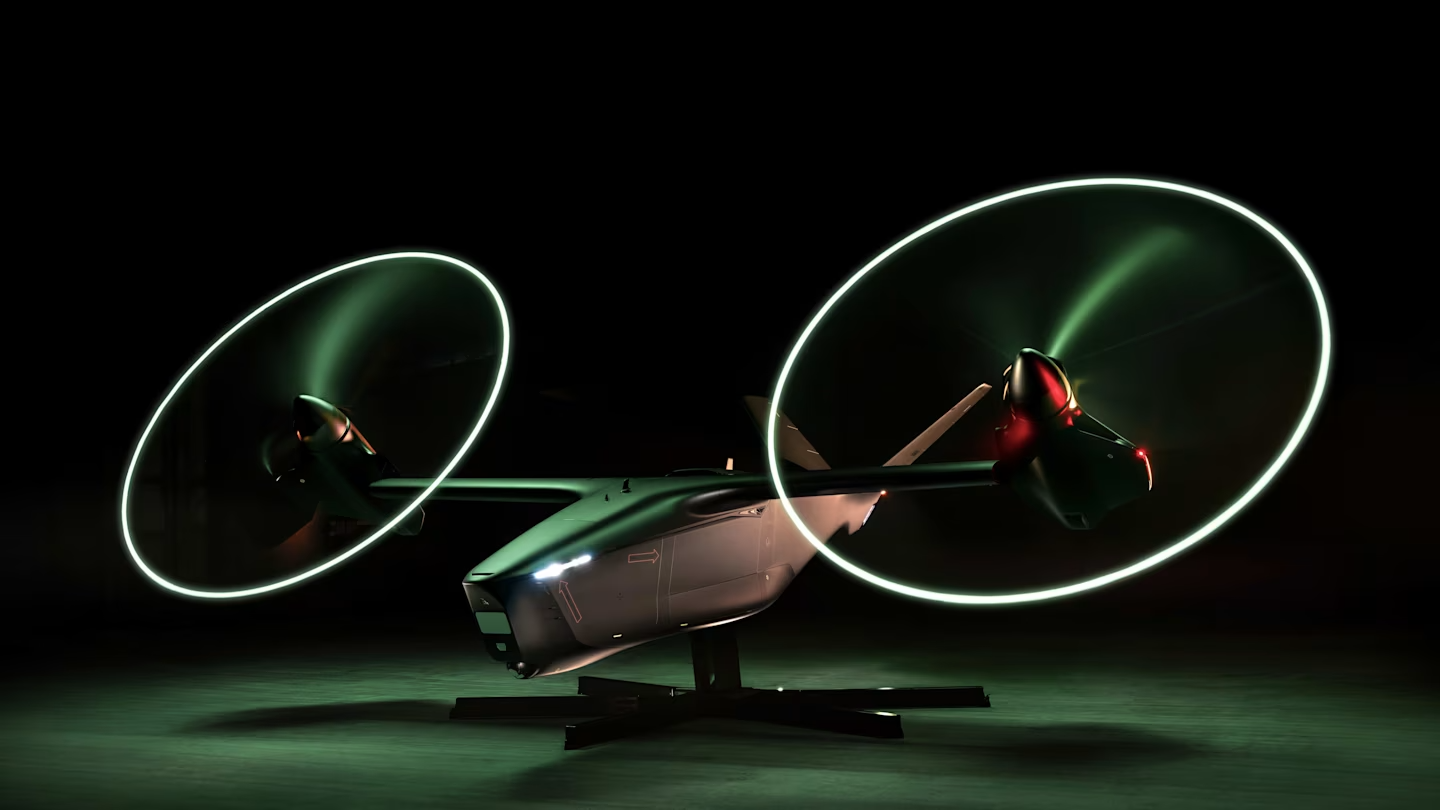
Anduril's Thunder is the first autonomous attack rotorcraft designed to fly as a loyal wingman for manned helicopters, extending a concept that has so far been confined to fixed-wing platforms into the near-surface domain where loitering munitions and cheap air defenses have made crewed rotary operations increasingly untenable. Despite the fact that the "wingman" concept is a western invention more than a battlefield-originated approach, the Thunder has been the most picked up single drone story this quarter. Built with Archer Aviation on a hybrid-electric tiltrotor airframe and powered by Lattice autonomy software, Anduril claims a single Thunder can carry 10 air-to-ground missiles, 16 launched effects, or 76 unguided rockets alongside crewed Apache and Cheyenne II formations, with first flight targeted for 2027. (FT) (Janes) (Defense News)
Ukraine Shakes Up Military Leadership Over Drone Disagreements
Ukraine has become the first country to remove a wartime commander-in-chief over the pace of autonomous systems adoption, with Zelensky firing Gen. Syrskyi following mass protests demanding faster robotic warfare integration and appointing Gen. Drapatyi with an explicit mandate to expand drone deliveries, robotic front-line operations, and asymmetric strikes on Russia's defense industrial base. The reshuffle, triggered by Syrskyi's public conflict with former Defense Minister Fedorov over drone-first doctrine, signals that in Ukraine the political cost of being slow on autonomy now exceeds the political cost of replacing a general mid-war. (The Economist) (NYT) (AP)
NATO Launches $40bn Anti-Drone Buildout for Europe
NATO has formally elevated counter-drone capability to a tier-one Alliance readiness requirement, committing $40 billion over five years under the Drone Edge initiative alongside a NATO-tested procurement marketplace and a fivefold expansion of drone operator training by 2027. NATO's Supply and Procurement Agency simultaneously awarded a contract in the hundreds of millions to procure surveillance drones for Allies, making this the first summit at which the Alliance acted as both buyer and builder of drone infrastructure in the same session. (NATO)
Israel Unveils Counter-Fiber Optic Drone Platform
Fiber-optic-guided FPV drones are immune to jamming, and until now no fielded system addressed them; Axon Vision's ForceField closes that gap using passive detection that requires no signal emissions, meaning it does not betray the position of the unit it protects. Designed for maneuvering forces, ForceField addresses the single most significant gap in current C-UAS architectures as fiber-optic guidance becomes the standard countermeasure to electronic warfare on the Ukraine and Gaza battlefields. (The Defense Post)
Saronic to Start Constructing Dual Use Shipyard in Texas
Less than two months after Saronic's Corsair drone boats conducted the first armed sea drone strike in U.S. military history at Bandar Abbas, the company is breaking ground on Port Alpha, an 800-acre, $3.2 billion shipyard in Brownsville targeting a 2028 opening, transforming from a drone boat startup into a vertically integrated shipbuilder. The yard will build both defense and commercial vessels, a dual-use model that mirrors the industrial logic Anduril and others have used to sustain the unit economics of mass production. (Breaking Defense)
Iran Strikes MQ-9 Reaper Hangar in Kuwait as DC Questions the Program's ROI
The IRGC's destruction of the MQ-9 hangar at Ali Al Salem, following the loss of nearly 30 Reapers across the Iran campaign, turns a procurement debate into an operational verdict, with the $50 million platform being destroyed faster than the arguments for its survival can be made. The strike lands the same week DIU issued its Massed Modular Aircraft notice calling for a replacement designed "with the expectation that some will be lost in combat," suggesting the Pentagon has already internalized the answer. (Iran International)
Hardware Innovations and Tactical Adaptations
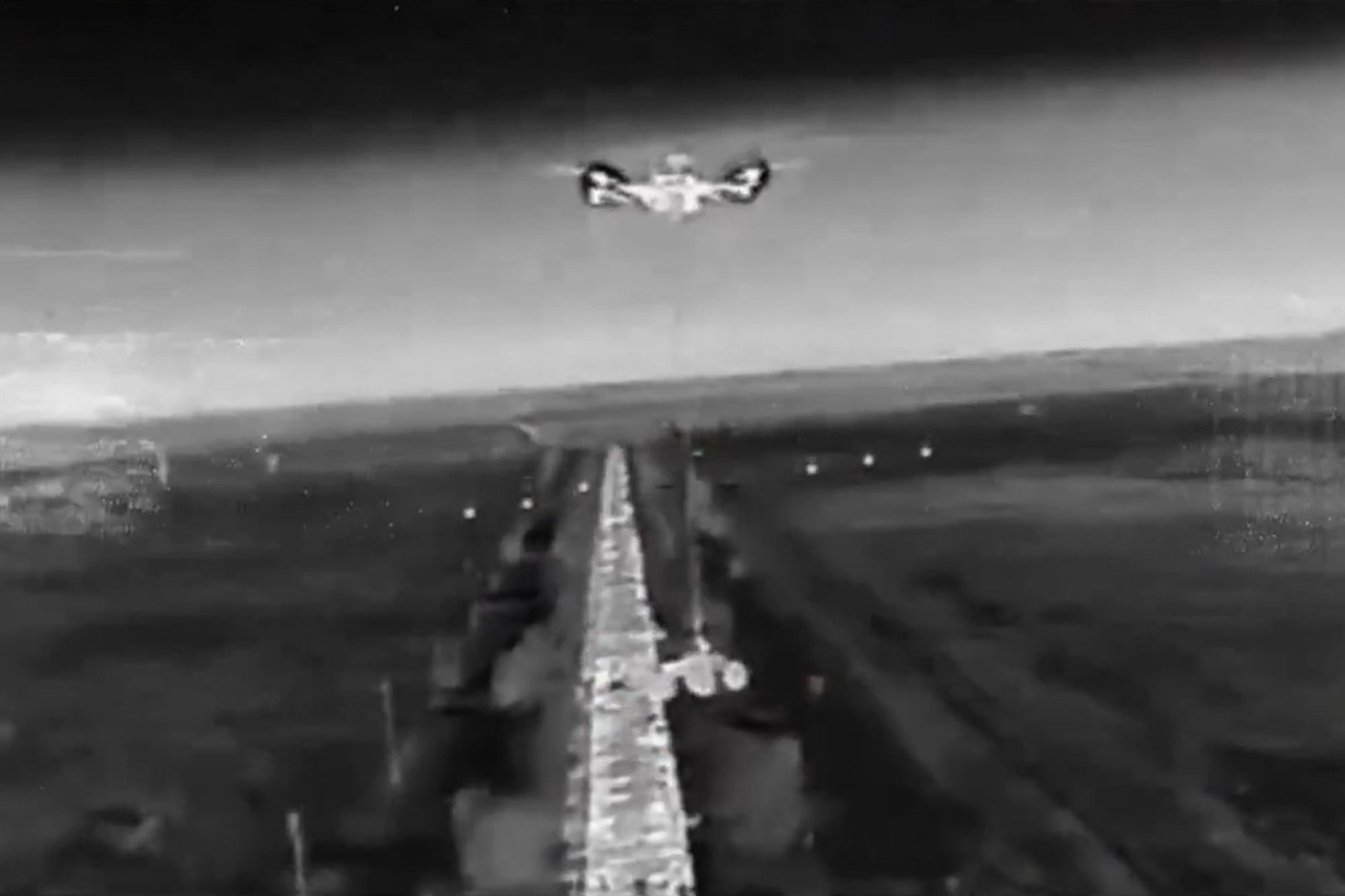
- Bomber UAVs Dropping UGVs: Ukraine has started using hexacopter bomber drones to drop UGVs (ARK-1) equipped with anti-tank mines deeper into the frontlines. The cross-domain configuration was most likely done to enable UGVs to travel across difficult terrain, which could otherwise be a major limiting factor to their movement. It also allows the bomber drone to release its tactical payload and withdraw before reaching the final position, reducing its exposure to direct enemy fire.
- Component Hardening: Russian forces reportedly intercepted a Ukrainian strike drone whose vulnerable external components had been reinforced with small square metal plates. The modification was likely intended to improve survivability against small-arms fire, particularly machine guns, by shielding exposed components such as the battery, motors or electronics from disabling hits. It also suggests that last-mile kinetic solutions remain effective against fast-maneuvering strike drones despite contrary narrative.
- Middle & Long Strike FP Variants: Ukraine is using upgraded versions of FP-1 & 2 UAVs to strike Russia’s Omsk oil refinery. The operational range of both models has been increased by relocating the fuel tank from the fuselage into the wings. The new FP-1 UAV retains its 60kg payload capacity and a strike range of 1,600 to 2,600 km. The FP-2 UAV raises payload capacity from 105 kg to 200 kg and offers a 200–370 km strike range. This will likely increase Ukraine's ability to disrupt Russian logistics across land and maritime domains.
- Gunboats with Car tires: Myanmar Navy has reportedly begun equipping its Y301-type river patrolling gunboats with car tires and mesh metal structures to protect from drone strikes by insurgents. The improvised anti-drone protection system covers the boat's hull with medium-sized car tires, likely serving as temporary armor, while a metal wire cage with mesh netting shields the superstructure.
What We're Reading
- Sri Lanka Deploys Military Drones as Worst Dengue Outbreak in Decade Kills 56 People: Sri Lanka's Air Force deploying drones to scan rooftops for stagnant water amid 76,000 infections is one of the first large-scale uses of military ISR infrastructure for vector-borne disease surveillance, a dual-use application most defense ministries have not formally planned for. (The Independent)
- Israel Unveils ELLYON Spy and Attack Plane: IAI's ELLYON collapses electronic attack and advanced ISTAR into a single business-jet airframe, reducing the number of aircraft required to suppress, deceive, and surveil a target simultaneously. (The Defense Post) (Breaking Defense)
- US Triton Reconnaissance Drone Patrols Cuban Coast: The Navy's MQ-4C Triton conducted an extended five-hour patrol along Cuba's southern coast, using its 60,000-foot ceiling to make a surveillance presence visible without committing a crewed aircraft. (RIA Novosti)
- Embraer, Northrop Develop Autonomous KC-390 Refueling Boom: The AI-driven autonomous refueling boom removes the human operator from one of the most technically demanding phases of aerial refueling, allowing the KC-390 to conduct autonomous tanking in contested environments where a dedicated boom operator would be an unacceptable risk. (Infodefensa)
- Russia Tests New Heavy-Lift "Motylek" Logistics Drone: Russia's Motylek, capable of carrying 300 kg of payload for cargo delivery and casualty evacuation, addresses the same last-mile resupply problem Ukraine solved with its own logistics drone programs, confirming autonomous heavy-lift logistics is now a standard requirement on both sides of the war. (Izvestia)
- India Develops Autonomous Anti-Submarine Platform: The Indian Navy's prototype order to Apollo Micro Systems for SAVIOR-ASW, an indigenously developed semi-submersible autonomous vessel, makes India one of the first countries to field an autonomous underwater platform specifically designed for ASW surveillance. (Economic Times)
- Israel Unveils 'HYPNOSIS' Drone Swarm Air Defense: IAI's HYPNOSIS deploys mobile GNSS jamming and spoofing stations to neutralize drone swarms without expending interceptor missiles, addressing the cost asymmetry that has made saturation attacks the dominant offensive drone tactic in Ukraine and the Middle East. (Defense News)
- Australia Funds Drone Surveillance for Philippines: Australia's $6.7 million drone surveillance package for the Philippine Coast Guard extends Canberra's ISR reach by proxy into the South China Sea, in waters where Australia has a direct interest in Chinese maritime activity but limited appetite for direct presence. (The Hindu)
- Bosnia Acquires Turkish Anti-Drone Jammers: Bosnia's receipt of 10 KANGAL/ADL 100 RF jamming systems from ASELSAN as a military donation extends Turkish defense industry influence into the Western Balkans while giving Sarajevo a fielded C-UAS capability it could not have afforded through standard procurement. (Defence Blog)
- 'Easier Access': US Export Change for the UAE to Boost Emirati Drones, AI Tech: Washington's upgrade of the UAE to A:5 export status, the first Arab state to receive the designation, removes license requirements for dual-use technology including advanced semiconductors and UAV subsystems, explicitly designed to pull Emirati procurement toward American suppliers and away from Chinese alternatives. (Breaking Defense)
- Greece to Buy Anti-Drone 'Achilles Shield' From Israel for $3.1B: Greece's approval of the $3.1 billion Achilles Shield multi-layer air defense dome, part of a broader $4.8 billion package that also includes Heron UAVs, makes Athens one of the largest single buyers of Israeli air defense technology outside the Middle East. (The Defense Post)
- Chilean Deputies Request Drone Inventory Information: Chile's congressional request for a comprehensive accounting of UAV inventories across the armed forces and police is an early indicator of the legislative oversight pressure that drone proliferation is beginning to generate in Latin American democracies, where procurement has moved faster than parliamentary visibility. (Infodefensa)
- Russian AI-Assisted Drone Swarms Overload Ukrainian Air Defense: Russian Geran-2 swarms enhanced with AI-distributed role assignment for reconnaissance, decoys, and strike have reportedly overwhelmed Ukrainian air defenses by 400%, with autonomous coordination allowing the swarm to adapt its composition in real time to exhaust interception capacity. (TASS)


