


Welcome to this week’s Brief, our analysis of the most consequential developments in unmanned systems and drone warfare. Each week we track rapidly accelerating battlefield innovations, emerging doctrine, and the technologies reshaping how states and non-state actors deploy unmanned systems.
Have intelligence requirements, developments we should investigate, or perspectives to share? Contact us at info@dronesense.ai.

Deep Dive: How is Russia adapting software to control tactical FPV drones across kill zones?
When someone talks about adaptation, often hardware comes to mind. But a large part of what makes FPV drones perform against the enemy’s constant counter-innovations is software iterations.
Most Russian tactical drones use open-source software such as Betaflight and Express Long Range System (ELRS). The source code is free, highly modifiable and accessible to anyone with basic programming knowledge. Changes to the software can easily alter how the same physical drone flies, communicates and responds to disruption without necessarily changing its underlying hardware.

This means the same physical drone can behave differently depending on the software controlling it. So far, modifications have been made in response to emerging Ukrainian electronic warfare (EW) measures. Russian developers have been modifying the FPV software stack to address specific points where EW can break the kill chain.
For frontline operators, a critical vulnerability remains a drone’s control link. If jamming interrupts communication between the pilot and drone, a standard failsafe can cause the aircraft to disarm or fall. Russian modifications to ELRS, reportedly including Totalitarian ELRS (or TLRS), have changed frequency-hopping and packet-handling behavior to make this link harder to disrupt or spoof.
But spoofing differs from jamming, and creates a different problem. The defender does not necessarily need to block the signal if it can make the drone accept a malicious command. Russian TBF modifications to Betaflight have reportedly tried to prevent commands such as airborne disarm from being accepted, while also extending the period for which the drone remains airborne after losing its link.
This changes what EW can achieve. If losing the control link no longer immediately produces a crash, the defender will need to sustain the disruption for longer. The drone is still vulnerable to EW, but the interruption is less likely to become an immediate mission kill.
Videos also struggle with the same problem. An FPV can remain controllable while becoming operationally useless if the pilot loses the feed during the final approach (unless it has an autonomous module onboard). To counter this, Russian firmware builds included wider VTX frequency options and the ability to change video channels during flight, giving operators another way to respond when a particular frequency is being suppressed.
Although software adaptation must account for cost, how quickly a battlefield observation can become a new configuration really matters.
A hardware modification generally requires components to be sourced, installed and tested. This adds time, which can make or break momentum. But firmware can change the behavior of an existing aircraft without rebuilding it. Betaflight and ELRS both support relatively rapid firmware updates, though field deployment still requires configuration and testing.
Reports on Russian FPV development suggest that some builds were updated monthly or even bi-weekly based on frontline feedback. This, however, does not mean software can overcome every electronic threat. The software remains constrained by the physical capabilities of the receiver, transmitter, antenna and video system.
More complex firmware can also introduce configuration errors and new failure modes.
And once a modification becomes widespread, the defender can study its behavior and adapt again. The value of Russian FPV software likely depends on how long each modification remains effective. A change that keeps a drone controllable through a critical part of the kill zone will impact mission success. If the defender can quickly identify and defeat that behavior, the advantage may disappear just as quickly.
In other words, the airframe can remain almost unchanged while the rules governing how it communicates, responds to interference and handles link loss continue to evolve.
China Watch: Border Defense with Mongolia, Stealth UAV Testing, New Drone Tech Patents & Shenzhen ‘1km’ Supply Chain
- During the recent China-Russia-Mongolia Border Defense Cooperation 2026 exercise, new cross-domain formations of unmanned platforms were tested. One of them involved a Chinese drone-assisted combat team that detected and locked simulated terrorist targets, while FPVs supported an armoured ground assault as the Russian helicopters conducted air strikes and Mongolian forces blocked escape routes.
- Practicing combat coordination using drones among actors with very different capabilities provides 3 key benefits: it shows each actor what drones can realistically do in their operational context and for a specific use case; demonstrates how another country’s weapons could perform in a future conflict (doubling as a sales pitch); and helps improve the overall skills and operational experience of the forces involved.
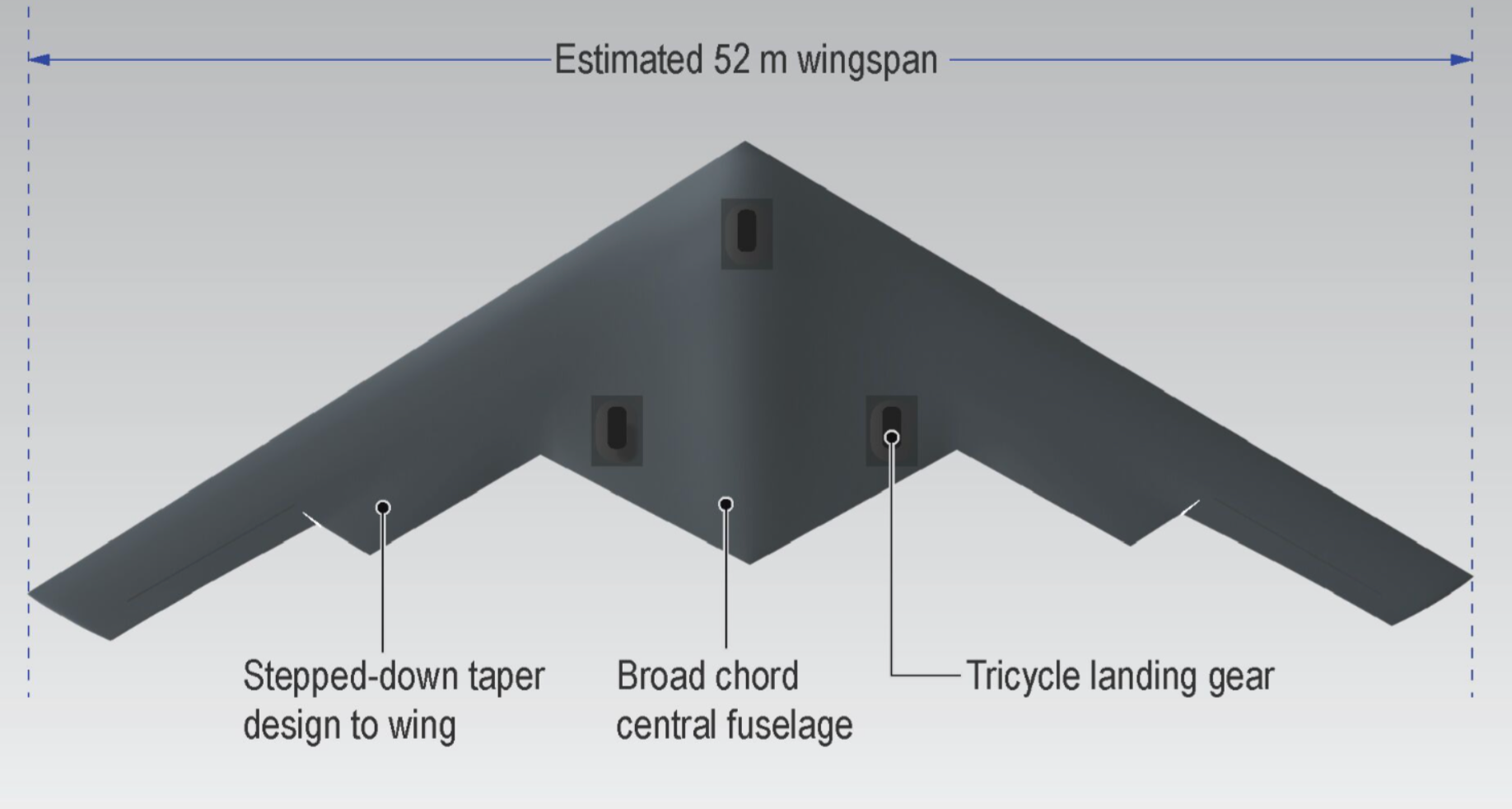
- China has begun flight testing its WZ-X, a large tailless flying-wing UAV, first identified at Malan Air Base in 2025. The aircraft is estimated to have a 52–53m wingspan and roughly 13m length.
- While the unusual wing geometry reflects requirements for lower observability, wing folding, or removable outboard sections, it is hard to say for certain with just the available imagery. The current configuration appears to lean towards a mission set involving long-duration surveillance.
On Our Radar:
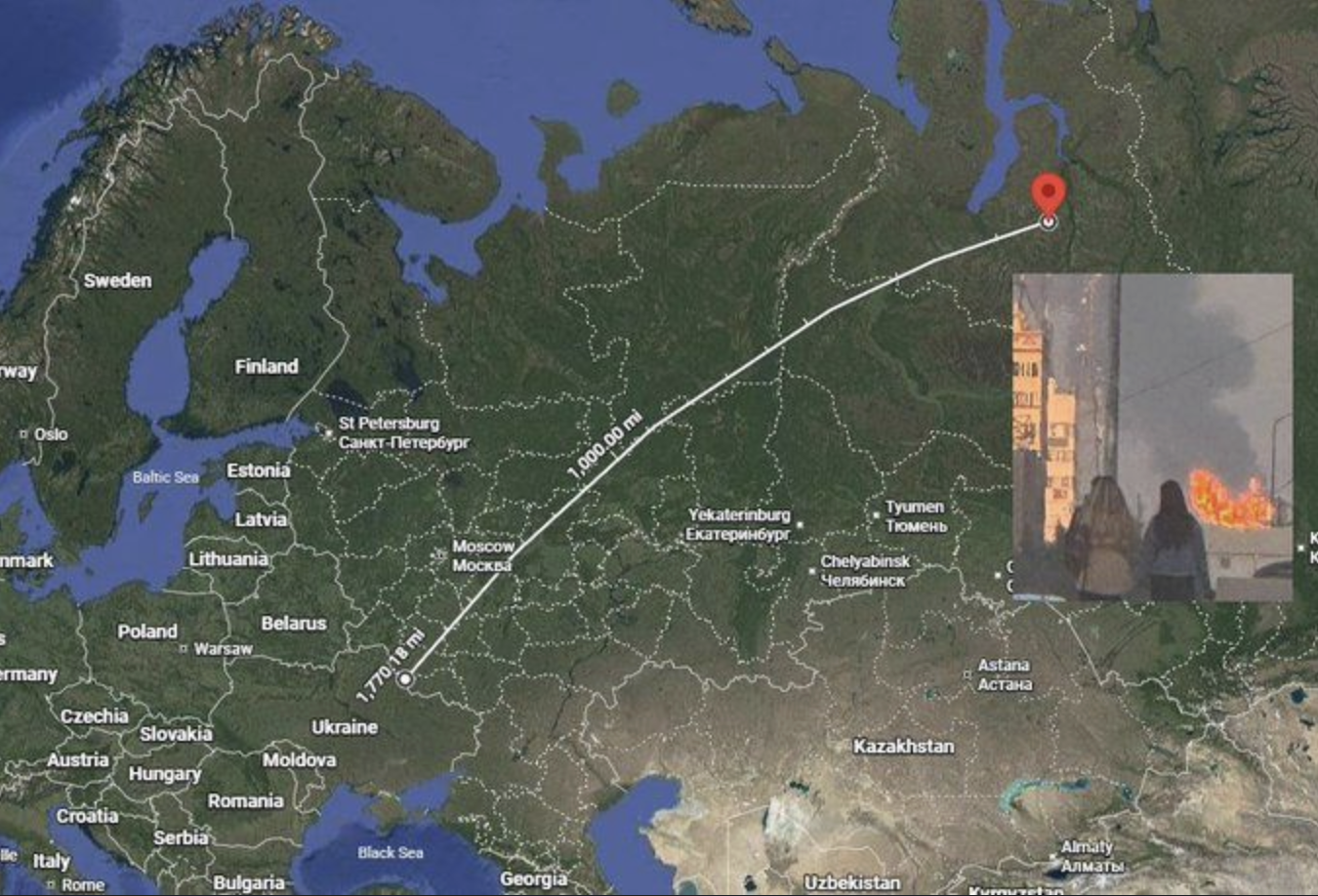
Ukraine Sets Drone Strike Distance Record With Arctic Gas Attacks
Ukraine’s strike on gas-condensate plants at Purov and Novyi Urengoy pushed its long-range drone campaign more than 3,000 kilometres into Russia’s Arctic, farther than any previously reported Ukrainian attack inside the country. The plants process condensate from the Yamal-Nenets region, placing a new layer of Russia’s gas industry within reach after months of strikes on refineries and export infrastructure closer to the front. The operational significance is less the damage assessment than the revised map: facilities once insulated by distance must now account for an attack route that crosses most of Russia’s depth. (Bloomberg)
Iran Captures American Underwater Drone
Iran’s Revolutionary Guard says it recovered an Anduril Dive-LD autonomous underwater vehicle near the Strait of Hormuz, a 19-foot platform the United States uses for long-duration work beneath one of the world’s most contested waterways. Washington said the vehicle malfunctioned during a mission, but the apparent recovery offers Tehran a physical sample of an American system at a moment when its own naval strategy increasingly relies on uncrewed surface and undersea platforms. Analysts told Reuters that Iran will likely attempt to examine the vehicle’s hardware and reverse-engineer components, even if software protections limit how much of the system can be replicated. (Reuters)
Drone Industry Consolidates as Swarmer Buys Ratel
Swarmer’s acquisition of Ukrainian ground-robotics maker Ratel Robotics for up to $224 million is among the largest transactions in Ukraine’s unmanned-systems industry, joining an autonomy-software company to a manufacturer whose products have been built around battlefield demand. Swarmer says its AI-enabled swarm-control software has supported more than 100,000 combat missions, while Ratel brings ground robotic systems and a pathway to hardware production. The transaction reflects a market moving beyond a dense field of small wartime suppliers toward companies that can combine combat data, software, manufacturing, and international distribution. (The Wall Street Journal) (Ukrainska Pravda)
Iranian Drones Risks force UAE to Redesign Data Center Plans
The United Arab Emirates is redesigning its planned 5-gigawatt AI campus as a dispersed network of data centers after Iranian drone attacks damaged two Amazon Web Services facilities in the UAE and one in Bahrain. The project had been envisioned as a 10-square-mile campus in Abu Dhabi, a concentrated physical expression of the UAE’s ambition to become a global AI hub; officials are now weighing air defenses, electronic jamming, underground construction, blast-resistant concrete, and redundant power and cooling. The redesign makes the underlying calculation explicit: computing capacity is now fixed critical infrastructure, and concentrating it can turn an industrial strategy into a target set. (Reuters)
 Drone Sense
Drone Strikes Become a Key Dynamic in Macroeconomics
Houthi attacks on Saudi energy facilities set oil installations ablaze, wounded more than 70 people, and lifted Brent crude to $97.92 a barrel, its highest close in six weeks. Saudi Arabia had already been routing oil west to the Red Sea to avoid the disrupted Strait of Hormuz, leaving attacks on the kingdom’s southern energy network capable of reaching supply routes that had become the workaround for a wider regional blockade. The result is a familiar military asymmetry with a new level of economic consequence: a relatively inexpensive strike can now move global oil, diesel, inflation, and interest-rate expectations far beyond the immediate target. (Reuters)
Navy Prepares for USV Attrition Dynamics With Current C-UAS Stack
Marines aboard USS Makin Island are training to detect, track, and jam small hostile drones before they reach an amphibious assault ship, using an upgraded Light Marine Air-Defense Integrated System that combines radar, optics, radio-frequency sensing, and electronic warfare. The system can break the link between an aircraft and its operator, yet its effectiveness depends on early detection and trained operators able to work through a crowded spectrum. At the fleet level, Chief of Naval Operations Adm. Daryl Caudle has called directed-energy weapons essential to preserving finite missile magazines against cheap drones, even as laser deployment remains constrained by power, cooling, and weather. The Navy’s current layers address individual engagements; the challenge is whether they can withstand a prolonged campaign built around expendable systems and attrition. (Business Insider) (Business Insider Africa)
Hardware Innovations and Tactical Adaptations
- Drone Innovation Teams: Russia is transforming several artillery maintenance and armor units into dedicated drone repair and upgrade teams for frontline operations. Teams will use 3-D printing, like Chinese FlashForge, to produce components. The reallocation of manpower is closely tied to the declining utility and demand for repairs in traditional artillery and armor. It also reflects the military’s need for adaptability and quick turnaround times due to counter-innovations. With this, Russia could likely achieve shorter adaptation cycles and build a database of what works for local production.
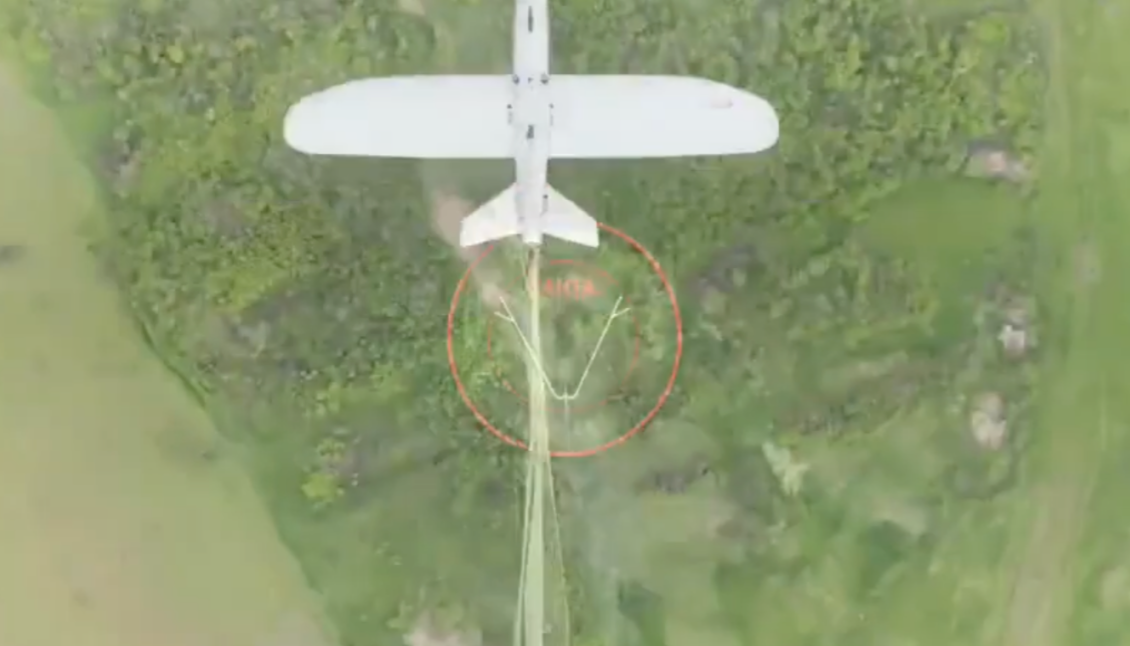
- Nets on Recon UAVs: At least 5 different Russian reconnaissance drone models have reportedly released a meshnet/fibrous material at Ukrainian interceptors over the past few weeks. These include, but are not likely limited to, ZALAs, KVOs, Supercams, Orlans and Skalpel. The dedicated self-protection systems are particularly important for Orlan, Supercam and ZALA because they sit inside Russian reconnaissance-fire and reconnaissance-strike systems, where losing one can impact the sensor chain.
- CUAS Training Simulator: Russia is reportedly training its tactical units with an anti-drone simulator, featuring a static vehicle chassis wired to shake constantly to imitate a moving vehicle. Soldiers are then tasked with aiming at tactical drones closing in using rifles and other counter-drone equipment to practice their shooting skills, similar to what they will have to do in a 3-4 person frontline team. The goal is likely to familiarize recruits and retrain older personnel to newer tactics.
What We're Reading
- Russian Drones Target Ukrainian Electronic Warfare Stations: Russian operators say they have identified and destroyed roughly 10 Ukrainian EW stations in Kharkiv by using reconnaissance drones to spot antennas hidden under trees, bushes, and debris, demonstrating that the systems designed to blind drones are becoming drone targets themselves. (RIA Novosti)
- Japan Pursues Drone-Borne Quantum Sensors for Submarine Detection: Tokyo’s fiscal 2027 defense request includes quantum magnetic sensors for aerial drones, a bet that distributed unmanned aircraft could help restore an anti-submarine surveillance advantage as China expands operations in nearby waters. (Nikkei Asia)
- Ethiopia Expands Domestic Drone Production: Ethiopia is reported to be operating two domestic drone-production facilities and building a fleet in the thousands, though evidence that the displayed systems are fully indigenous remains limited and some resemble commercially available Chinese models. (Borkena)
- Extremists Gain Access to AI-Enabled Drone Tools: Commercial drones, generative AI, encrypted communications, and 3D printing are lowering the barriers for violent non-state actors to combine capabilities once reserved for states, reviving the counterterrorism community’s old problem of recognizing the threat before the first spectacular attack. (Foreign Policy)
- Turkish USV Demonstrates Autonomous Mine Laying: Türkiye’s Marlin surface drone deployed the Malaman naval mine in autonomous and remote-controlled trials, adding mine laying to a platform family built for surveillance and maritime security. (Janes)
- Ukrainian Corps Uses Drones to Encircle Russian Forces: Ukraine’s 3rd Army Corps has used reconnaissance and strike drones to support a slow counteroffensive north and east of Lyman, cutting supply routes and putting several hundred Russian troops at risk of tactical encirclement. (Blic)
- Russia’s Geran Drones Likely to Gain AI Autonomy: A Ukrainian presidential adviser warns that Russia may add AI control to Geran drones, reducing the value of electronic warfare by removing the continuous radio link that conventional jamming relies on. (Moskovsky Komsomolets)
- Russian Drones Gain a Nuclear-Operations Kit: Russia’s Khrust program is reported to be turning a radiation-resistant FPV drone into a modular board-and-firmware package that could adapt platforms ranging from FPVs to Gerans for work in radiological or chemical contamination. (Lenta.ru)
- Drone Attack Destroys Food Aid in Sudan: An aerial attack on two clearly marked World Food Programme trucks destroyed more than 50 tonnes of food bound for South Kordofan, extending drone warfare’s impact from civilian infrastructure to the logistics chains keeping besieged communities alive. (Radio Dabanga)


