


Welcome to this week’s Brief, our analysis of the most consequential developments in unmanned systems and drone warfare. Each week we track rapidly accelerating battlefield innovations, emerging doctrine, and the technologies reshaping how states and non-state actors deploy unmanned systems.
Have intelligence requirements, developments we should investigate, or perspectives to share? Contact us at info@dronesense.ai.

Deep Dive: Is Russia Changing the Ways It Protects Oil Refineries?

Energy ceasefire or no, Russian leadership isn’t remaking idle after observing losses and lessons of Ukrainian drones' repeated battery its oil refineries relentlessly. Every failure has been a painful data point that, in hindsight, fed its protection strategy. Mostly out of desperation, and perhaps to a limited degree, prescient decision-making, Moscow has been building layers upon layers of defenses to protect its leverage: oil.
To the point that, now, Russian oil refineries may just be the world’s most well-protected against drone attacks.
Lately, Pantsir missile-and-gun systems have been reinforcing defenses around Moscow’s refinery, while shoulder-fired missiles and interceptor drones have appeared during raids involving the facility. Electronic warfare systems also feature in refinery defense, attempting to disrupt navigation or communications.
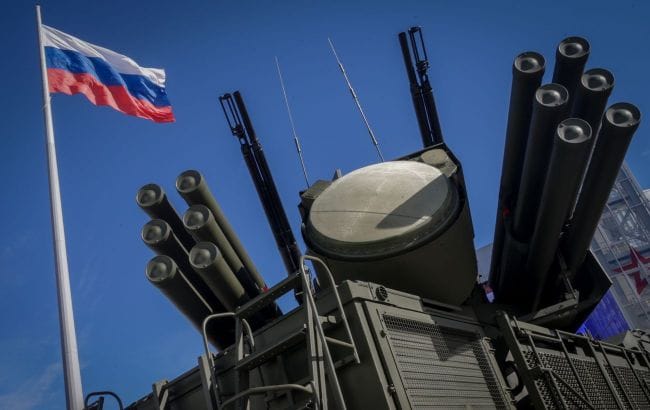
So jamming targets a drone’s dependence on external signals, kinetic weapons can physically destroy it, and combining them offers another engagement option when electronic disruption fails to stop an approaching drone.
New hardware like guns with custom anti-drone ammo and lasers appear to extend that mix.
Citadel is a 30mm gun system combining radar and optical tracking with programmable airburst ammunition. Its targeting system calculates where a shell should burst, releasing fragments near the drone to damage it without a direct projectile hit, although accurate tracking and burst timing remain essential. Perun, a laser under testing for infrastructure protection, directs energy at drones to damage them, opening another development path for local interception.
Inside refinery grounds, new nets, steel frameworks, and container walls are being added by Russia to create obstacles around vulnerable equipment. Pautina, a newly introduced modular metal structure, is undergoing trial operation at energy facilities to provide physical protection and give operators another opportunity to interrupt a strike after a drone penetrates active defenses.
The physical layers suggest Moscow is planning for drones to penetrate active defenses, making protection around critical equipment part of keeping refineries operational.
Another emerging countermeasure involves aerostat barriers under testing, in which balloons suspend cables intended to entangle or damage drones, while radar data is intended to guide winches adjusting the barrier’s height to match that of the drone.
This addresses the possibility of drones flying over a fixed barrier. Yet detection must leave enough time for mechanical repositioning, and one barrier height cannot cover simultaneous approaches at different altitudes. Intercepting a small test drone also leaves collision resistance against heavier long-range aircraft unresolved.
Kuibyshev’s refinery, for example, has advertised positions for gun and armored-vehicle crews, while reservist mobile fire groups are being organized to protect energy facilities. Stationing these men near energy assets adds opportunities to engage drones approaching them, but businesses have complained that reservists are frequently reassigned, making sustained coverage dependent on replacement crews being available and familiar with the site.
And to equip these groups, Russian companies are allowed to use a procurement mechanism to buy guns, radar, and EW equipment for transfer to military units protecting infrastructure. Moscow has also introduced powers to place inadequately protected or slowly repaired critical facilities under temporary management, which for operators means facing both the expense of protection and the prospect of losing management control if their response is judged inadequate.
Businesses often buy individual components, whereas uptake of comprehensive systems remains limited. Operators then have to connect those purchases into a working defense, ensuring detection data reaches an assigned crew with a suitable weapon. Every delay in that chain, inevitably, consumes time available to intercept an incoming strike drone.
The value of that investment also depends on what sits behind the defenses. A strike at Syzran damaged the main crude distillation unit, accounting for 71% of processing capacity, with repairs expected to take at least a month. Its other distillation unit, accounting for the remaining 29%, was already undergoing repairs after an earlier attack.
The later strike left both units unavailable, compounding the outage before repairs could restore capacity. Concentrating protection around such equipment can preserve a disproportionate share of production, giving substance to Moscow’s argument that keeping refineries operational justifies the expense.
For better or for worse, Moscow is turning refinery protection into a standing obligation for operators, backed by more interception methods, physical barriers, and local crews. Sustaining these layers requires recurring spending and coordination, but drones that penetrate them can still force another shutdown by damaging critical processing equipment. What Moscow needs to solve is how to keep detection linked to weapons, crews assigned, and critical processing units protected through successive attacks.
China Watch: CUAS testing, larger agricultural drones, UAV route choices in GNSS-denied areas & national standard for HPM trials
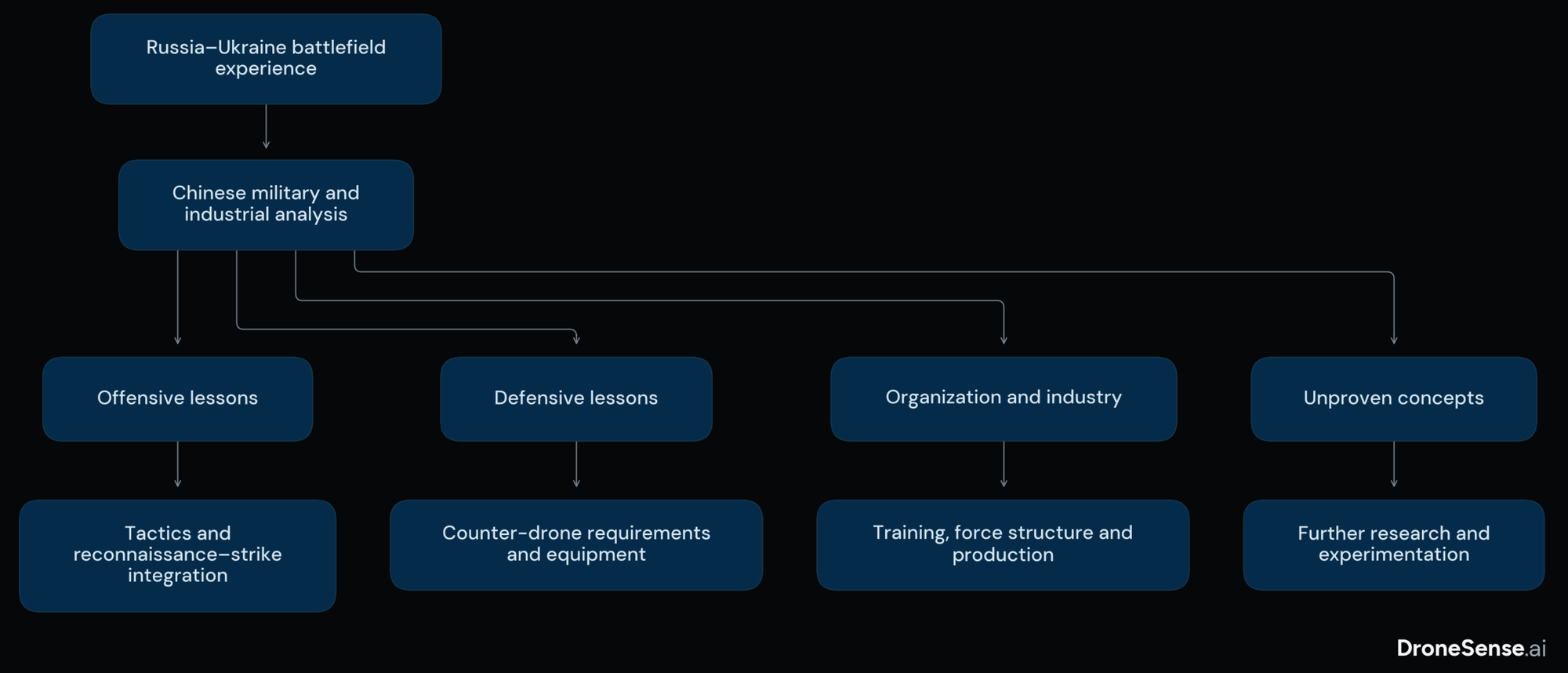
- The PLA is putting more of its counter-drone equipment into the same engagement sequence, with a 75th Group Army brigade using lasers and microwave systems against a low-flying swarm before interceptor drones and anti-aircraft guns engaged targets that penetrated the first layer.
- The exercise suggests that future progress will depend heavily on target allocation and continuity of coverage. A formation that can defeat one swarm would still, however, need enough functioning sensors, weapons, and crews to meet the next attack while moving.
- Elsewhere, crop-protection drones with 85 kg payloads are seeing wider deployment as China upgrades its agricultural machinery. Beijing’s domestic agricultural drone fleet already exceeded 300,000 units at the end of 2025, creating a large base of operators and service providers for heavier systems.
- Larger payloads can reduce refill interruptions, but only if loading, batteries, and field transport keep pace. Contractors with several customers and organized ground support are likely to capture more of that benefit, particularly where individual farms cannot keep a high-capacity drone fully occupied.
On Our Radar:
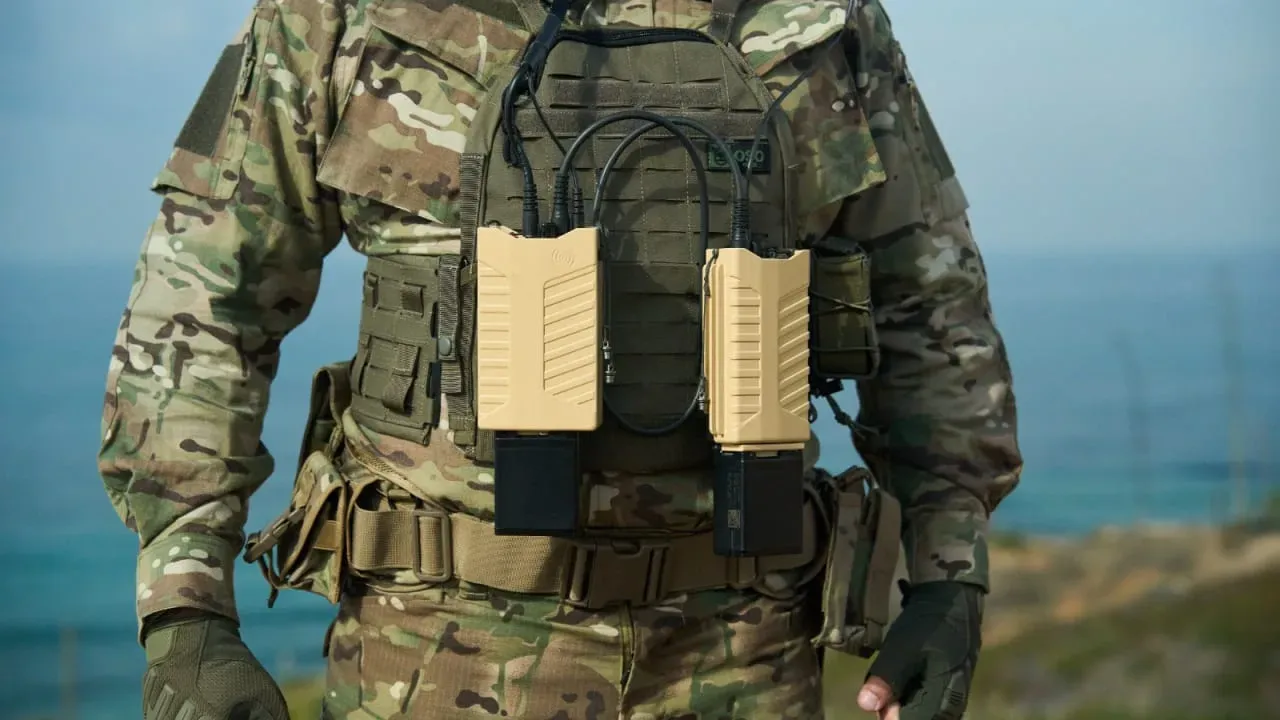
Militaries Adopt Wearable Counter-Drone EW Systems
Autonomous Guard says its Wearable Kit has been used by Ukrainian troops and IDF maneuvering forces in Gaza, while the U.S. Army in Europe has tested the soldier-carried system. The company says the kit detects hostile drones through radio frequency signals at up to two kilometres and can jam them at up to three kilometres, pushing warning and electronic response down from a fixed C-UAS site to the individual mobile unit. (The Jerusalem Post)
Russia Unveils Heavy Assault Drone Tank System
Russia demonstrated its Shturm heavy assault robotic complex during the Tsentr-2026 exercises, pairing a protected command vehicle with unmanned T-72-based platforms in tank and BMPT configurations for assault-unit fire support. The system is intended to let a crew direct movement and firing from up to several kilometres away, although Russian and open-source reports said a Shturm vehicle lost its radio link and became stuck in mud during the demonstration. (Rossiyskaya Gazeta) (TASS) (The Defence Blog)
 Drone Sense
Ukraine Turns to AI Anti-Aircraft as Last Line Against Jet Drones
Ukraine’s Air Force says AI-assisted machine-gun turrets have already downed Russian jet-powered drones, including Geran-5s, as Kyiv adds a final defensive layer around protected sites. More than 12 of the systems have been installed around Kyiv, according to President Volodymyr Zelenskyy, in response to aircraft that Ukrainian officials say can cut a defender’s reaction time from tens of minutes to seconds. (Polskie Radio) (Ukrainska Pravda)
Houthis Claim First Combat Use of New Indigenous Drone
Houthi footage of the claimed first combat use of the Shawaz shows a fixed-wing aircraft with swept wings and a V-tail flying low over water, a configuration consistent with a one-way attack drone and visually close to the Shahed-style family. The video establishes no range, payload, engine, guidance package, production site, or evidence that Shawaz is an original domestic design, locally assembled variant, or imported airframe; its claimed attack effects are also unverified. The disclosure nevertheless introduces a newly branded fixed-wing strike platform into the fighting around the Bab el-Mandeb Strait, where Houthi footage has been geolocated near Al Bahiyah as government forces attempt to regain the coast. (National Business Daily) (CGTN) (Reuters)
Pentagon Begins Building Its Autonomous Warfare Command Architecture
Defense Secretary Pete Hegseth’s proposed four-star Autonomous Warfare Command, or AUTOWARCOM, would give autonomous and robotic capabilities service-like standing across the joint force if Congress approves it, with an October 2027 target for establishment. Acting Army Secretary Adam Telle has moved first at the service level, ordering Army Futures and Autonomous Systems Command, or FASCOM, and a dedicated autonomy acquisition executive to prioritize autonomous fires, combat vehicles, resupply watercraft, and manned-unmanned teaming by fiscal 2028.
Separately, the Army has selected 10 companies for a counter-drone IDIQ with a potential ceiling of up to $7 billion across sensors, effectors, and command-and-control systems, though only $50 million had been obligated when the awards were announced. (Breaking Defense) (Breaking Defense) (DefenseScoop) (Breaking Defense)
Hardware Innovations and Tactical Adaptations
- Cutting Warheads on Jet Drones: Russia has reportedly started equipping its jet Gerans (4 & 5) with custom KRSN cumulative-cutting warheads to target high-voltage pylons and steel bridge structures. The latest configuration has a 40kg main charge and 4 additional destructive modules that can easily concentrate destructive effect on structural components. If it performs as intended, a jet Geran could seriously weaken critical steel members, causing disproportionate damage relative to its explosive payload. Longer infrastructure recovery cycles would then become likely due to the need for specialized replacement parts, heavy equipment, and engineering inspections.
- Barrage Balloons Barrier: Russia is fielding barrages of balloon barriers (usually 2-3 small balloons connected by a net made of thin cables) to entangle or damage incoming drones at oil facilities. This is a static measure, which at first glance appears to discount manueverability leveraged by current drone models to evade obstacles. To close that gap, Russia has built a system that uses radar data to track a drone’s flight altitude and automatically adjusts the height of a cable-suspended barrier to intercept it. While this makes response time critical for performance, the countermeasure is unlikely to work well against swarms of drones at different altitudes.
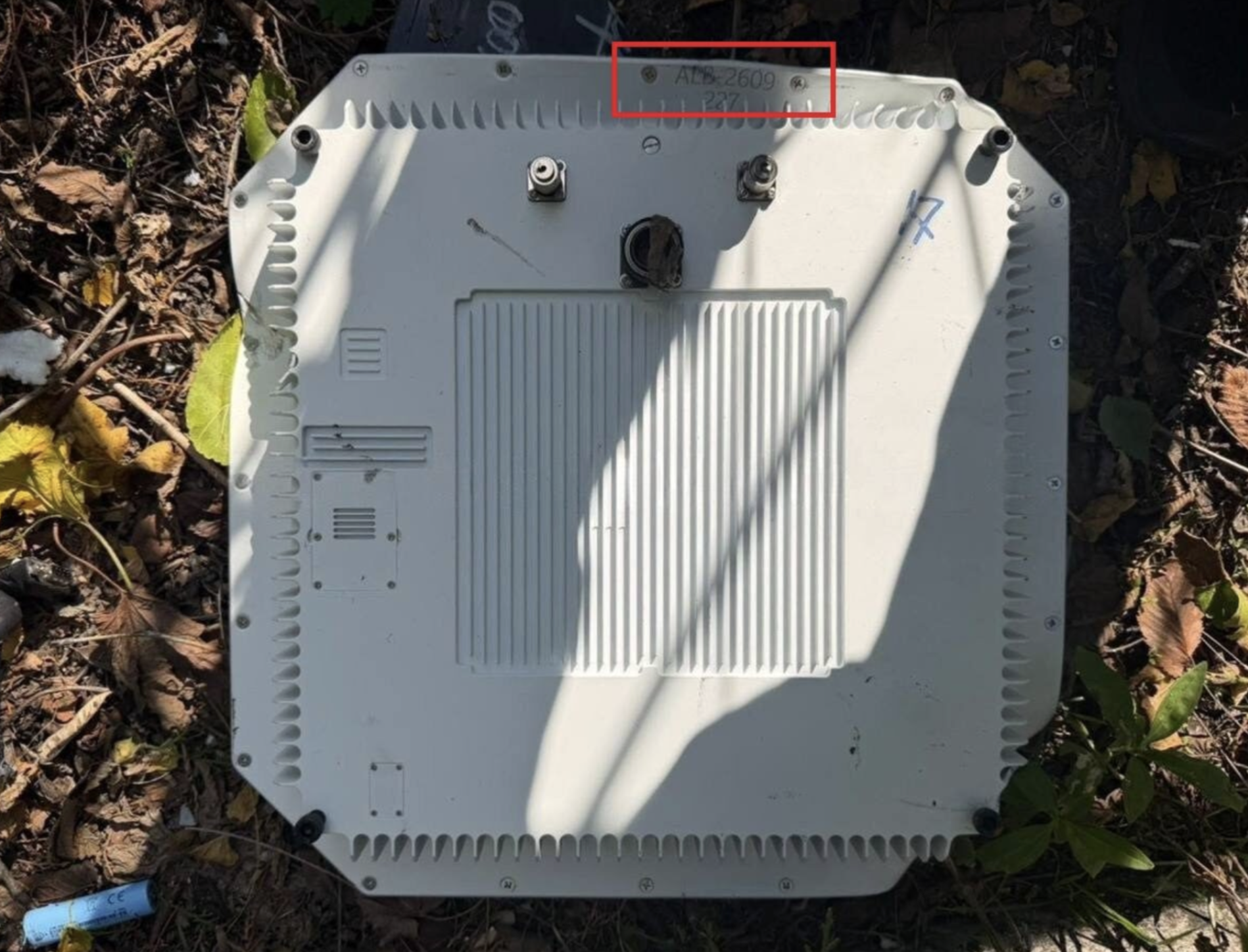
- 32-CRPA on Geran-4: A downed Russian Geran-4 was found carrying a 32-element CRPA antenna assembled at Russia’s Alabuga facility. The system combined 2 sets of 16 antenna elements operating across the L1 and L2 satellite navigation bands to suppress interference from multiple directions and maintain navigation under electronic warfare conditions. The antenna also closely resembles designs from Chinese manufacturer Harxon. Improvements giving greater resistance to satellite-navigation jamming would make it harder for Ukrainian EW systems to disrupt Geran flight paths, particularly in areas covered by multiple jammers.
What We're Reading
- Japan Develops Autonomous Ships to Ease Personnel Strain: Japan’s Defense Ministry is researching AI-assisted navigation for Self-Defense Force transport vessels to move people and cargo with fewer crew amid chronic manpower shortages. (Jiji Press)
- Army Special Forces Train Robotics Integrators: Ten Special Forces warrant officers graduated a new course to help commanders integrate drones, ground robots, sensors, and autonomous systems into operations. (DefenseScoop)
- UK Opens Ukraine’s Drone Data to Swarm Developers: Britain will give up to 12 companies access to Ukrainian drone data to develop AI swarm systems that can operate through degraded communications and navigation. (UK Ministry of Defence)
- RSF Drones Target Blue Nile Governor’s Home: Sudanese authorities say Rapid Support Forces drones targeted Blue Nile Governor Ahmed al-Omda Badi’s residence in Ed Damazin, with air defenses intercepting the aircraft and Badi unharmed. (Youm7)
- Chile Debates Whether to Replace Fighter Jets With Unmanned Systems: Chile’s Air Force has begun studying an F-5E/F replacement for hybrid manned and unmanned missions, leaving the platform and timetable open. (El Mostrador)
- Drone Strike Sinks Merchant Ship Near Bulgaria: Unidentified drones struck two merchant vessels inside Bulgaria’s Black Sea economic zone, sinking the Alfa Watan; all 18 people aboard the grain carrier Able were rescued. (Yonhap News Agency) (Reuters)
- South Korea’s Nuri Completes Fifth Launch: Nuri placed five microsatellite cluster satellites and nine CubeSats into orbit during its fifth flight, though one CubeSat failed to eject. (YTN)
- Moroccan Startup Tests a GPS-Denied Strike Drone: Rabat startup Ballistic Defense System is testing a Matador UAV using vision, inertial, and map-matching navigation; its planned 2,000-kilometre airframe remains untested. (Breaking Defense)
- Aselsan Eyes Japan for Air Defense and Underwater Drones: Turkish defense group Aselsan is discussing Japanese cooperation on counter-drone air defense and ship protection from underwater drones, with no partner or order announced. (Nikkei Asia)
- Chinese Drones Trigger South Korean Farmland Survey Review: South Korea temporarily halted DJI drone filming after lawmakers found nationwide farmland surveys paired Chinese aircraft with Russian image-processing software, prompting a security review. (NewsPim) (Yonhap News Agency)
- Second U.S. Carrier Gains MQ-25A Control Hub: USS Ronald Reagan received the Navy’s second MQ-25 control center, expanding carrier capacity for the refueling drone while pier-side and at-sea testing continue. (The Defense Post)
- U.S. Army Demonstrates M-LIDS to India: U.S. troops demonstrated the M-LIDS mobile counter-UAS system to the Indian Army during Exercise Yudh Abhyas, integrating detection, command and control, electronic warfare, and kinetic defeat. (Janes)


