


Welcome to this week’s Brief, for our American readers we hope you enjoyed a pleasant holiday weekend. Each week we track rapidly accelerating battlefield innovations, emerging doctrine, and the technologies reshaping how states and non-state actors deploy unmanned systems.
Have intelligence requirements, developments we should investigate, or perspectives to share? Contact us at info@dronesense.ai.
Deep Dive: UAVs Are Decoupling Long-Range Strikes from Legacy Constraints
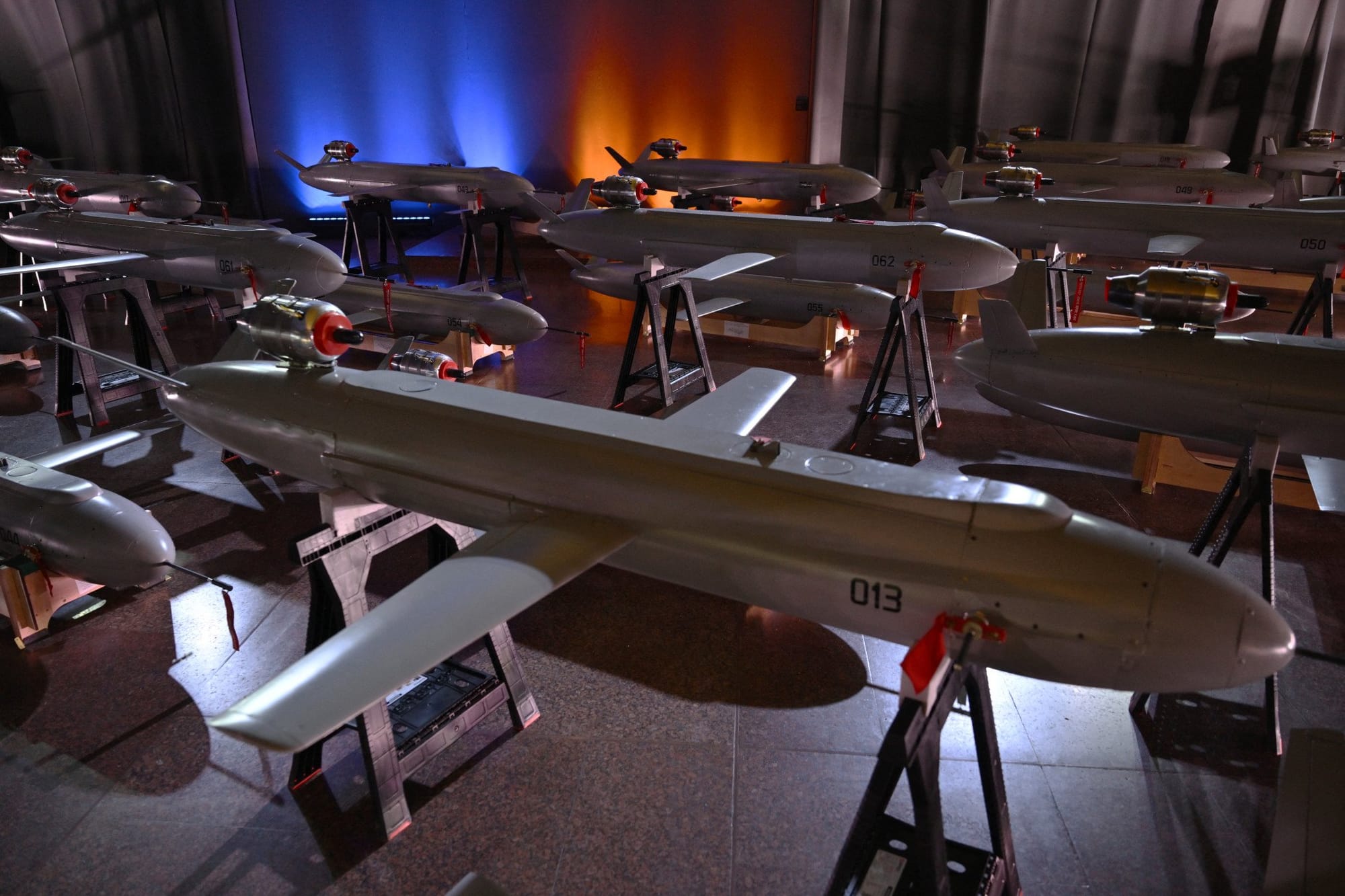
Ukraine's long-range drone strikes will likely become more methodical as design dependencies demand caution. Both countries are raising the baseline volume for strike missions with a noticeable shift in bombing tactics. In March alone, Ukraine launched 7,000 long-range drone strikes into Russia with drastically improved accuracy.
Unlike earlier deep-end drone missions, which were sporadic, the new campaign focuses on repeated attacks on key widespread logistical nodes to impact operational recovery. It exploits the vast surface area of Russian territory with 11 time zones that its current Air Defence (AD) stack is struggling to protect.
Ukraine's early long-range platforms relied on GPS guidance that Russian electronic warfare (EW) consistently defeated, forcing rapid iteration cycles. That process produced a 3-tier fleet which has become pivotal to Ukrainian deep-strike success: high-volume propeller-driven platforms for 1,000km+ attrition; jet-powered fast drones for evasion against defended targets; and a hybrid class combining a strike warhead with onboard rockets to suppress air defense crews on approach. Even with this spread, long-range attacks face in-transit challenges.
Penetrating Russia's jamming environment required building a layered navigation stack. So, Ukrainian drones combine inertial navigation, multi-constellation satellite receivers, and AI-driven terrain-relative visual positioning requiring no external signal. This helps to autonomously lock machine vision on the target in the terminal phase, rendering ground-based jamming largely ineffective.
While ISR drones confirm target status before each wave, a tight feedback loop between frontline units and manufacturers keeps the navigation stack ahead of Russian countermeasures.
This architecture will likely shift long-range strike CONOPS from precious mass to precise mass. Conventional deep-strike doctrine often relied on limited inventories of expensive munitions reserved for the highest-value targets. Ukraine increasingly combines saturation attacks with precision strikes, forcing Russian air defenses to expend costly interceptors and complicating layered defense coverage before follow-on strikes.
A deep-strike drone costing tens or hundreds of thousands of dollars can compel Russia to use interceptors worth several times more, while sustained nightly pressure on the same node replaces one-time shock as the operative theory of effect.
But 2 major design dependencies are eclipsed by the success of long-range UAVs, which many countries seek to obtain. First, Ukraine's dependence on Starlink for Command, Control, and Communications (C3) and navigation layers to shape outcomes of deep strike missions. Ukraine's drone operations over occupied territory roughly depend on approximately 42,000 Starlink terminals. If Starlink access were restricted or politicized, coordination capacity would degrade faster than alternative constellations could scale, with Ukraine's sovereign LEO program unlikely to reach operational capability before 2027.
Second is the access to Ukraine's combat data. Several states forging long-range drone pacts with Ukraine will likely find that sustained weapon performance requires continuous AI updates from active battlefield use. As Ukraine becomes the primary testbed for drone AI in peer-contested conditions, states unable to generate comparable training data will most likely see their long-range systems lose operational relevance without an ongoing Ukrainian data pipeline. That is a hard kill switch right there..
China Watch: Drone-Hackers & Space-based Power Stations
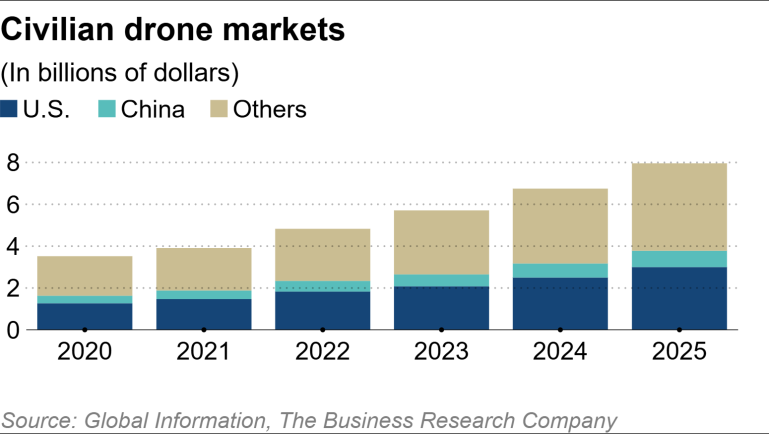
- Between January and March 2026, the Chinese Police arrested 16 people for hacking drone systems, vowing a nationwide crackdown on illegal drone use, as low-altitude security becomes central. The suspects reportedly sold hacking services on e-commerce platforms to bypass restrictions on drone altitude and no-fly zones, risking airspace order and also leaking state secrets.
- The"Clean Skies" campaign, grounded in national security needs, is impacting China's low-altitude market. Major players like DJI and Autel Robotics are now reducing shipments to update the software of existing products in line with state mandates, as aggregate demand threatens to hit an all-time low. For manufacturers, rising costs are shrinking profit margins, compelling them to pivot to other categories with fewer restrictions, such as cameras.
- Chinese scientists successfully tested a wireless power station capable of beaming KW-level energy to multiple moving targets, including drones. The architecture is a step towards building space-based solar power stations that can charge unmanned systems mid-flight, signalling Beijing's strong bottom-up approach to resolving end-user issues. Even as new inventions arrive, the PLA spokesperson this week warned that achieving effective integration and coordination of these technologies within manned and unmanned teams (MUMT) will likely be an operational challenge in the near term.
On Our Radar:
Russia's Drone Blame Game Fails to Split Ukraine from Baltic Allies
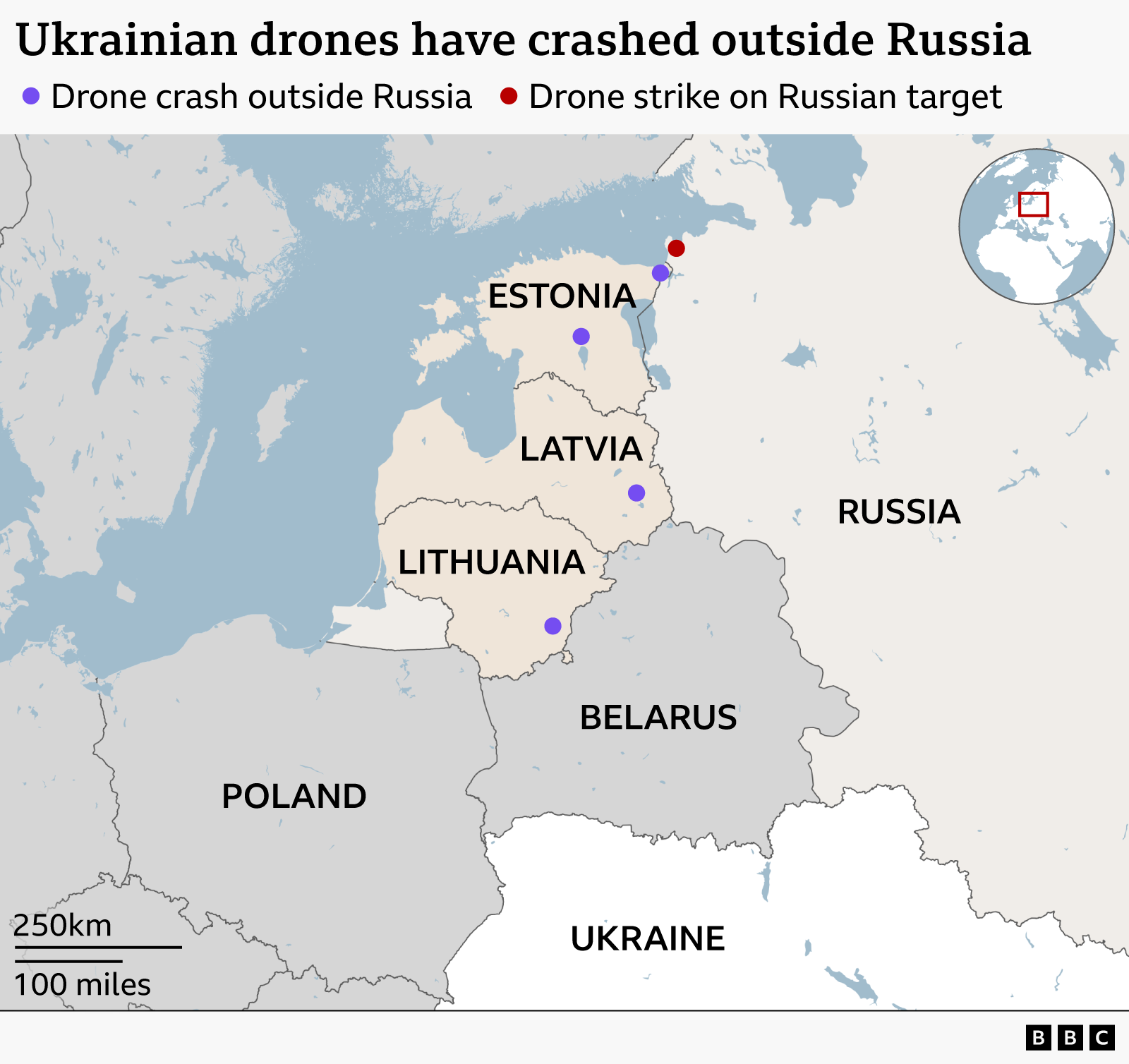
Despite stray Ukrainian drones crossing into NATO airspace, Kyiv's allies are standing firm against Russian attempts to fracture the alliance over airspace violations. The political tension escalated sharply when a NATO air policing jet shot down an unidentified Ukrainian drone over Estonian territory, marking the first confirmed kinetic action by the alliance against a Ukrainian platform. The incident establishes a stark rules-of-engagement precedent for NATO's eastern flank, demonstrating that member states will actively defend their airspace against any unauthorized incursions while maintaining political solidarity with Kyiv. (Politico)
Drone Strike on UAE Nuclear Power Plant Raises Escalation Threshold
A drone attack on a nuclear power facility in the United Arab Emirates drove oil prices to a two-week high, marking the first confirmed strike on nuclear infrastructure in the Gulf region. The attack crosses a significant escalation threshold, demonstrating that non-state actors or regional proxies possess both the capability and the intent to target the most sensitive energy assets in the Middle East. The incident will likely force a rapid reassessment of point-defense architectures around critical infrastructure across the region, as the deterrence value of traditional air defense networks continues to erode. (Bloomberg)
Russia Builds Dedicated Base for Geran-5 Jet-Powered Drones
Satellite imagery reveals that Russia has constructed a dedicated operational base for a new generation of jet-powered strike drones, designated the Geran-5. The infrastructure investment confirms that Moscow is moving beyond the propeller-driven Shahed architecture to operationalize a faster, more evasive class of long-range munitions. This capability escalation will compress the reaction time for Ukrainian air defense crews and force a recalibration of the layered interception networks that currently protect critical infrastructure. (Business Insider)
US Commits Over $1.5 Billion to Counter-Drone as the 'Final 10%' Problem Sharpens
The Pentagon awarded Perennial Autonomy a $500 million contract for AI-enabled C-UAS systems this week as the Army's FY27 budget request sets aside $994 million for small counter-drone procurement, together representing the largest single-year US commitment to counter-drone capability on record. Both investments are a direct response to the "Final 10%" problem: high-end precision munitions are increasingly ineffective against the low-cost autonomous drones now saturating the battlefield. The shift toward AI-driven autonomous interception reflects an institutional acknowledgment that the cost exchange ratio has inverted, and that matching drone volume with expensive interceptors is neither sustainable nor strategically sound. (DefenseScoop, Breaking Defense)
Soldiers Learn to Identify Drones by Sound
Units are formally integrating acoustic identification into their counter-drone training, teaching soldiers to distinguish specific UAV platforms by their acoustic signatures before they enter visual range. The tactical adaptation acknowledges that electronic detection systems are often unavailable or compromised at the squad level in contested electromagnetic environments. Institutionalizing acoustic recognition as a baseline infantry skill reflects the pervasive reality of drone warfare, where the sound of an approaching rotor is now as critical a threat indicator as incoming artillery fire. (Breaking Defense)
Ukraine Reaches 5 Million Annual Drone Production
Ukraine has rapidly scaled its domestic defense industrial base to achieve an annual production capacity of five million drones, fundamentally altering the cost calculus of modern attrition warfare. The sheer volume of production enables Ukrainian forces to sustain high-intensity strike campaigns and saturate Russian defenses without relying exclusively on Western munitions pipelines. This industrial milestone demonstrates that mass production of low-cost, AI-assisted autonomous systems can effectively offset traditional advantages in artillery and manpower, establishing a new baseline for industrial mobilization in peer conflict. (Kyiv Independent)
Singapore Tests Armed Drones and Extends Unmanned Systems Diplomacy Across Southeast Asia
Singapore publicly trialed weaponised UAVs this week while simultaneously offering drones and urban warfare training grounds to the Philippines in support of counterterrorism operations in Marawi. The pairing of domestic capability demonstration with bilateral defense diplomacy reflects a deliberate strategy to establish Singapore as a regional hub for unmanned systems expertise at a moment when Southeast Asian militaries are accelerating autonomous strike acquisition. The speed at which Singapore is moving from evaluation to export-ready assistance signals that the Indo-Pacific proliferation curve is steeper than most Western assessments have accounted for. (SCMP, Straits Times)
Hardware Innovations and Tactical Adaptations
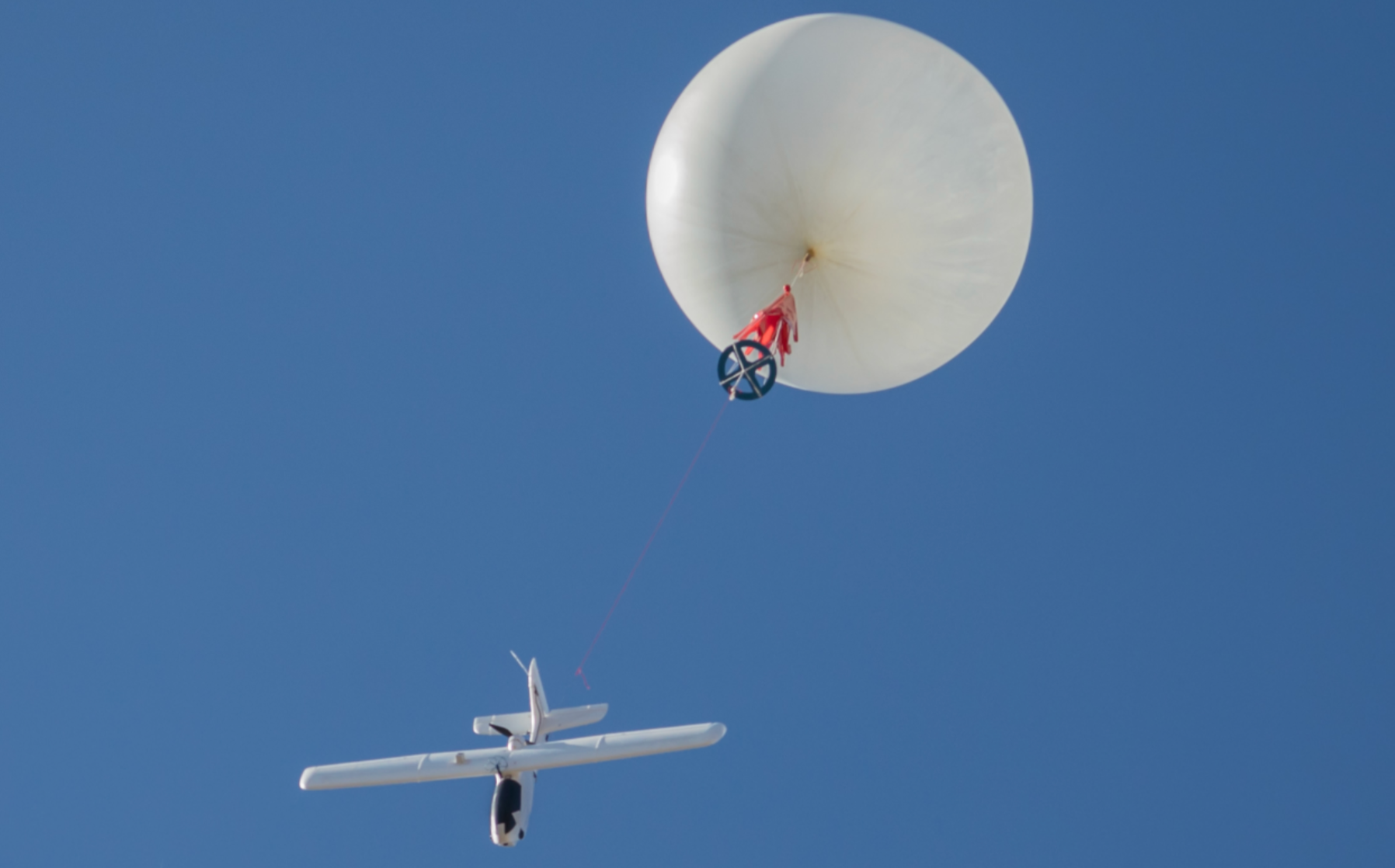
- Ballon-launched: Ukrainian forces are testing the launch of strike drones from tethered aerostats (e.g. balloons) at high altitudes rather than ground-based catapults to save battery and extend flight range. Aerostats help drones conserve power in 3 ways: by improving horizontal transit, release altitude, and battery availability for the powered phase of flight. The innovation will likely enable Ukraine to double the range of its OWA long-range drones to strike logistical routes deep inside Russian-held areas.
- Flamethrower USV: Open source reports show that a Russian KVN operator used a fiber-optic drone to target a Ukrainian Unmanned Surface Vessel (USV) in the Black Sea equipped with an RPO-A Shmel flamethrower. The platform modification indicates sustained Ukrainian efforts to execute layered kinetic strikes across domains. Earlier configurations on similar USVs included designing compartments to carry small FPVs or mount rocket launchers.
- Thermite-mix UAVs: Russian forces have reportedly used a Molniya drone carrying a thermite mixture to burn Ukrainian anti-drone nets across logistical routes. The new payload indicates that cheap and effective passive protection measures will likely become a new target set.
What We're Reading
- Not One-Drone-Fits-All: Admirals Stress Unmanned Systems Tailored to the Mission: Senior naval leadership is emphasizing mission-specific tailoring over universal platforms, signaling a shift in procurement logic toward specialized unmanned architectures. (Breaking Defense)
- UK Picks 4 Companies for Apache Drone Wingman Demonstrator Project: The selection advances the integration of unmanned wingmen with legacy rotary-wing assets, a critical step toward operationalizing manned-unmanned teaming in complex airspace. (Breaking Defense)
- Anduril Announces Partnership with Kraken for Small USVs: The partnership pairs Kraken's maritime platforms with Anduril's software and manufacturing scale, accelerating the deployment of autonomous surface vessels for the US Navy. (Breaking Defense)
- 3D Vision Is Redefining How Drones Navigate Without GPS: The shift toward visual positioning systems reflects the growing necessity of resilient autonomy in heavily contested electromagnetic environments. (Breaking Defense)
- Japan Plans Island Drone Deployment to Monitor Chinese Naval Activity: The deployment of persistent surveillance drones to remote islands strengthens Japan's maritime domain awareness architecture along critical maritime chokepoints. (SCMP)
- Trump (Formally) Wants Ukraine's Drone Technology: The US government is formally evaluating the procurement of Ukrainian AI-enabled drone systems, marking a structural shift in the bilateral technology relationship. (Bloomberg)
- Russia Is Now Operationalizing Co-Orbital ASAT Weapons: The deployment of operational anti-satellite systems within reach of high-value US assets escalates the threat environment in the space domain. (ArsTechnica)
- Leonardo Develops New Passive Battlefield SIGINT System: The introduction of a new passive signals intelligence system enhances the ability of ground forces to detect and locate drone operators without emitting detectable signatures. (DefenseBlog)
- USAF Warns AI Robot Fighters Could Surpass Humans: The public warning from senior Air Force leadership acknowledges that autonomous combat aircraft may eventually exceed human physiological and cognitive limits in air-to-air engagements. (NDTV)


