


Welcome to this week’s Brief, our analysis of the most consequential developments in unmanned systems and drone warfare. Each week we track rapidly accelerating battlefield innovations, emerging doctrine, and the technologies reshaping how states and non-state actors deploy unmanned systems.
Have intelligence requirements, developments we should investigate, or perspectives to share? Contact us at info@dronesense.ai.
Deep Dive: Why Aren’t The Russians Using Interceptor Drones?
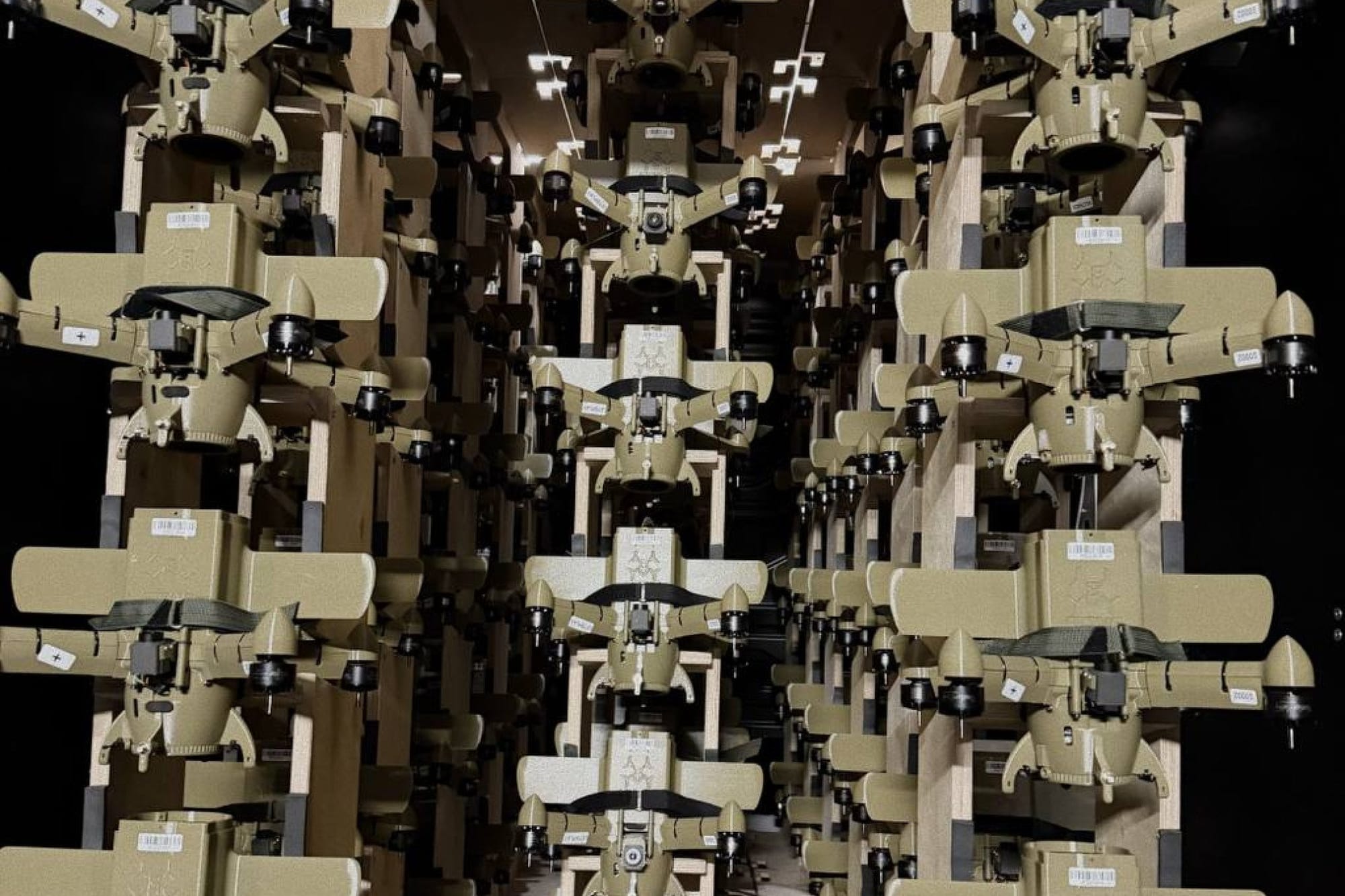
Innovations get copied all the time during conflicts. But even as Ukrainian interceptor drones proved highly effective with a 95% kill rate, Russia has not copied them to protect its high-value assets that are getting destroyed by Ukraine’s long-range drones every single day now. The reasons for this likely range from Russia’s lack of operational architecture to its doctrinal approach, which favors an offense-driven strategy over building a mass defensive drone layer bottom-up.
The few interceptor concepts the Russians presented, such as the Yolka, remained discrete platforms and have not been integrated into a scalable system capable of defending large surface areas. A closer look at the Ukrainian and Russian interceptor systems immediately indicates a technological gap. While Ukraine’s interceptor UAVs are more mature and technologically advanced, combining different sensors, EO/IRs, warheads and autonomy, Russian drones lack these highly advanced structural components and have likely limited production and testing.
Part of this gap stems from industrial constraints. Russian drone production continues to depend heavily on imported electronics and other critical components acquired through indirect supply chains. Sanctions have increased reliance on Chinese substitutes, while access to high-quality avionics, optics, batteries, and semiconductors remains uncertain. That is not the case for Ukraine, as Western companies are stepping up their support to create more alternative routes for better technologies.
More importantly, Russia has allocated the bulk of its UAV manufacturing capacity toward offensive systems, leaving interceptor development without the industrial priority required for rapid scaling.
The reason is likely doctrinal. Ukraine faced a deteriorating cost-exchange ratio as Russian Shahed attacks intensified and air-defense missile inventories dwindled. Cheap interceptor drones became the best way to protect critical infrastructure. But Russia never faced a comparable challenge. Its air-defense architecture remained heavily centered on layered SAM systems, anti-aircraft guns, and electronic warfare.
As a result, Moscow had little incentive to build a dedicated interceptor-drone ecosystem. Now, as Ukrainian long-range drones strain its traditional defenses and alter the economic calculus, Russia is finding it difficult to replicate Ukraine's model because it never developed the operational architecture to begin with.. Instead, it is easier to iterate on existing capabilities and double down on the offensive side because building a comparable defensive ecosystem would require more time and resources.
This doctrinal divergence has produced profound differences in command-and-control (C2), sensing, and training. Ukraine built an integrated architecture that links acoustic sensors, radars, and command networks to provide early warning and cue interceptor launches. It adopted a decentralized approach by establishing dedicated unmanned air-defense units and expanding operator training across military and civilian organizations.
Russia did neither fully. It possesses sophisticated radar assets, but it has not yet fielded a comparable nationwide drone-detection and cueing network. Without that architecture, interceptor drones never became part of a coherent defensive layer. Ukraine's faster adaptation cycle also indicates that this gap will likely persist in the coming months.
There are some opportunities to narrow the gap. If Russia can figure out how to build a large-scale acoustic and sensor-based alert network and make interceptor drones a formal procurement policy, it can likely leverage its substantial UAV industrial base to expand production rapidly. It won’t be easy and could definitely be a game-changer in protecting against Ukrainian deep-end strikes.
China Watch: Robo Cops, Smart Drones & Local Engines
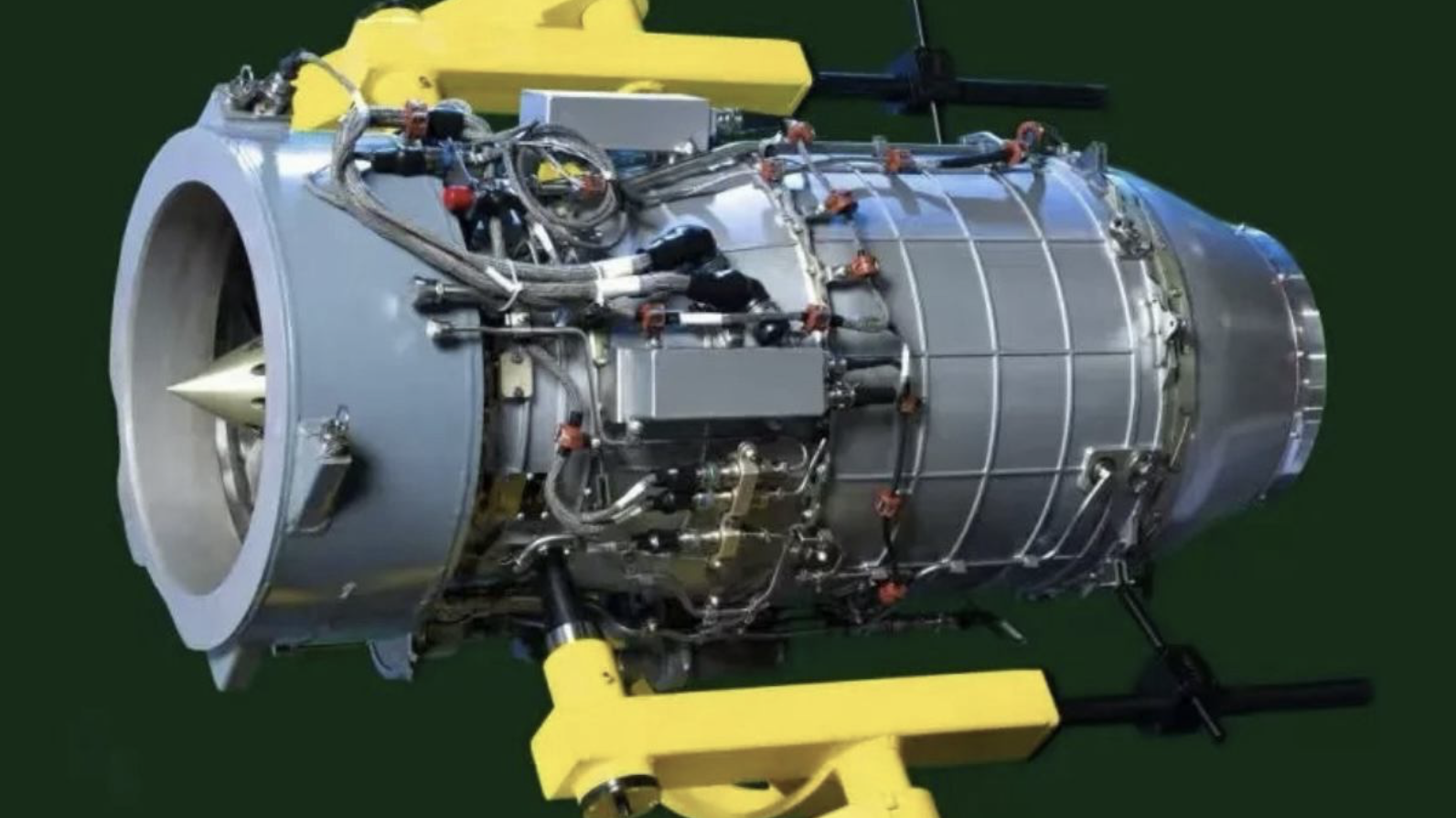
- Aero Engine Corporation of China has completed the maiden flight of its indigenous 600kg thrust-class turbofan engine, the F406. The flight was conducted on an advanced meteorological drone in a twin-engine configuration, marking the first independent control and domestic application of medium and small-thrust high-end turbofan engines in the general aviation power sector.
- China is piloting its first urban management enforcement program where drones, a robot and human officers tag-team during patrols. The system begins with real-time drone monitoring to identify street violations and share the information with the human-robot patrol unit. The robot then provides support in auxiliary tasks, including explaining policies.While assessment and contextual judgments lie with the human officers, this demonstrates China’s efforts to ramp up use of unmanned systems in real-world public operations.
- For Beijing, a domestically controlled turbofan core adaptable across multiple UAV classes reduces dependencies on foreign propulsion systems. This will likely shorten development cycles of key platforms and bolster domestic supply chains. The development also signals the emergence of a reusable propulsion baseline for modular UAVs, which could accelerate fleet standardization built around a common indigenous propulsion architecture.
On Our Radar:
Russia Hardens Infrastructure Against Drone Threats
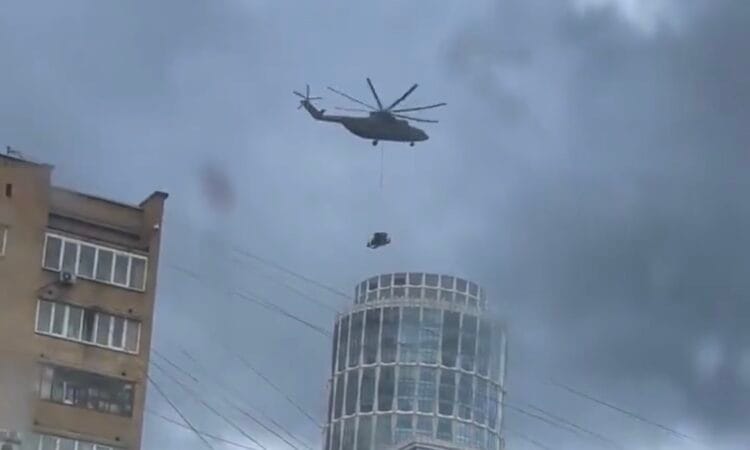
Russia is compensating through simultaneous passive and active hardening: new C-UAS units are being mounted on Moscow rooftops, container terminals are integrating AI drone threat detection, and researchers are rushing to developed multi-layer electrical grids that can absorb drone strikes and fragmentation. The rush of counter drone infrastructure reflects the recognition that Russia's traditional SAM-and-EW architecture cannot defend the full surface area of critical infrastructure against Ukraine's expanding long-range strike capacity. The reliance on physical barriers and localized point defense rather than a coherent interception layer confirms the doctrinal gap the Deep Dive identifies, and signals that Russia is building around the problem rather than solving it. (MK.ru, Kommersant, Unmanned Airspace)
US and China Pursue Different Drone Mothership Concepts
The US Marine Corps is exploring legacy helicopters as airborne command posts for FPV drone operations, while China this week unveiled the Jiu Tian, a large modular UAV purpose-built to deploy drone swarms against enemy air defenses. Both forces are independently concluding that the limiting factor in drone mass is not the drone itself but the control and launch infrastructure behind it. If the mothership model matures on both sides simultaneously, the next major contested environment will feature not just drone-on-drone engagements but competing mothership suppression campaigns, a doctrinal layer that current C-UAS planning has not fully accounted for. (Business Insider, Cronista)
Countries Scramble to Fill Talent Gap for Drone Operations
Militaries worldwide are confronting a severe human capital deficit as the rapid acquisition of unmanned systems outpaces their ability to train operators and technicians. The Chilean Navy recently issued a tender for a specialized training course covering drone assembly, electronics, and flight testing, while the Nigerian Army formally requested funding support for AI and drone warfare training to modernize its capabilities. These requests, mirrored across NATO and the Indo-Pacific, highlight a structural bottleneck: the proliferation of hardware is relatively cheap and fast, but building the institutional knowledge base to maintain, repair, and tactically employ those systems remains slow and expensive. (Infodefensa, Punch)
Latvia's 5% GDP Defense Commitment Reflects Drone-Era Budget Logic
Latvia's new government has committed 5% of GDP to defense with an explicit priority on AI, drone systems, and electronic warfare – a budget posture that would have been unthinkable for a country of Latvia's size five years ago. The commitment reflects a hard-nosed calculation that deterring a peer adversary in the drone era requires persistent sensor coverage, layered EW, and a continuous attritable inventory that legacy force structures cannot provide. The fact that a frontline NATO state of 1.8 million people is now structuring its entire national budget around drone-era deterrence requirements is the clearest indicator yet that the cost floor for credible defense has permanently shifted upward. (Press.lv)
Ukraine Decentralizes Its Counter-Drone Effort
Kyiv is formally opening the counter-drone problem to private defense technology companies, allowing them to develop, test, and field intercept solutions against live Russian attack drones without waiting for state procurement cycles. The move is a direct acknowledgment that the adaptation tempo of the threat (Russia is modifying Shahed flight profiles and timing patterns on a near-daily basis) exceeds the response speed of any centralized military acquisition process. By treating the private sector as a parallel innovation layer rather than a downstream supplier, Ukraine is institutionalizing the same decentralized iteration model that gave it an early advantage in FPV drone development, and betting that the same approach will hold as the C-UAS problem grows more complex. (Business Insider)
Fiber-Optic Drone Proliferation Is Outpacing Defense Adaptation
Fiber-optic FPV drones, which first appeared at scale in Ukraine, are now actively disrupting defense logic in Lebanon and Myanmar. In Lebanon, Hezbollah's deployment of cable-guided UAVs is rendering Israeli EW systems ineffective and forcing the IDF to redesign its integrated defense architecture from scratch. In Myanmar, both state forces and non-state actors are fielding the same technology against each other, confirming that jam-resistant drone control has crossed the threshold from battlefield innovation to widely available TTP. The speed of this spread carries shows that successful tactics, techniques, and procedures now propagate across theaters in months rather than years, and any defense architecture built around the assumption that a new threat will remain geographically contained is already obsolete by the time it is fielded. (Jerusalem Post, Nikkei)
Hardware Innovations and Tactical Adaptations
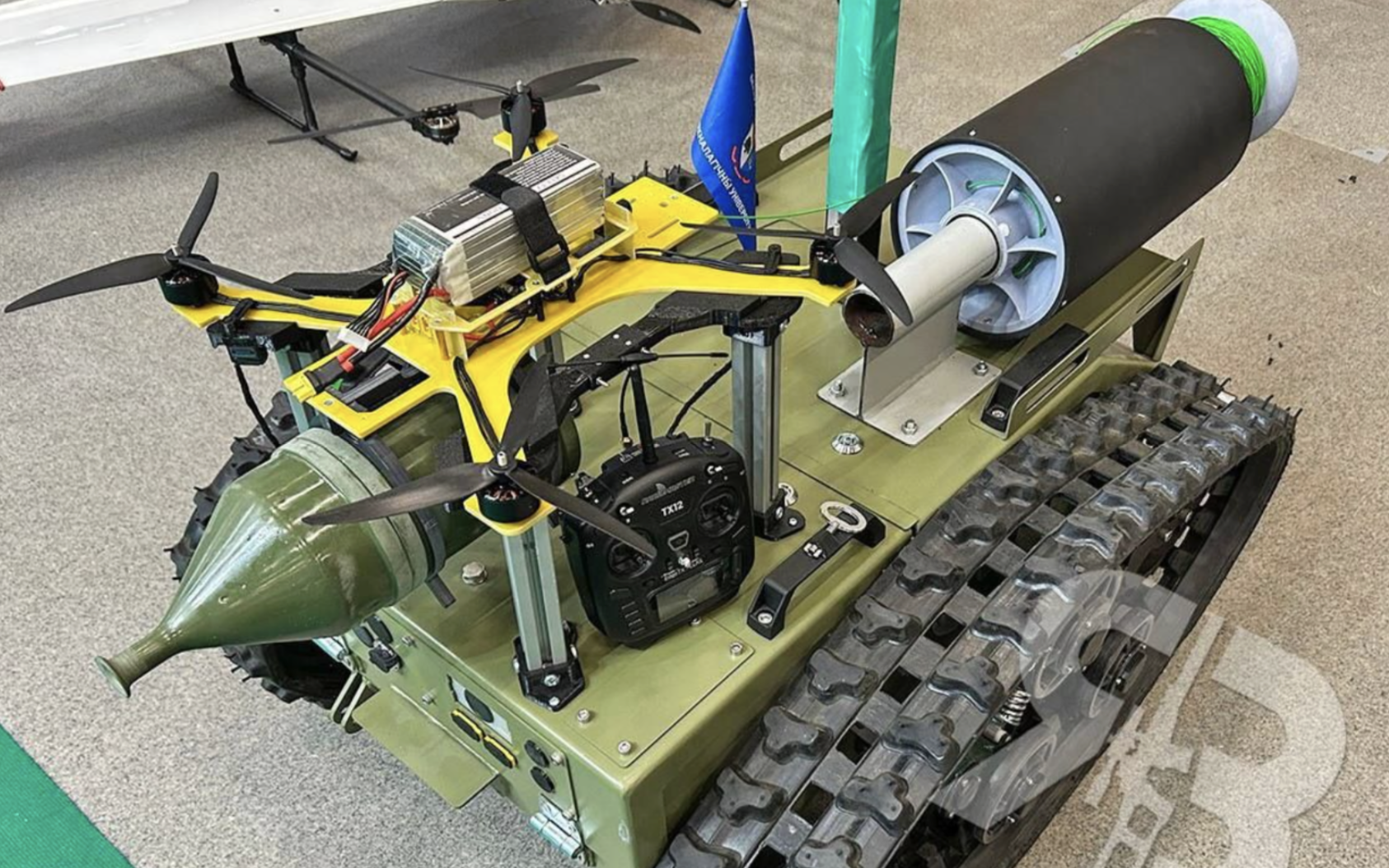
- Suicide UGVs: Both Russia and Ukraine have begun configuring their UGVs to be tethered to fiber-optics in heavily contested EW-jammed front lines. A unit of Russian soldiers was also reported to have equipped their fiber-optic UGV with 2 anti-tank mines, likely to use it as a kamikaze platform against Ukrainian soldiers in trenches. These innovations indicate that UGVs are likely evolving from mission-specific systems into multi-role platforms capable of both independent defense and offense.
- Contact-Charge Drones: Russian soldiers are equipping their FPV interceptor drones with a forward-extended contact charge attached to a long arm mounted in front of the drone to counter the Ukrainian fixed-wing drones mid-air. The configuration signals a move toward contact-fuzed interception, where physical touch rather than precision collision becomes the kill mechanism. Contact with the charge can likely damage the airframe, propulsion, or onboard electronics, while allowing the interceptor to be reused.
- Drone-slasher platform: A Russian mobile counter-drone fire group reportedly used a quadruple mount of 4-barrel GShG-7.62 machine guns on an armored KamAZ-4385 chassis to create a dense ‘wall of fire’ against incoming drones at short range. Each gun launches up to 6,000 RPM, providing a likely high-density solution against strike UAVs in the last mile of the engagement envelope. The makeshift system reduces interception precision requirements by saturating the drone’s predicted flight path with bullets, but the difficulty of translating the raw rate of fire into reliable kills remains.
What We're Reading
- Ukraine Is Testing Out Cheap New Interceptor Missiles to Battle Russia's Jet-Powered Attack Drones: Ukraine is already developing low-cost missiles to counter the Geran-5, closing the adaptation loop before Russia's jet-drone base is fully operational. (Business Insider)
- US Military Is Using the Southern Border as a 'Sandbox' to Test Out Counter-Drone Tech: Cartel drone flights are giving US C-UAS systems their first sustained operational exposure outside a declared conflict zone. (Business Insider)
- Europe, NATO Warn Moscow After Drone Hits Romania: A Russian drone striking a building on NATO territory moves the alliance closer to the threshold where a political warning is no longer a sufficient response. (Radio Free Europe)
- Baltics Turn to Ukraine for Drone Bomb Shelters: Baltic governments are treating Ukrainian civil defense doctrine as the operational baseline, accepting that some drones will get through. (Politico)
- Armenia Unveils Jet-Powered Interceptor Drone: The DDS-10K is Armenia's first domestically developed high-speed autonomous interceptor, reflecting how the demand for sovereign C-UAS capability is reaching militaries well outside the major power competition. (Defense Blog)
- Russian Troops Adapt to Ukrainian Drones: Russian SOF in Donetsk are restructuring supply runs and movement patterns around the assumption that AI-equipped Ukrainian drones will be overhead at all times. (Iz.ru)
- Ukraine Pioneers Robot Warfare: Ukrainian UGVs are now handling demining, casualty evacuation, and offensive operations, compressing the timeline for autonomous ground systems from experimental to operationally necessary. (FAZ)
- Taiwan Deploys Drone Battalions: Dedicated drone battalions across three combat zones signal that Taiwan is no longer treating unmanned systems as a supplementary capability but as a primary defensive layer. (Defense Post)
- Colombian Army Integrates SkyWiper Anti-Drone System: Colombia's adoption of the Lithuanian EDM4S jammer shows combat-proven European C-UAS hardware reaching Latin American militaries who have launched over 6,000 drone strikes in past years. (Infodefensa)
- Senators Push All-Domain Drone Warfare Strategy: Congressional legislation is attempting to force a unified AI-drone strategy across the services, a move that signals frustration with each branch developing autonomous systems in isolation. (Defense Post)
- Kim Jong Un Oversees AI-Guided Missile, Rocket Tests: North Korea's AI-guided cruise missile with terrain-matching and autonomous terminal guidance demonstrates that autonomous precision strike is no longer limited to states with access to Western or Chinese supply chains. (KCNA)
- Pentagon Bets $55 Billion on Autonomous Warfare: The DoD's FY27 request for autonomous munitions and AI systems is the clearest budget signal yet that massed autonomous capability, not platform superiority, is now the organizing principle of US force design. (Cipher Brief)


