


Welcome to this week’s Brief, our analysis of the most consequential developments in unmanned systems and drone warfare. Each week we track rapidly accelerating battlefield innovations, emerging doctrine, and the technologies reshaping how states and non-state actors deploy unmanned systems.
Have intelligence requirements, developments we should investigate, or perspectives to share? Contact us at info@dronesense.ai.

Deep Dive: Can Russia’s New Starlink Jammers Stop Ukrainian Drones?
Russia's new Starlink jamming system, Volna Kupol Garant ("Wave Dome Guarantor"), could mark the early stages of an anti-drone capability that is expensive today but might become cheaper as it is refined through operational use. These jammers are built in complexes, with a single complex comprising 6 trailers equipped with satellite dishes to protect a 20 km2 area. The system uses multiple satellite antennas to engage reportedly up to 8 communication channels simultaneously.
The jammers direct high-power interference at a designated Starlink satellite, disrupting the communication link between the satellite and ground-based user terminals. Once within jamming range, drones lose their connection to Starlink satellites, impacting their navigation capabilities.
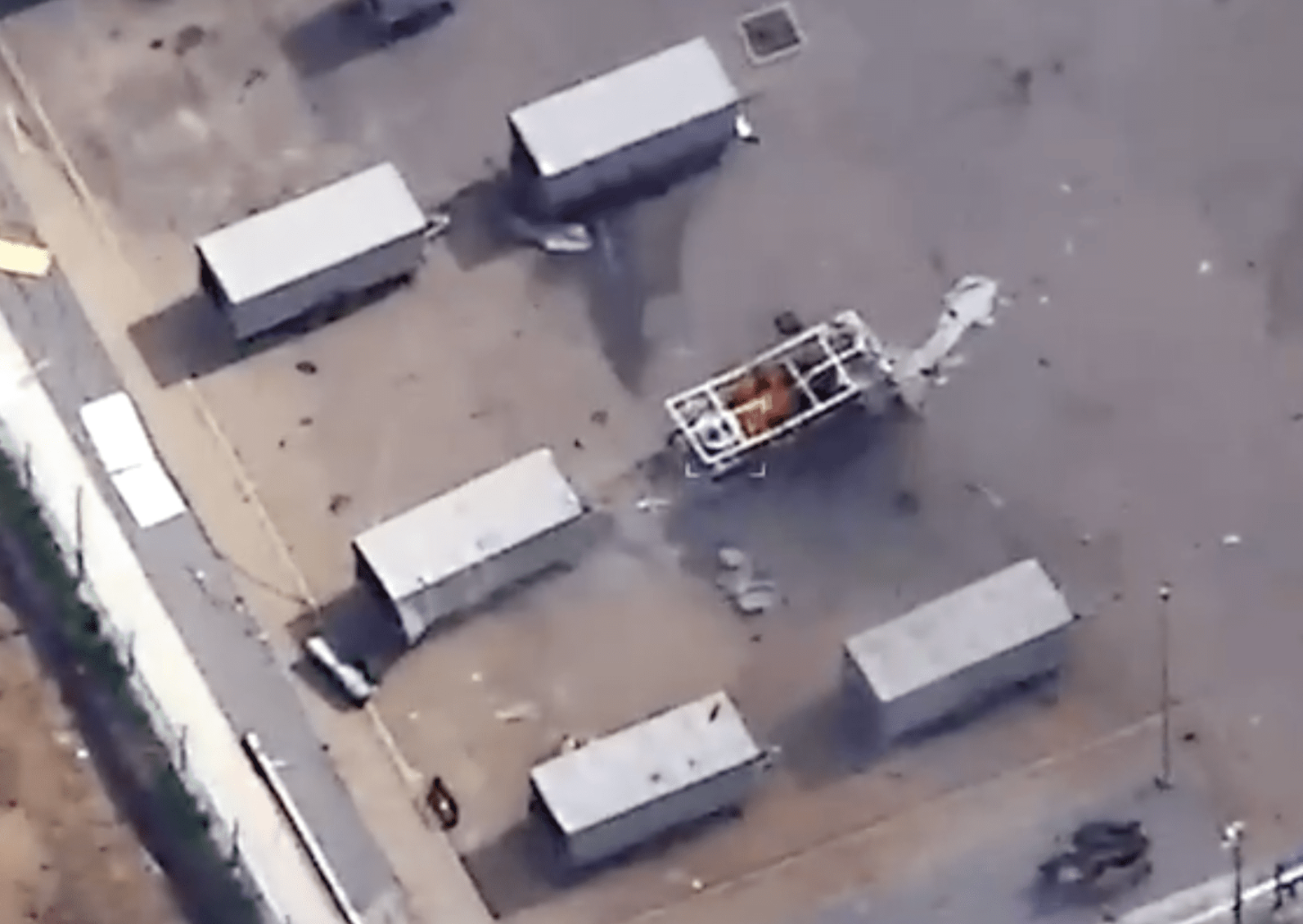
So far, 10 such jammers have been deployed on the front, and Ukraine has already destroyed 2 of them. The main reason is that these complexes have a large operational signature. Their size and dispersed layout expose them easily to surveillance and strike drones, particularly if deployed near the frontlines. Once detected, attackers can launch repeated high-volume strikes in the area to maximize the chances of a hit.
Although the EW system is mobile, it is unlikely to reposition fast enough to evade waves of incoming strike drones. It also appears to lack independent kinetic counter-drone capabilities, relying instead on nearby Russian mobile fire units or anti-drone teams to engage Ukrainian attacks.
And even if visual detection is evaded either through camouflage or by disrupting the video feed, jamming Starlink satellites requires massive output power. This causes the complexes to emit strong electromagnetic signatures that Ukraine can use to geolocate.
The Volna EW system also requires significant power to operate. It can run either on independent generators attached to each trailer or via an external electrical grid connection. This power dependency creates a vulnerability Ukrainian drone operators could exploit. Strikes against the infrastructure supporting these trailers could disable the system and expose it to follow-on attacks.
In other words, targeting the enablers behind a capability can be as effective as destroying the capability itself, as illustrated by Iranian drone strikes on US high-value detection systems in the Middle East.
The next problem is cost and volume. Ukraine has claimed that Russia is paying roughly $1.5 million per EW complex, making it an expensive solution. The physics are fundamentally mismatched against the scale of the Starlink constellation, as well: 1 Volna-Kupol-Garant is designed to jam a single Starlink satellite at a time, while Starlink operates over 9,000 satellites with beam-steering and frequency-hopping countermeasures.
Given the complexity of structures and smuggled internal components they most likely rely upon, the production tempo of these EW systems is unlikely to keep pace with the problem they are designed to solve. Russkiy Kupol is reportedly dependent on foreign-sourced advanced electronics for its supply chain — FPGAs, DSPs, high-frequency amplifiers - routed through China and Hong Kong.
Putin’s directive to the Ministry of Industry and Trade in early 2024 to increase the domestic component share in Russkiy Kupol’s systems clearly signals that Russia recognized this vulnerability in its EW value chain.
Despite their high cost and limited numbers, these EW systems have demonstrated some tactical value as point-defence tools protecting logistics nodes and high-value rear-area assets from Ukraine’s mid-range strike drones. This localized effectiveness is likely sufficient for Russia to justify continued production and deployment.
The system does not eliminate Russia’s need to develop a sovereign satellite network for military operations. In parallel, Starlink’s planned migration to V3 satellites with higher gain and more sophisticated anti-jam features will further reduce the effectiveness of uplink jamming at current power levels.
China Watch: Disaster Relief, Everest Test & HPM Weapons
- China is using heavy-cargo and agricultural drones, including DJI FlyCart 100 UAVs, to airlift trapped residents and provide emergency supplies to flooded areas in Southwest China’s Guangxi Zhuang autonomous region. The widespread use of drones in rescue operations has demonstrated their potential to save lives during extreme weather events and suggests they will likely be employed at greater scale across a wider range of missions.
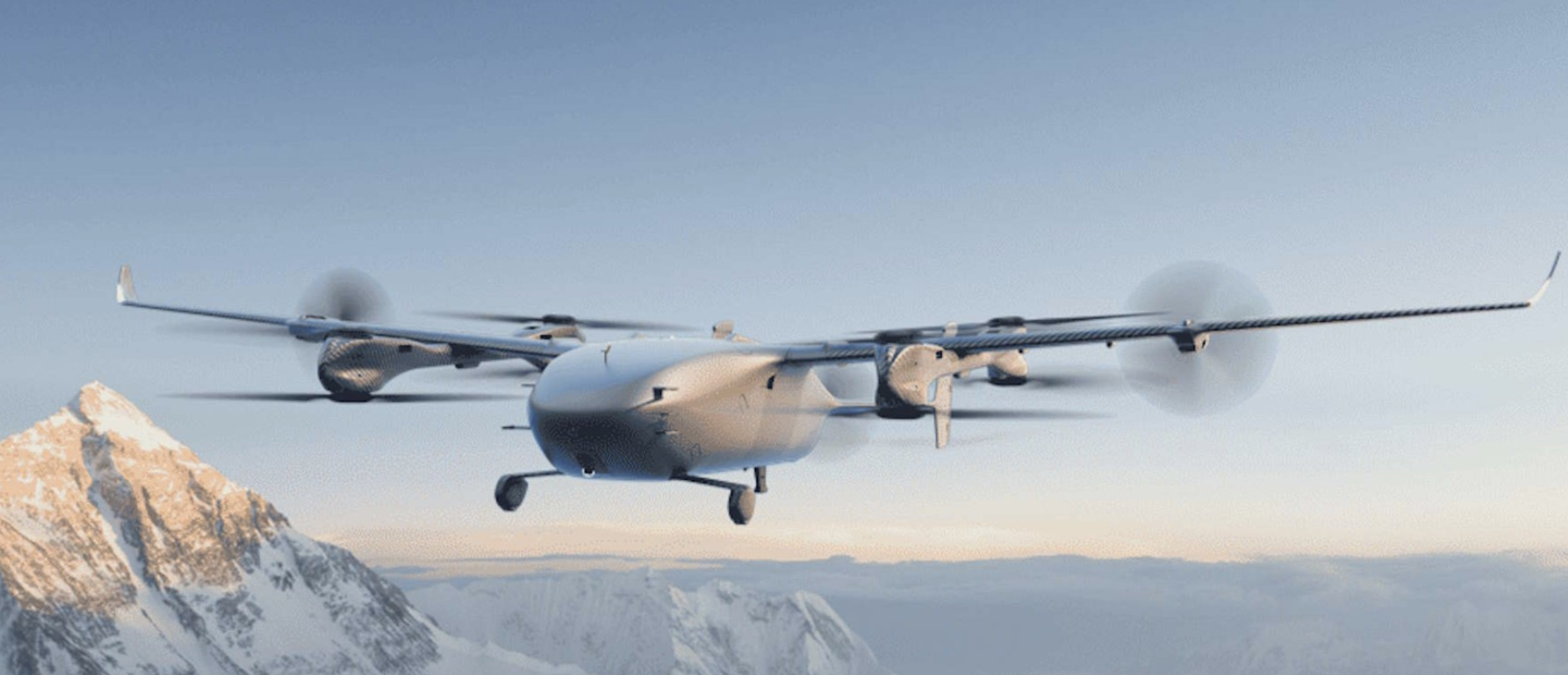
- DJI has unveiled their first eVTOL cargo drone, EV50, in a high-altitude test on Mount Everest, where the drone reached a final altitude of 29,072ft carrying atmospheric equipment. EV50 is designed for long distance deliveries, with a reported payload capacity of 50kg and a maximum flight range of 150km. Unlike DJI’s FlyCart models, it uses a lift-and-cruise design, and takes off and lands vertically before switching to fixed-wing flight for longer-range missions. This model shows DJI’s growing push into logistics, with heavy-lift drones designed to carry industrial loads in harsh operating environments.
- Chinese researchers have released information on several high-power microwave (HPM) weapons, including a 100 GW-class microwave weapon that links multiple high-power pulse generators into a single platform. Such weapon could likely target low Earth orbit satellites such as Starlink, which has been used by Ukraine for long-range drone missions under heavy EW environments. The information suggests Beijing is exploring anti-drone technologies that disrupt operations at multiple layers.
On Our Radar:
Reaper Losses Drive DIU to Institutionalize Attritable Drone Doctrine
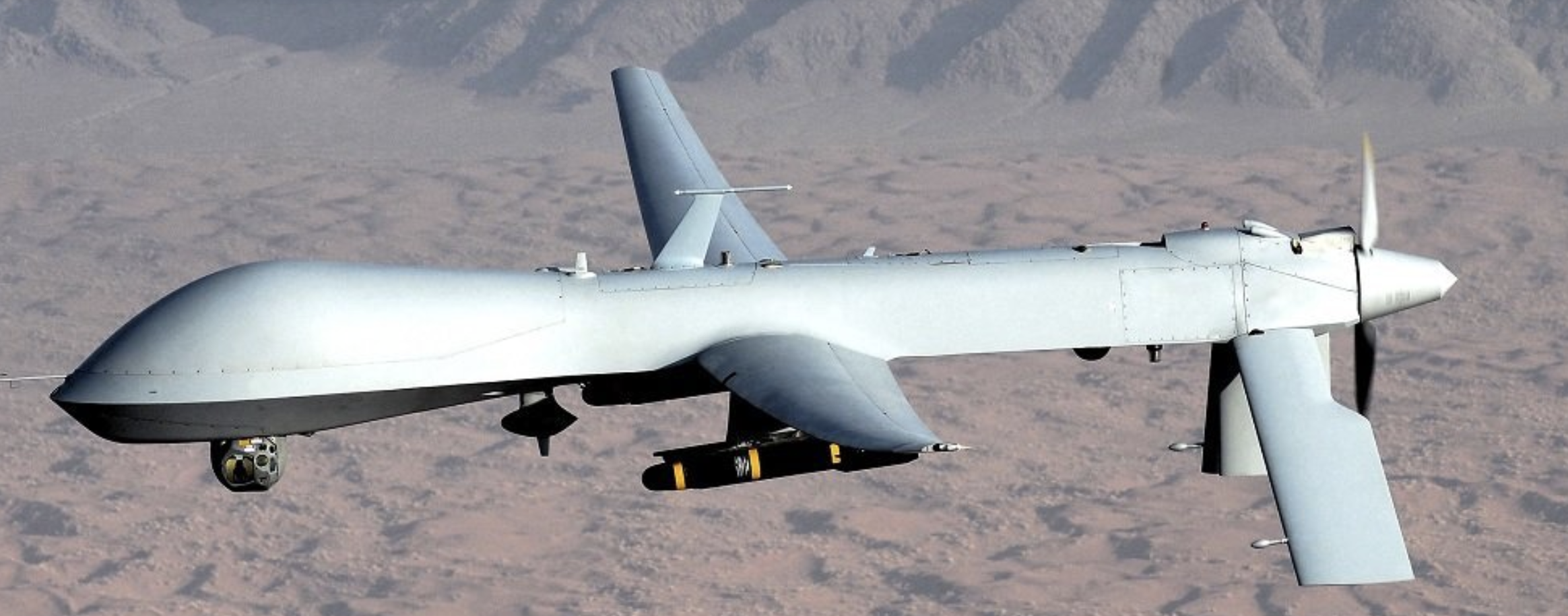
Operation Epic Fury cost the US Air Force 24 MQ-9 Reapers, cutting the fleet 54 aircraft below the service's 189-aircraft floor at up to $50 million per airframe. The loss appears to be driving DIU's recent request for Massed Modular Aircraft (MMA), codifying attrition as doctrine, a sub-$30 million drone built with the expectation that some will be lost, carrying 2,800lbs over a 2,300nm combat radius. In parallel, DIU is also collapsing its 7 portfolios into 3, elevating drones and autonomous warfare to a top-line priority and cementing attritable mass as a core investment thesis through FY2031. (Breaking Defense) (DefenseScoop)
Russia is Fast-Tracking North Korea’s Multi-domain Drone Shift
North Korea's combat exposure in Ukraine is enabling it to expand the production of Shahed-136-derivative theater-range drones and smaller UAVs. Russia is central to this effort, with reports indicating its commanders are training North Korean troops on maritime drones, likely to strengthen Pyongyang's control over undersea assets and increase pressure on South Korea. South Korea's cable-dependent infrastructure sits exposed to a doctrine already validated against Ukraine and Iran, where civilian energy and communications networks were struck directly. (National Defense Magazine)
Pentagon Laser Awards Target the Cost Math Iran's War Exposed
The Department of War (DOW) has awarded nLIGHT Defense and Lockheed Martin Aculight $86 million in initial Joint Laser Weapon System (JLWS) contracts with a combined program ceiling of $847 million. The awards support the "Golden Dome for America" missile defense architecture and target the cost-per-intercept economics exposed by the Iran war. Lasers will supplement, not replace, kinetic interceptors, but nLIGHT's disclosed $627 million ceiling on its agreement suggests the program's headline figure will likely expand. (Military.com) (Breaking Defense)
Rural Areas in South America Have Become Testing Grounds For Criminal Drones
Criminals across South America are converting consumer drones into weapons as authorities struggle to develop effective counter strategies. Colombia's ELN recently used drones to strike Tibu Airport near the Venezuelan border, injuring 3 workers. In Mexico's Guerrero state, the FTO-designated La Nueva Familia Michoacana drone-bombed the rural community of Guajes de Ayala, while 100,000 security forces were deployed to World Cup host cities. Both incidents signal a concentration of drone attacks in rural areas, likely making them a regional blind spot. (The Defense Post) (AP News)
DARPA Prize Challenge Targets the Drone Logistics Cost Barrier
DARPA's Lift Challenge is offering $6.5 million to teams that can quadruple the payload-to-weight ratio of vertical-lift drones, from current 1:1 baseline to new 4:1. The effort targets the cost-per-pound-per-mile economics that have kept heavy-lift UAS logistics uneconomical, and it is framed as advancing the DOW’s Drone Dominance initiative, positioning contested logistics alongside strike and ISR as a funded priority. The challenge also comes as Chinese drone firms advance dual-use logistical UAVs, highlighted by DJI's recent high-altitude eVTOL cargo drone tests above Mount Everest's elevation. (DefenseScoop) (DARPA)
Hardware Innovations and Tactical Adaptations
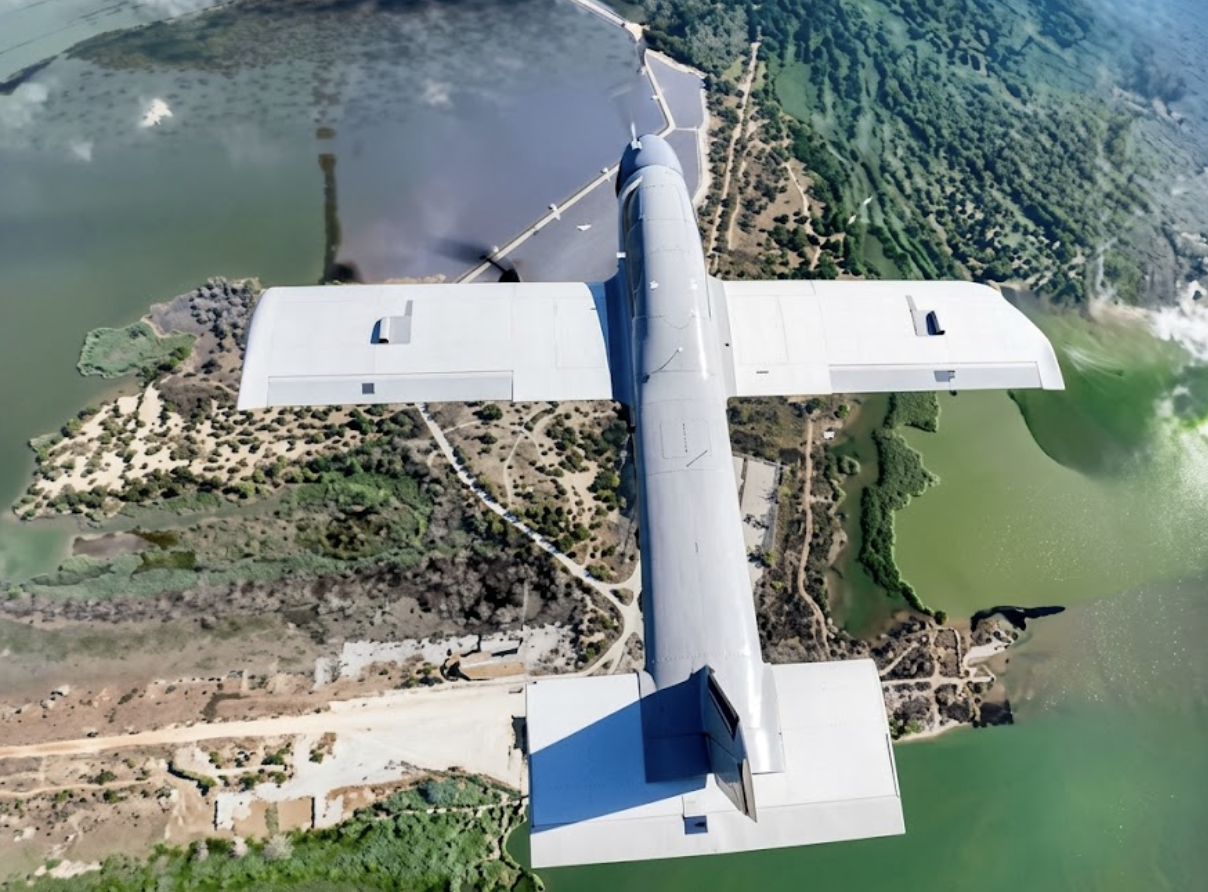
- Autonomous Molniya Drone: Russia has started using a fully autonomous version of its cheap Molniya drone to attack Ukrainian facilities in Zaporizhzhia. The new variant carries a camera and computer onboard with no control antenna for live pilot steering. The drone most likely uses onboard visual processing to navigate & search for targets before attacking. Given Molniya’s weakest part used to be its control link, the configuration is a direct response to the effectiveness of the Ukrainian EW campaign.
- Fiber-Optic Strike Drone: Russia is reportedly experimenting with a new fiber-optic, wing-type strike drone with an operational range of up to 50km and a warhead capacity of up to 10kg. The model is designed to be mass-produced, similar to Molniya, but for long-range missions. The fiber-optic tethering will provide immunity against Ukraine’s EW measures, and will likely transmit high-quality video feed to operators, enabling them to fly at very low altitudes and avoid ground obstacles.
- Mini FP-2 UAV: Russia claims to have recovered a previously recorded Ukrainian fixed-wing strike UAV, which it has labelled as a ‘mini FP-2.’ Although no formal link has been established between the FP-1/2 manufacturers and this newly recovered drone, it is likely one of the many new models Ukraine tests on the frontline each month. Alternatively, Ukraine could be testing newer models as decoys to overwhelm Russian air defenses, create confusion, and compel them to expend costly countermeasures.1
What We're Reading
- JIATF-401 Publishes Counter-Drone Handbook. The publication of "Small Drones, Big Problems" synthesizes warfighter feedback and lessons from Ukraine and the Middle East, marking the institutionalisation of what had previously been a fragmented, service-by-service counter-UAS response. It also establishes for the first time a common vocabulary and layered defence doctrine shared across the US government, industry and academia. (Army.mil)
- AeroVironment Wins $500M JIATF-401 Domestic Shield Contract. The DOW’s award of a 3-year $500 million IDIQ contract to AeroVironment for counter-UAS and counter-small UAS capabilities under JIATF-401's Domestic Shield Programme signals that the US is moving from ad-hoc procurement to a standing architecture for protecting critical infrastructure at home. (Investing.com)
- Forterra Deploys Over 100 Autonomous Ground Vehicles in Ukraine. Forterra's deployment of Lancer ATVs across 1,100 missions in Ukraine — carrying supplies, ammunition and casualties — shows that remotely operated ground logistics platforms are now operationally viable in a contested environment, even as the gap between teleoperation and full autonomy limits specific functions without human oversight. (TechCrunch)
- Ondas Acquires DZYNE Technologies for $876M. The acquisition bringing the Ultra long-endurance ISR drone, the LEAP medium-altitude platform, the Blitz strike drone and the IonStrike interceptor under a single Palantir-integrated command architecture reflects a broader consolidation pattern in the US autonomous systems industry, where the competitive advantage now lies in the ability to offer a vertically integrated portfolio. (Breaking Defense)
- US Air Force Advances Autonomous Aircraft Inspection with Drones and Ground Robots. Asylon's MARIA system entering operational deployment suggests the Air Force now views coordinated air-ground robotic inspections as mature enough to replace manual walk-around checks, potentially changing how sustainment manpower is calculated across its aircraft fleet.(Interesting Engineering)
- Turkey and Bangladesh to Establish Joint Drone Factory in Bogura. Bangladesh's decision to co-locate a joint venture drone manufacturing facility with Turkey next to the country's northern Air Force base reflects a broader pattern of developing states embedding drone production capacity directly into new military infrastructure, compressing the timeline between procurement dependence and indigenous capability. (The Daily Star)
- KDDI to Study AI-Powered Drone Deployment in Vietnam and Philippines. Analysing deployment of AI drones for disaster response and infrastructure inspection in Vietnam and the Philippines illustrates how commercial drone operators from mature markets are following infrastructure deficits and disaster vulnerability into Southeast Asia, building the regional presence that will determine which national technology ecosystems set the standards for civilian drone adoption across the Global South. (Vietnam Investment Review)
- KP Police Foil 341 Drone Attacks in Six Months. Khyber Pakhtunkhwa police's establishment of Pakistan's first dedicated UAV Division and its reportedly foiling of 341 terrorist drone attacks in the first half of 2026 places sub-state counter-drone operations at a scale and operational tempo that most NATO member states have not yet encountered, revealing how quickly drone-enabled insurgent tactics are outpacing the institutional frameworks designed to counter them. (Dawn)
- Uzbekistan Intercepts Drug-Smuggling Drone from Afghanistan. Uzbekistan's State Security Service seizing a drone carrying over two kilograms of opium crossing from Afghanistan into the Surxondaryo region demonstrates that the same low-cost, commercially available platforms driving tactical innovation on conventional battlefields are now a primary logistics vector for cross-border narcotics trafficking. (Afghanistan International)
- Madagascar Security Opens Fire on Drones Tracking President's Motorcade. The presidential security detail of Madagascar's coup-installed government firing on two unidentified surveillance drones trailing President Randrianirina's motorcade illustrates how a threat vector previously associated with peer-state conflict is quickly being adopted for political violence.. (Caliber.Az)


