


Welcome to this week’s Brief, our analysis of the most consequential developments in unmanned systems and drone warfare. Each week we track rapidly accelerating battlefield innovations, emerging doctrine, and the technologies reshaping how states and non-state actors deploy unmanned systems.
Have intelligence requirements, developments we should investigate, or perspectives to share? Contact us at info@dronesense.ai.

Deep Dive: Are Anti-Drone Stacks on Armored Vehicles a Viable Long-Term Solution?
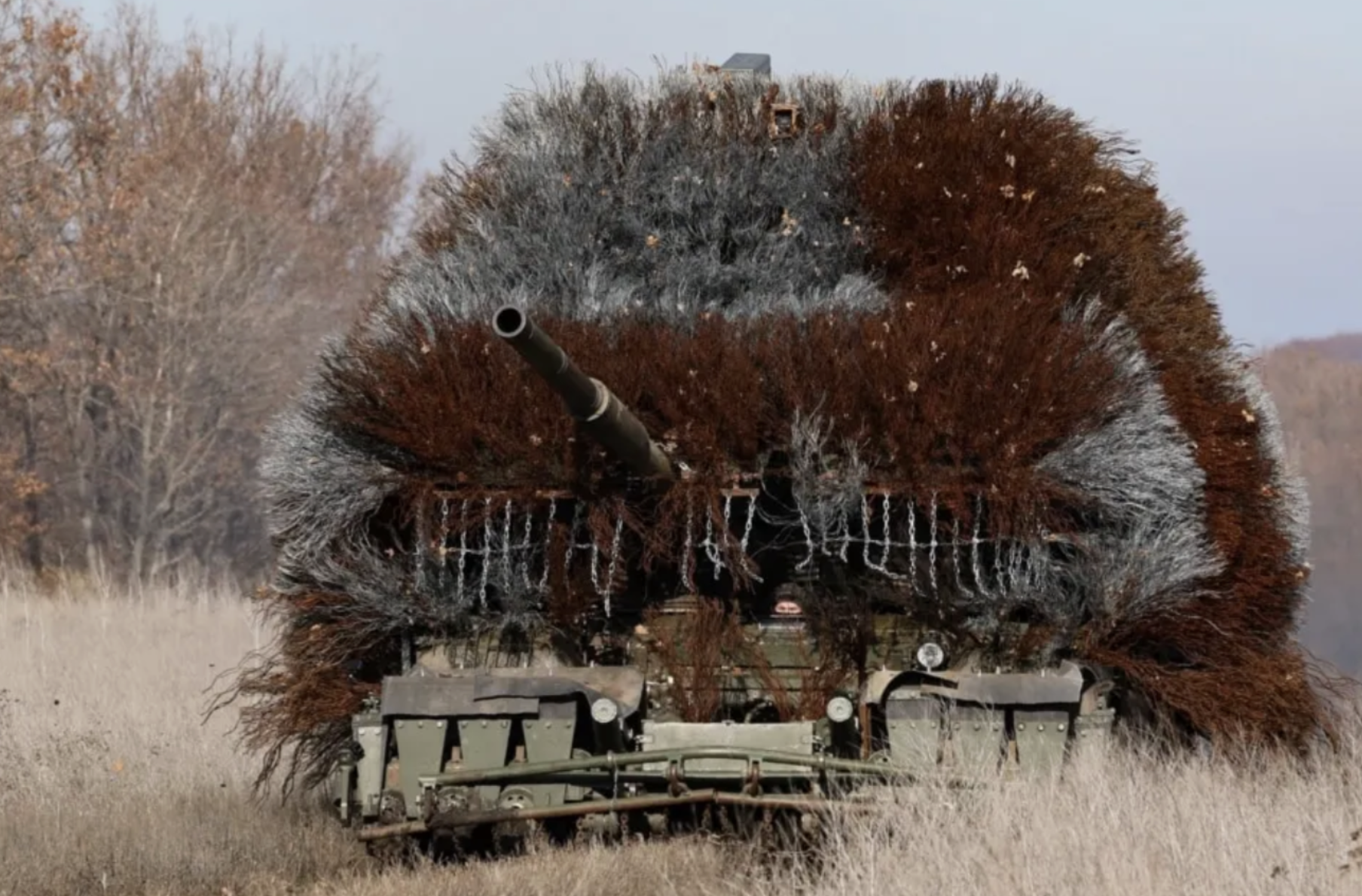
Every armoured vehicle now looks like a hedgehog to survive drones. A blend of active (EW sensors, mounted DEW, etc.) and passive (mesh nets, metal cages, etc.) anti-drone stacks is quickly becoming a common feature of heavy combat vehicles that once decided outcomes. But even as armies shore up defensive measures, attack vectors continue to outpace calibration, adding costs to an already expensive platform.
Achieving a favorable cost-exchange ratio then becomes inherently challenging, suggesting that armored vehicles will likely require a role overhaul rather than mere improvised add-on solutions to survive unmanned threats.
One of the clearest ways this is showing up is in the decline in the use of tanks since 2022 in the Russia-Ukraine War. The key reason lies in a lack of adaptability, even as the survivability baseline changed fundamentally on the frontline. Tanks that relied on concealment to lead assaults are being tracked outright long before contact through persistent aerial surveillance, particularly across kill zones. Once detected, they are immediately neautralized/disabled by roughly a dozen cheap strike drones. This is because tanks were built to fight other tanks, not swarms of explosive-laden small drones.
That role mismatch demands protection beyond armor, with jammers, sensors, passive shields, and interceptor drones forming the new baseline rather than specialized capabilities.
But mounting anti-drone stacks has its own challenges. Every additional defensive layer competes for finite engineering or Space, Weight, and Power (SWaP) capacity on armored vehicles. Jammers need larger generators/ batteries to meet greater power demand, sensors need unobstructed mounting locations, while radars and electronic warfare (EW) systems compete for electromagnetic bandwidth. Each subsystem also has different degradation points that impact overall performance.
Under combat conditions, the stack’s effectiveness end up depending heavily on continuous software updates, calibration, and maintenance. From an engineering standpoint, the challenge then lies in integrating multiple defensive functions without compromising the platform's performance.
Limited capacity further leads to hard operational trade-offs. Drone cages increase the vehicle's external profile and can restrict movement through dense terrain or urban environments. Defensive systems also create new signatures through radar emissions, electronic activity, and additional external equipment. In fact, every protective measure creates fresh incentives for attackers to adapt. Double-tap FPV attacks, where a first drone damages or removes protective structures, allowing the second to exploit newly exposed vulnerabilities, illustrate exactly this.
As drones dominate the battlefield, survivability for armored vehicles will likely depend less on individual vehicles and more on formations that redistribute functions across integrated manned-unmanned team architectures.
Traditional mission sets are also getting distributed. Russia captured more territory during its 2025 offensives even as it used fewer tanks. Small infantry assault groups supported by a wide variety of drones, artillery, and persistent ISR did the job more cheaply. Several functions of armored vehicles are increasingly being atomized across attritable unmanned platforms, as UAVs assume reconnaissance, FPVs conduct precision strikes, and UGVs manage logistics, route clearance, and casualty evacuation. And with a replacement rate and industrial tempo that far outstrip that of traditional armored vehicles.
As affordable mass makes denial cheaper, armored vehicles should be procured as nodes within manned-unmanned teams, with the data architecture to control robotic wingmen, rather than as standalone platforms. Tanks are unlikely to disappear in the near term because armies around the world have invested too heavily in existing fleets to phase them out entirely. Instead, manufacturers will most likely integrate anti-drone capabilities into their core designs as armored vehicles evolve to take on a new role in a more dispersed operational environment.
China Watch: Secret Trainings & Agile Systems
- Beijing has blacklisted 4 Japanese government defense research institutes and placed 20 defense-linked Japanese companies on an export-control list. Japanese drone maker, Terra Drone Corporation, has also been put on a watchlist, requiring enhanced licensing scrutiny for exports of Chinese dual-use items. The move will likely push Japan to ramp up development of its non-Chinese drone supply chain, as Beijing weaponizes its dominance in the low-cost components market to retaliate against Japanese PM Takaichi’s hardening security posture.
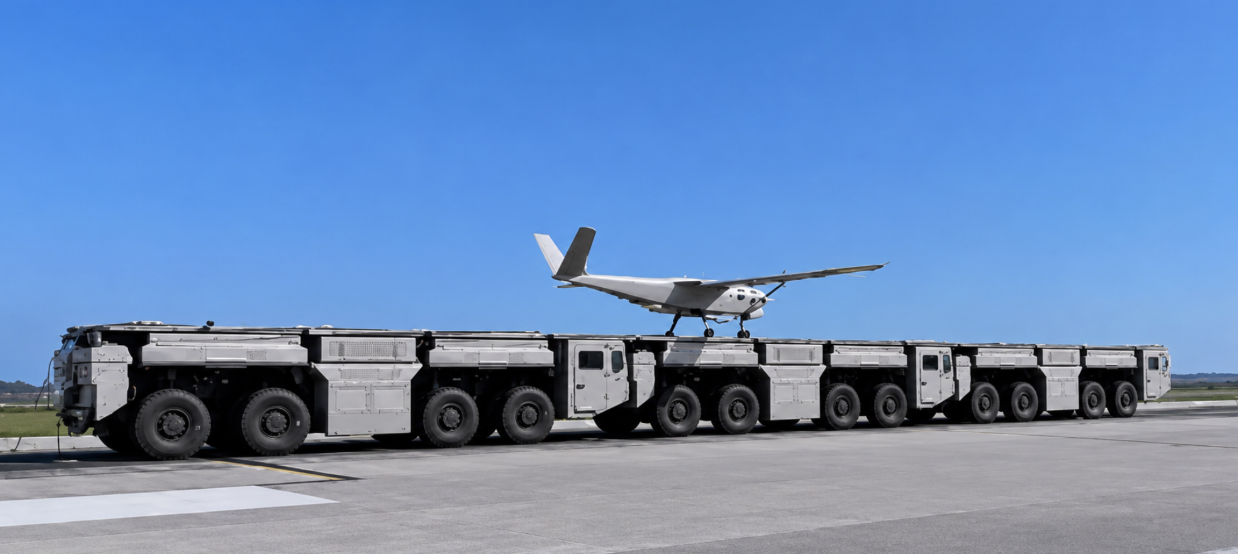
- China unveiled a truck-mounted modular and containerized electromagnetic aircraft launch system (EMALS) capable of launching drones from almost any location. The EMALS comprise 3 or 4 linked trucks that can be quickly aligned to form a continuous launch platform. The catapult then accelerate a fixed-wing drone to take-off speed before releasing it into flight. The system reflects China’s growing preference for dispersion, modularity, and rapid assembly as it integrates unmanned systems across its defense forces.
- New details indicate that Russian soldiers conducted extensive training sessions with their Chinese counterparts on FPV drones, reconnaissance UAVs, EW and counter-drone measures at PLA facilities last year. This is likely one of many joint training activities in a quid pro quo arrangement, with China using the partnership to offset its lack of combat experience and Russia securing a steady supply of low-cost drone components.
On Our Radar:

UK Commits £300 Billion Defence Budget with Over £5 Billion Earmarked for Drones and Autonomous Systems
The UK announced a £300 billion military budget over four years this week, with Prime Minister Starmer explicitly framing the shift around AI, mass-produced drones, and laser air defense in place of legacy platforms. The plan commits more than £5bn specifically to drones and autonomous systems, drawing directly on Ukraine's operational model of rapid unmanned deployment and AI-integrated targeting. The harder question the plan does not answer is whether the procurement architecture that produced it can iterate at the speed the threat now requires. (Le Monde, Times of India, FT, Kommersant, Lenta.ru, ABC.es)
Hegseth Creates Autonomy Czar and New Drone Office as Senate Moves to Establish Robotics Warfare Command
Defense Secretary Hegseth this week created both a new autonomy czar role covering almost all ground, air, and sea unmanned programmes and a new DRPM-UxS office to centralise oversight and acquisition authority across the Pentagon's drone and autonomous systems portfolio. The Senate Armed Services Committee simultaneously approved establishing a Robotics and Autonomous Systems Warfare Command to unify AI-integrated warfare under a single command structure. Washington is reorganising faster than it is acquiring: the structural consolidation is real, but it does not address the underlying timeline problem the GAO has flagged every year for a decade. (Breaking Defense, Defense News, Defense Scoop, 81.cn)
Israeli Startup Develops Autonomous Tunnel Robots for Subterranean Warfare
Israeli startup Traysar has secured funding to develop autonomous ground vehicles designed for subterranean warfare and tunnel destruction, targeting military applications in GPS-denied underground environments. The demand signal is a direct consequence of aerial drone dominance: as persistent ISR and cheap strike drones make above-ground positions increasingly untenable, adversaries are moving critical assets below ground, and the tunnel networks of Gaza, Ukraine, and Lebanon have already established the operational requirement at scale. No current autonomous platform is equipped to operate there at scale, and Traysar is among the first to build specifically for that gap. (Mako)
US Navy Integrates MQ-25A Stingray Unmanned Refueler onto Aircraft Carrier
The US Navy confirmed the first integration of the MQ-25A Stingray unmanned aerial refueling tanker onto an aircraft carrier this week, the first time an autonomous platform has been embedded into a carrier strike group's operational architecture rather than evaluated in isolation. F/A-18s previously committed to the tanking role return to strike missions the moment the unmanned tanker assumes that function, directly multiplying the offensive output of the air wing without adding a single manned airframe. The integration marks the point at which autonomous systems stop being tested and start reshaping how carrier strike groups are structured and sustained. (Yonhap)
West-to-East Drone Flow Is Set to Fragment the Attack Stack
Helsing's delivery of AI-equipped HX-2 loitering munitions to Ukraine and Brave1's facilitation of over 500,000 system acquisitions through a performance-rewarding procurement model together illustrate how the West-to-East flow of drone technology is restructuring the innovation cycle. Each system that reaches the frontline returns failure and targeting data that feeds directly into the next iteration, compressing what was once a years-long development loop into weeks and producing an attack stack that fragments and evolves faster than any adversary C-UAS architecture can track. The implication for Western contractors is structural: systems built on fixed specifications and delivered through multi-year procurement cycles will likely degrade in operational relevance before their hardware lifecycles end, because the frontline has already moved on. (DW, Infodefensa)
Hardware Innovations and Tactical Adaptations
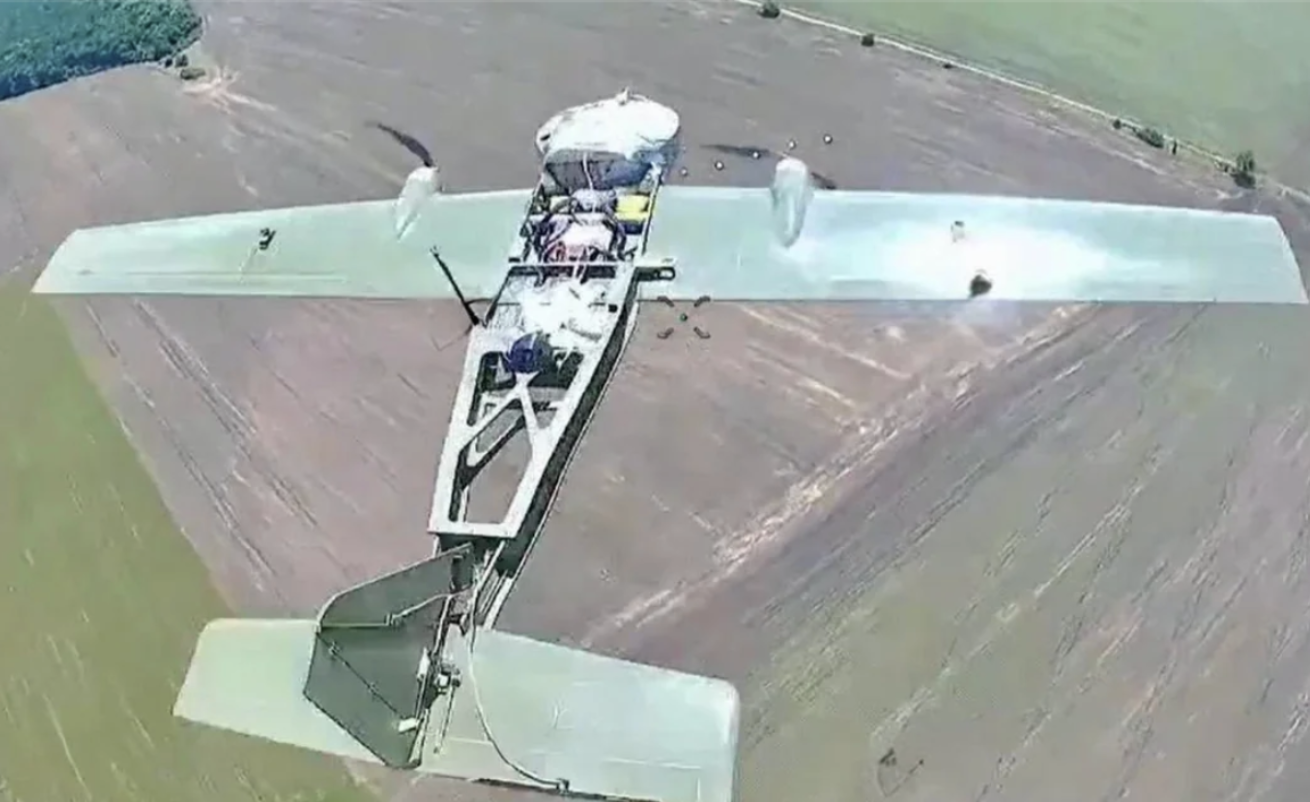
- UAV with Anti-tank Mines: Ukraine has intercepted a new fixed-wing, twin-engine Russian UAV with a larger payload capacity than the Molniya-2 drone. The new configuration is likely designed for long-range strike missions. The airframe uses an open-air structure made of wooden components, which keeps cost low and production fast. The UAV was equipped with TM-62 anti-tank mines in its nose section to detonate via contact or a modified impact fuse, indicating it was likely a one-way attack platform or used as a relay drone to scatter mines.
- Anti-drone Guns on Ships: A Russian LNG tanker, ‘Marshal Vasilevskiy ’, has reportedly begun mounting fully automatic anti-drone machine guns on tripod stands and sandbag barriers along the edges of open decks. While machine guns are effective against close-range targets when operators detect the drone early and maintain accurate fire, their effectiveness declines against swarms and fast-moving drones. With growing drone attacks, similar modifications are expected on other Russian vessels, including Russia’s shadow fleet that has been subject to Ukrainian offshore attacks.
- Gerbera Drones with Fuel Tanks: Ukrainian soldiers have observed a new tactical behavior by Russian Gerbera drones, which are now being fitted with additional fuel tanks. These UAVs reportedly enter Ukrainian airspace, maintain a stable altitude, and then return to Russian territory while carrying no visible payload. While their exact mission remains unclear, they are likely probing Ukrainian air defense coverage by collecting signals, mapping reactions and available routes, and testing radar coverage for subsequent strikes.
What We're Reading
- US Army Conceals Command Posts from Drones. The 4th Infantry Division is serving as a testbed for decentralised, data-synced command and control architectures designed to minimise electromagnetic signatures, suggesting that the US Army has concluded that fixed command infrastructure is no longer survivable against persistent drone ISR. (Defense Scoop)
- Smart Shooter Sees C-UAS Demand Grow Across US Military. Israel's Smart Shooter reports accelerating demand for its optronics-based counter-drone solutions across US military branches, a signal that point-defence against small UAS is now a baseline procurement requirement rather than a specialised capability. (Breaking Defense)
- Israel Integrates Iron Beam with Iron Dome Command and Control. The integration of Iron Beam's directed energy capability into Iron Dome's existing command and control architecture marks the first operational layering of kinetic and laser-based intercept within a single air defence network, with cost-per-intercept implications that will likely reshape procurement calculus for every NATO member currently reliant on missile-only systems. (The Defense Post)
- Israeli Drones Aid Venezuela Rescue Efforts. Xtend drone technology deployed by Mexican search and rescue teams in Venezuela demonstrates that the sensor fusion and navigation architectures developed for contested military environments are transferring directly into civilian emergency response, compressing the traditional civil-military technology adoption gap. (Jerusalem Post)
- Taiwan Integrates Drones for Asymmetric Defense. Taiwan's move to embed large-scale drone procurement into its asymmetric defense strategy is encountering domestic political resistance and logistical constraints that reveal how difficult it is to operationalise a mass-drone doctrine even when the strategic rationale is clear. (News Ifeng)
- Europe Needs Autonomous Layered Air Defense. European defense experts are calling for fully autonomous, AI-driven kill chains to counter accelerating drone threats, a position that directly challenges existing legal and policy frameworks governing lethal autonomous systems and will likely force a formal NATO debate on autonomy thresholds. (National Defense Magazine)
- Japan Develops Autonomous Anti-Ship UUVs for Pacific Defense. Japan's investment in AI-enabled unmanned underwater vehicles for anti-ship operations signals a strategic shift toward attritable subsurface assets as a cost-effective counter to China's naval expansion in the Pacific, where crewed submarine operations carry escalation risks that autonomous platforms do not. (China News)
- Colombia Defines National Anti-Drone Shield Architecture. Colombia's Ministry of Defense finalising the technical architecture for a national anti-drone shield integrating detection, command and control, and hard-kill layers reflects a broader pattern of mid-tier states moving from ad-hoc counter-drone procurement to codified national frameworks. (Infodefensa)
- Egypt Boosts Defense Manufacturing with AI Robotics. Egypt's Ministry of Military Production integrating AI-driven robotic arms into indigenous artillery production illustrates how autonomous manufacturing is enabling regional powers to reduce dependence on foreign supply chains and accelerate domestic defense industrial capacity. (Mako)
- Australia Accelerates Uncrewed Naval Capability. Australia and New Zealand accelerating autonomous underwater vehicles for mine countermeasures and surveillance signals that the Five Eyes alliance is treating uncrewed naval systems as a near-term operational requirement rather than a future capability, with implications for how AUKUS Pillar II autonomous systems commitments will be prioritised. (Defence Connect)


