


Welcome to this week’s Brief, our analysis of the most consequential developments in unmanned systems and drone warfare. Each week we track rapidly accelerating battlefield innovations, emerging doctrine, and the technologies reshaping how states and non-state actors deploy unmanned systems.
Have intelligence requirements, developments we should investigate, or perspectives to share? Contact us at info@dronesense.ai.
Deep Dive: Fiber-Optic Drone Costs are Altering Western Procurement Assumptions
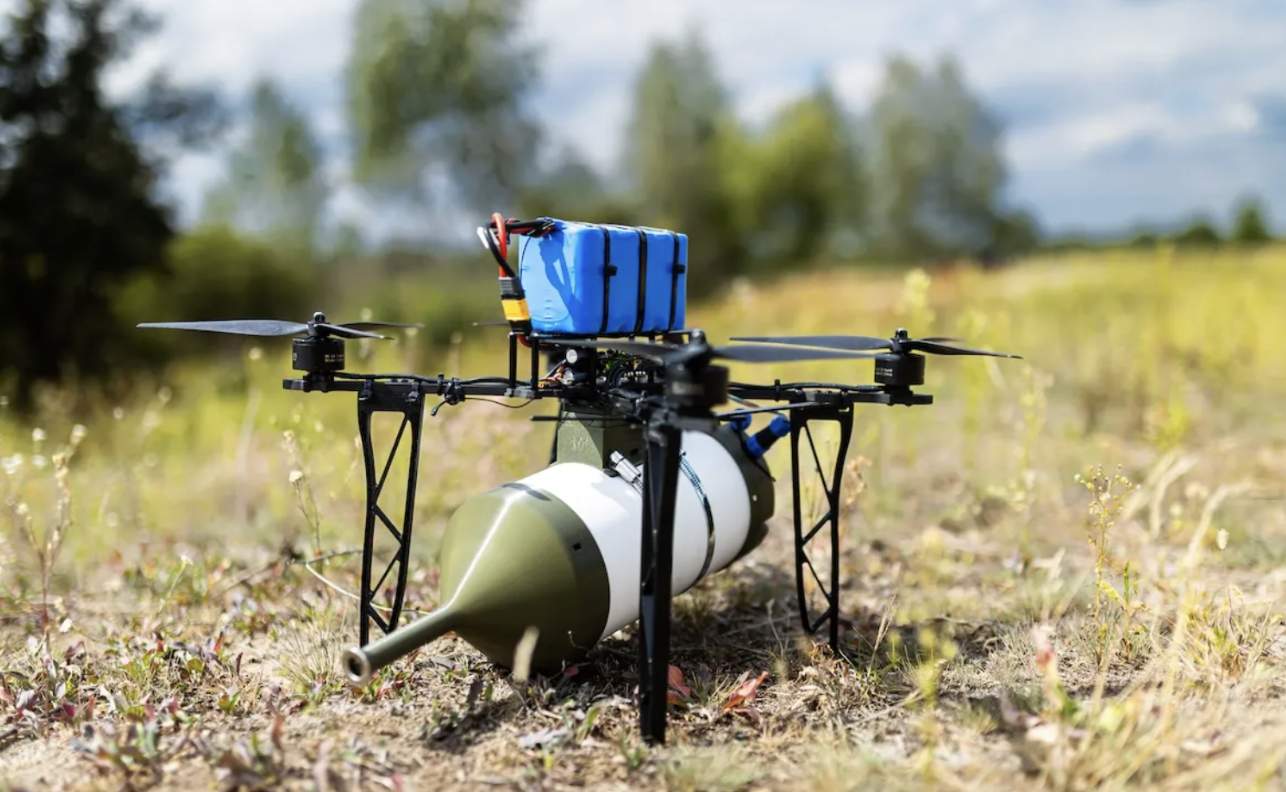
Fiber-optic drones with unjammable control links are dominating EW-heavy battlefields like no other technology. Unlike RF-controlled FPVs, they trail a cable during flight, providing crystal-clear video with no radio signature to detect, enabling them to ambush high-value targets in areas with dense jamming coverage. This ability to penetrate even the most advanced EW countermeasures has induced Ukraine and Russia to use fiber-optic FPVs to create kill zones 15 to 25km behind the frontline, where a hit is almost guaranteed.
To extend these kill zones, Ukraine has been scaling the use of fiber-optics aggressively. The Defense Procurement Agency delivered up to 374,000 fiber-optic drones in 2025 alone, with Ukraine's MoD now pushing fiber-optic systems onto new drone classes, including maritime platforms. However, a supply crunch that began in late 2025 now threatens to cap that expansion.
The spike in military demand for high-grade optical fiber has coincided with rising demand for this raw material in AI data centers, even as suppliers remain limited. China currently produces roughly 60% of the world's optical fiber, and has been a major source of this low-cost raw material to Russia and Ukraine since 2024. But Beijing’s priorities have changed as the AI race intensifies, with several Chinese manufacturers redirecting capacity toward domestic AI infrastructure projects while others choosing to fulfil larger Russian orders instead of those from smaller Ukrainian companies.
As a result, supplies to Ukraine tightened fast. Pivoting to Western cables to reduce Chinese dependencies further compounded the price damage, as Chinese fiber usually ran about $7/km, whereas Western alternatives can range up to $50/km. Raw material costs alone rose 5-7x, even as logistics and manufacturing overheads stayed flat, leaving Ukrainian manufacturers with no choice but to absorb the shortfall from earlier revenues.
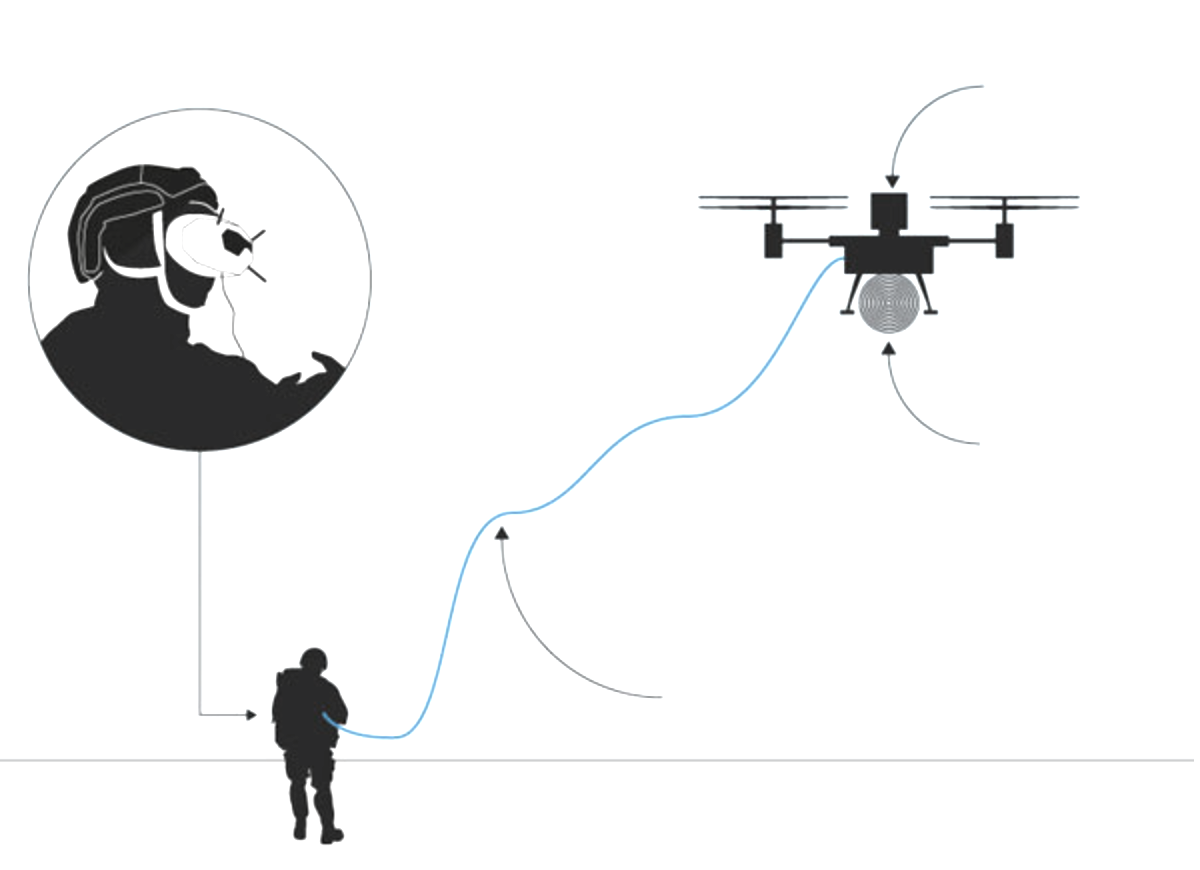
Even as new contracts prize in the higher optical fiber cost from Western producers, they are unlikely to fill the demand gap with their current supply quotas. Most Western producers view mass fiber-optic use in combat as a phase that advancing electronic countermeasures will eventually close out. A long-term investment in it to expand production lines then seems a loss-making bet rather than a necessary step towards self-sufficiency.
A slightly more expensive near-term workaround is found in Starlink terminals, which Ukraine and Russia have used on their long-range strike drones. A 35km fiber spool now costs north of $700, close to what a Starlink terminal runs. But Starlink puts a radio signature back on the operator and reintroduces the latency fiber eliminates. These cost and performance trade-offs become crucial in protracted wars. As the US trains its soldiers in fiber-optic FPV drone warfare, a central concern for policymakers should not be the peacetime affordability of fiber-optic drones, but whether their cost structure remains viable during sustained large-scale combat operations against a peer competitor.
A critical angle the procurement community hasn't confronted yet is that of cable reusability. A single drone consumes 20 to 40km of cable per sortie, and most armies treat that as a one-time loss. In specific terrain and mission profiles, partial retrieval is feasible, but treating fiber as a consumable by default forecloses that option entirely.
As fiber-optic cable becomes a strategic input, the plants that produce it become targets. Ukraine established the template when it struck Russia's only fiber-optic production facility in Saransk in April and May 2025. That plant has been offline for nearly a year. Any army now building operational dependence on fiber-optic drones must account for the embedded vulnerabilities of its in-house suppliers as long as fiber-optic drones rule the combat zones.
China Watch: Rise in Short-Range Anti-Drone Air Defenses
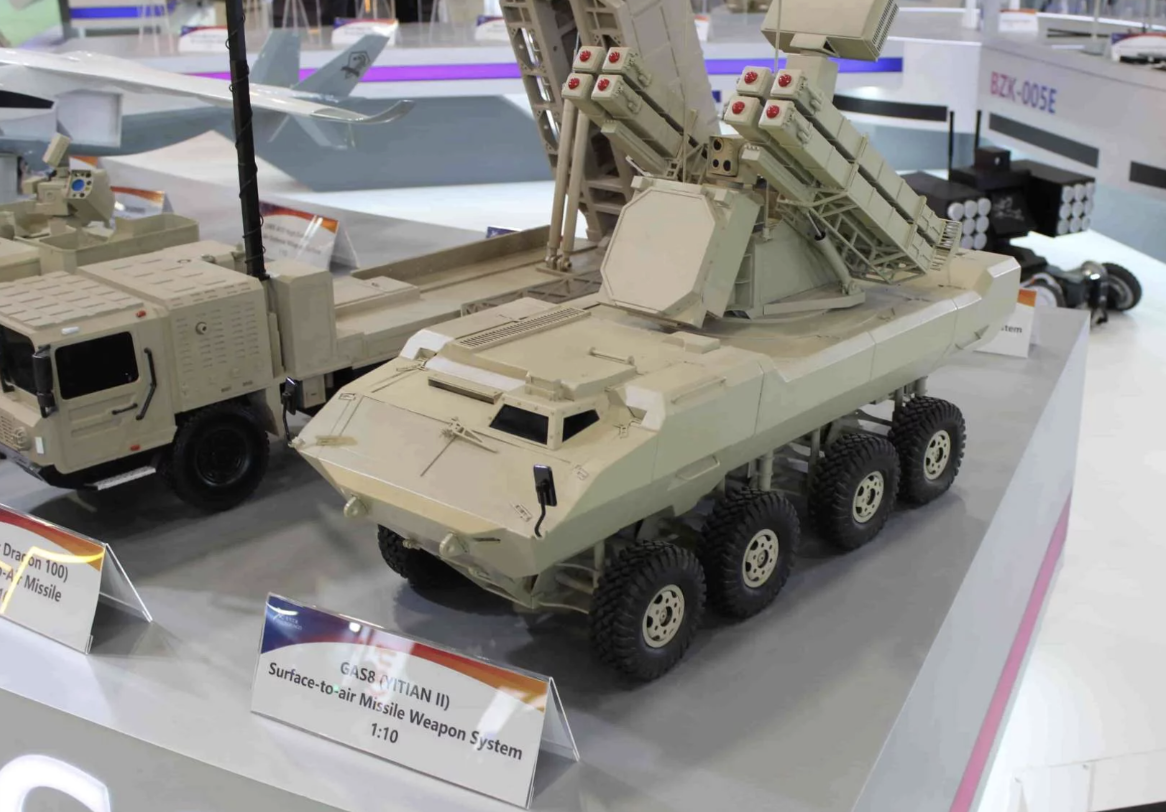
China has unveiled a new short-range air defense system, GAS8 Yitian II, to counter mobile low-altitude threats, particularly drones, and protect maneuver units from precision strikes and surveillance. Designed to keep pace with ground forces, the platform optimizes mobility and battlefield survivability by integrating search and fire-control radars with 8 missiles for independent detection and engagement.
The system has a reaction time of 7 seconds with a two-way data link, which allows mid-course updates to improve the probability of interception against manuvering targets, such as FPV drones. However, the system’s limited magazine depth will likely be ineffective against a swarm attack.
Elsewhere at the 2026 Chengdu Defence Technology Industry Expo, China displayed underwater drones designed to be launched from submarines. These sea drones can travel up to 9,800ft deep and autonomously detect and neutralize targets, enabling deep-sea reconnaissance and strike missions. Other unmanned technologies showcased included tactical robotic wolves and anti-drone devices. Beijing is also said to have tested a new naval air defense system in the Bohai Sea against ultra-low-altitude and stealth attacks.
On Our Radar:

Ukraine Deploys AI-Powered "Khyzhak" Turret to Counter Fiber-Optic Drones
Ukraine’s defense innovation platform Brave1 has deployed a new AI-powered anti-drone turret called "Khyzhak" to counter Russian UAVs, specifically targeting fiber-optic FPV drones that resist electronic warfare. The compact system independently detects, tracks, and calculates interception trajectories for incoming drones, requiring only a single confirmation command from the operator to strike. This kinetic interception approach represents a necessary tactical adaptation to the proliferation of unjammable fiber-optic systems, shifting the defensive burden from electronic suppression back to automated physical destruction. (United24)
US Army Plans to Buy Cheaper Interceptors with Army-Owned IP
Army Secretary Dan Driscoll announced a new program to develop affordable interceptors by purchasing or leasing intellectual property from nontraditional entities like academia, allowing the Army to own the IP and contract manufacturing directly. The initiative aims to break down interceptors into subsegments to drastically reduce costs, targeting a price point under $250,000 to counter the severe cost asymmetry of using $3-4 million PAC-3 missiles against $4,000 Shahed drones. Securing IP ownership also grants the Army the "right to repair," enabling soldiers to reverse engineer and 3D print parts in the field without relying on original manufacturers. (Breaking Defense)
Russia Offered Fiber-Optic Drones to Iran for Potential Attacks on US Forces
Russian intelligence reportedly proposed supplying Iran with thousands of fiber-optic drones designed to resist electronic warfare as part of a contingency plan during the early stages of the Israel-Iran conflict. The GRU document outlined transferring up to 5,000 short-range fiber-optic drones and training Iranian operators to launch swarms against US amphibious landing ships and military personnel in the Persian Gulf. (United24)
FAA Releases NPRM for Drone Restrictions Around Critical Infrastructure
The FAA has released a long-awaited Notice of Proposed Rulemaking to establish a petition-based framework for critical infrastructure operators to request designated Unmanned Aircraft Flight Restrictions (UAFR) around their facilities. The proposed rule creates two tiers of restrictions for fixed sites within 16 critical infrastructure sectors, allowing them to establish defined horizontal and vertical airspace limits to mitigate drone threats. Crucially, the NPRM includes a carve-out allowing commercial operators broadcasting Remote ID to transit the restricted airspace, balancing security needs with the operational requirements of the commercial drone industry. (Commercial UAV News)
Pakistan Builds Massive Iran-Style Suicide Drone Force
Pakistan is rapidly scaling up its unmanned aerial capabilities to create a formidable force of low-cost suicide drones inspired by Iranian designs, aiming for mass-scale manufacturing capacities exceeding 100,000 drones. Drawing lessons from the 2025 India clash and Middle East conflicts, the program focuses on overwhelming enemy air defenses through sheer volume using indigenous and Turkish-collaborated platforms priced around $50,000. (Times of Islamabad)
Hardware Innovations and Tactical Adaptations
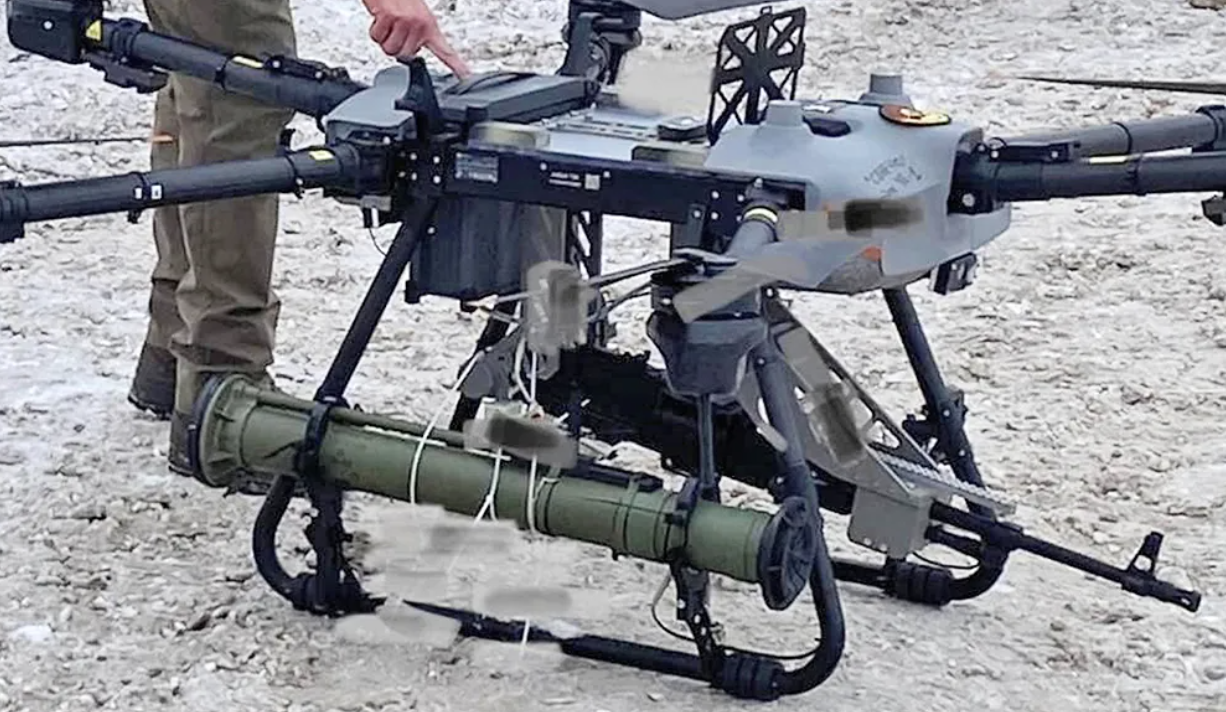
- Shotgun UAVs: Reports indicate that Ukrainian drone pilots are equipping their UAVs with small firearms to shoot down Russian FPV quadcopters mid-air. Unlike other methods, including deliberate collision, this kinetic approach enables soldiers to reuse drones for multiple interceptions. Given the high maneuverability of FPV drones, which often leads to fast-paced chases, pilot skills will be critical to timing successful shots during pursuit engagements and strike sequences.
- Sea Net Barriers: Reports indicate that Russia plans to use controlled net barriers in its waters to stop Ukrainian Unmanned Surface Vessels (USVs) from striking its naval assets. The efficacy of these physical hurdles will likely be limited by the vast surface area of the maritime domain, which enables USVs and UUVs to alter attack routes. In response to the netting, Ukraine could also retrofit its sea drones with blades to cut through the mesh. For the Russians, the intended objective is likely to create an alerting system for surveillance teams, separate from traditional sensors, that slows the attacker and buys them time for a kinetic response.
- Compact CUAS Radars: Russian soldiers are reportedly fielding a compact radar (roughly 65 by 35cm), MSL-20045, to detect UAVs near the frontline. The radar is claimed to have detection ranges of up to 15km for fixed-wing drones and 8km for FPV drones, with a 45° sector of view and an operational frequency range of 5.0 to 5.9 GHz. The system can be networked to enable 1 operator to work with up to 8 radar stations. The radar’s lightweight design and networked functionality signal a focus on distributed early-warning operations, enabling small units to detect drones independently while establishing a tactical-level anti-UAS surveillance architecture.
What We're Reading
- Anduril is leading a team to develop space-based interceptors for the Space Force, signaling a shift toward autonomous, orbital kinetic defense systems. (Military Embedded)
- Chinese firm Harxon is circumventing sanctions by supplying Russia with critical drone antennas disguised as agricultural equipment parts. (Militaryni)
- U.S. Coast Guard to deploy autonomous saildrones on Great Lakes: The US Coast Guard is deploying autonomous saildrones on the Great Lakes to enhance maritime domain awareness and environmental monitoring. (Military Times)
- Japan joins Australia in building cardboard drones designed for one-way strike and resupply missions. (TechRadar)
- Russia is rapidly expanding its dedicated anti-drone forces and accelerating domestic UAV production in response to a surge in Ukrainian strikes. (Kyiv Independent)
- Russian Airborne Forces have established dedicated drone repair companies to maintain operational readiness and reduce turnaround times for damaged UAVs. (Iz.ru)
- South African Petroleum Company is integrating drones into its fleet operations to enhance security and monitor critical infrastructure assets. (Automotive Fleet)
- Pakistani law enforcement agencies have foiled 246 drone attacks in Khyber Pakhtunkhwa province this year, highlighting the growing use of modified commercial drones by militant groups like the TTP. (Arab News PK)
- Russian developers have created a software package that accelerates neural network training for UAVs by a factor of ten, significantly reducing the time required to deploy new autonomous capabilities. (Iz.ru)


