


Welcome to this week’s Brief, our analysis of the most consequential developments in unmanned systems and drone warfare. Each week we track rapidly accelerating battlefield innovations, emerging doctrine, and the technologies reshaping how states and non-state actors deploy unmanned systems.
Have intelligence requirements, developments we should investigate, or perspectives to share? Contact us at info@dronesense.ai.

Deep Dive: Why Does Russia Keep Improving Its Drones While Ukraine Introduces New Ones?
Moscow has kept reworking its successful UAV families, while Kyiv is opening doors to a much wider pool of designs. The reasons say as much about what these drones are expected to do as how each country makes them.
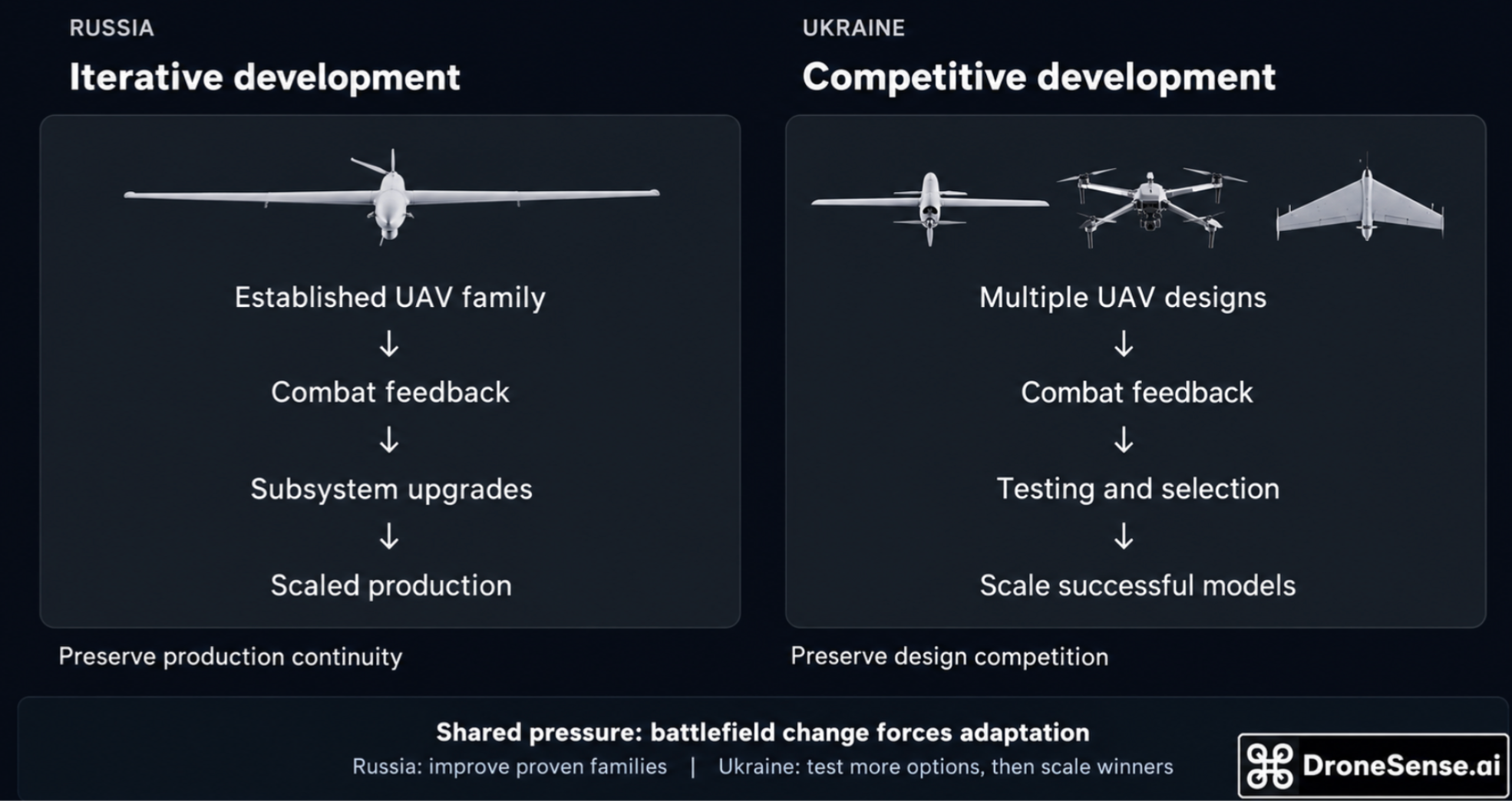
Russia's preference for reworking established UAV families is more apparent in the Geran program. Our examination of 14 hardware and production changes across Geran-4 and Geran-5 found modifications to propulsion, navigation, guidance and payloads. Some address specific vulnerabilities, while others expand their intended roles. The 2 drones also share navigation technology, allowing Russia to reuse established components across different designs.
Yet higher speeds have demanded stronger structures and different aerodynamic arrangements, showing where replacing components alone stops being enough.
Ukraine, meanwhile, authorized 650 new unmanned aerial systems in the first 9 months of 2026, including 238 strike copters and 231 fiber-optic systems. These approvals include variations of existing platforms, with some not entering large-scale production. Still, the numbers reveal how many options Kyiv is keeping available.
Much of what drives these choices can be traced to the missions themselves and the industries built around them. Russia needs Gerans in large numbers for repeated long-range strikes, where retaining familiar designs helps preserve tooling, assembly processes and supplier relationships. The more units a factory builds, the further it can spread its initial investment. Ukrainian frontline FPVs, however, face different jammers, terrain and targets across sectors. Combined with Kyiv's competitive private industry and greater frontline influence over procurement, these requirements encourage manufacturers to develop alternative configurations.
Besides the cost of manufacturing, there is also the time it takes to turn a battlefield problem into a working modification. Changing navigation electronics or communications equipment within an established design can be easier to introduce into production than developing another aircraft. But when speed, payload or range requirements exceed the original airframe's structural and power limits, continued modification could potentially become an expensive compromise.
Ukraine's wider selection offers competing answers to such problems, although keeping them all operational comes at a price. Smaller orders across numerous models can restrict economies of scale, while incompatible equipment complicates maintenance and training. Ukrainian investigations have even documented drones sitting unused because replacement parts were unavailable. A technically superior design loses much of its value when frontline units cannot consistently deploy it.
Yet neither military follows one method exclusively or is giving up methodical flexibility. Ukraine's FP-1 has become a major deep-strike platform, with production nearing hundreds of units daily, while Russia has incentivized competing tactical FPV developers. Kyiv is now directing 80% of procurement funding toward combat-proven systems and reserving 20% for innovation and testing.
This suggests the 2 approaches could become less mutually exclusive with time. Where missions remain relatively stable, both countries have reasons to retain successful designs and produce them at scale.
But as enemy defenses change, competition and redesign become necessary to recover lost advantages. Kyiv's procurement shift and Moscow's combination of shared subsystems with new airframes signal an intent on preserving production without letting established designs dictate what comes next.
China Watch: PLA Trains for Jamming Failure, DJI’s 25-Second Battery Swap & Microdrone Demand Signals
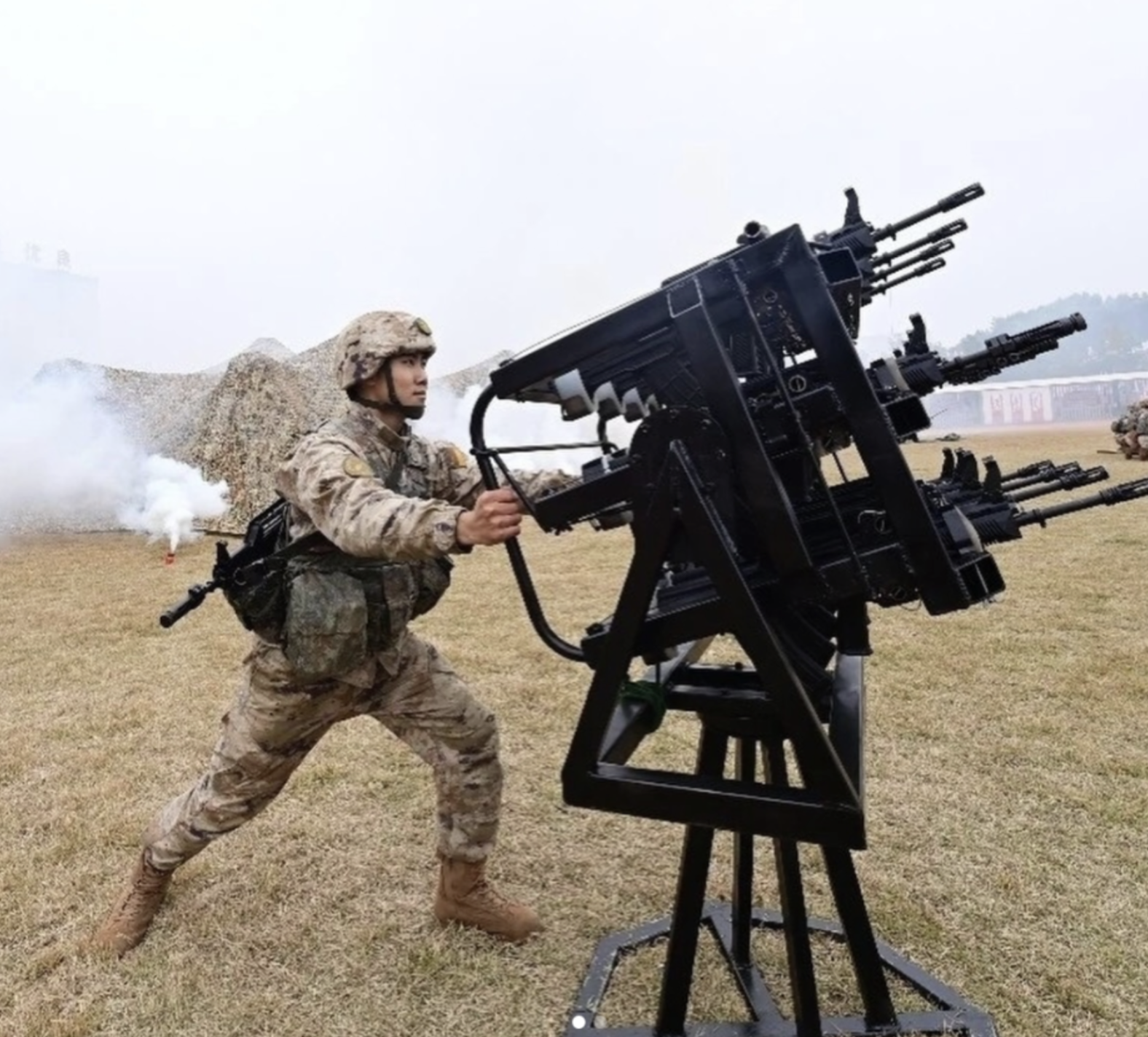
- PLA Rocket Force brigade recently conducted training to counter drones when directional jamming fails to stop them from attacking. The exercise involved rehearsing handoff to teams assigned to destroy the aircraft, immediately as the first line of defense breaks.
- Real crews and equipment were linked to an AI-upgraded simulation, including personnel deploying and operating their systems as the digital threat continued toward the position.
- Across units, Beijing is ramping up efforts to teach its soldiers layered counter-drone defense, reflecting lessons from Ukraine and applying those passed on from Russia. The above training indicated that China recognizes that when one anti-drone solution fails, the immediate course of action should be to commit to the next there is still time to act.
- Meanwhile, DJI's Dock 4 can now replace a landed drone's battery automatically in 25 seconds, addressing a recurring interruption in unattended drone operations. The accompanying Matrice 5TD has a manufacturer-stated maximum flight time of 59 minutes, giving operators a longer sortie followed by a shorter battery turnaround.
- For scheduled patrols and inspections, the gain is likely to come from how much useful work one installation completes across the day. Faster swaps help when missions are frequent enough for charging delays to constrain the schedule. As those delays shrink, battery inventory, maintenance, weather, and the ability to act on incoming imagery will determine how much of the additional availability customers can use.
On Our Radar:
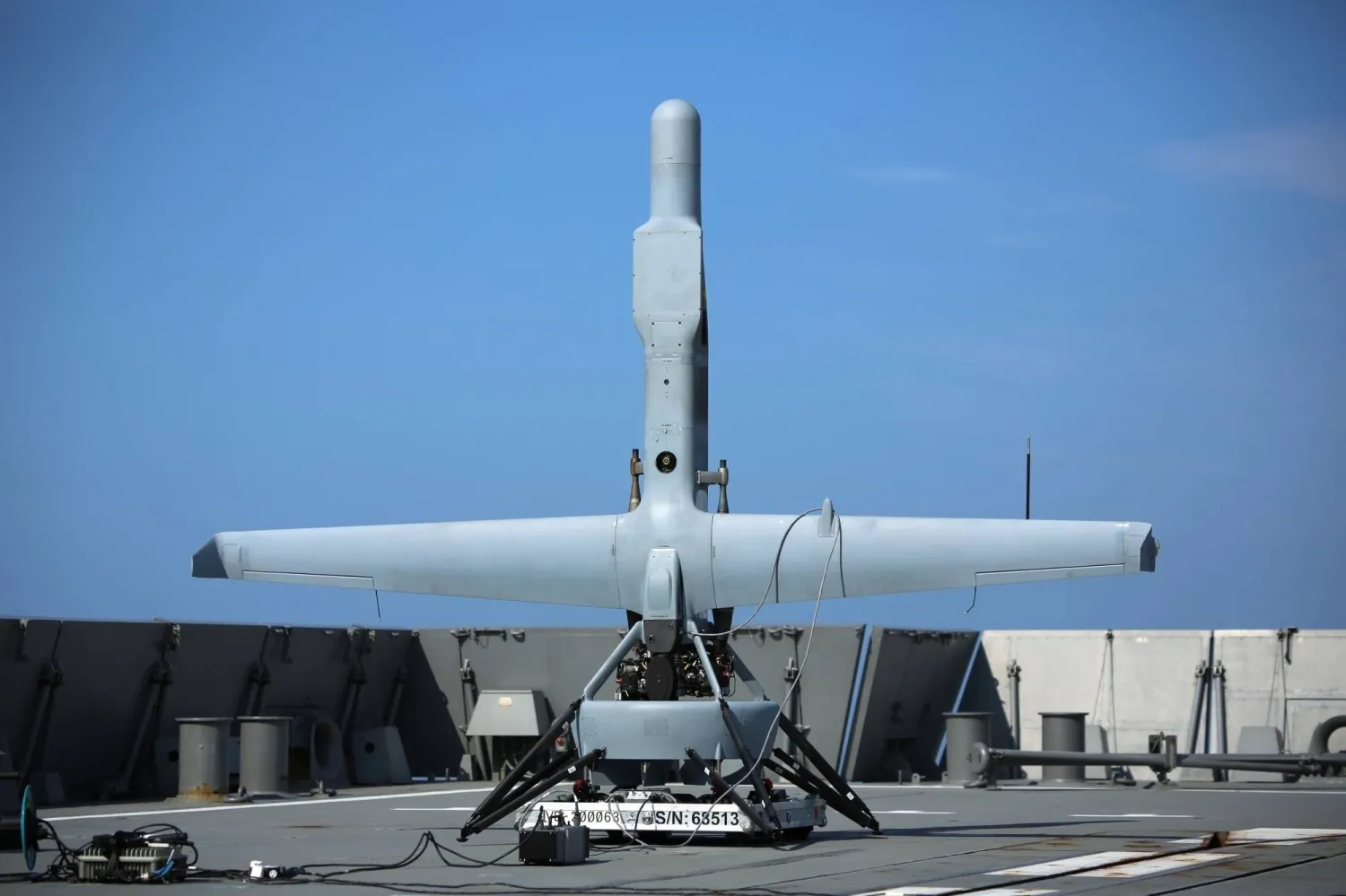
Taiwan Coast Guard receives its first V-BATs for shipborne surveillance
Shield AI has begun delivering V-BAT surveillance drones to Taiwan’s Coast Guard with local partner Aerospace Industrial Development Corporation. Newly arrived aircraft were presented at the Port of Taipei on October 7, ahead of the company’s announcement the following week. Twelve V-BATs are scheduled for delivery over the coming months under the Coast Guard’s shipborne UAV program. Vertical launch and recovery allow vessels to extend surveillance, coastal patrol and law enforcement coverage without runway access. Shield AI and AIDC will also establish local training and maintenance support—a practical requirement for turning aircraft deliveries into a sustainable maritime surveillance capability. (Shield AI)
China leads drone patent volume; the U.S. remains competitive on portfolio strength
LexisNexis’s drone patent analysis finds a more distributed innovation landscape than China’s manufacturing dominance might suggest. Its primary report puts China at 47% of global drone-related patent portfolio size in 2025, compared with 15% for the United States. On its Patent Asset Index, which combines portfolio size with citation-based technological relevance and geographic protection, their shares were much closer: 34% and 36%, respectively. The distinction matters for identifying emerging suppliers across logistics, agriculture, inspection and defense. Patent strength offers one indicator of competitive potential, however; it does not establish production capacity, commercial traction or operational performance. (LexisNexis)
China advances international standards for drone navigation and identification
China is expanding its role in international drone standardization as its low-altitude economy moves into logistics and urban services. People’s Daily reports that China jointly led development of a UAV perception and obstacle-avoidance standard covering detection distances, safety separation and emergency avoidance during landing. A separate Chinese-led proposal for testing UAS identity and security modules has been approved as a standards project. Together, these efforts address safe navigation and aircraft identification—requirements for scaling operations—and could give Chinese institutions greater influence over specifications manufacturers must meet. The identity-testing proposal remains under development; project approval does not establish a completed standard. (People’s Daily / Mianzhu Today)
Morocco joins U.S. Army drone procurement marketplaces
Morocco joined seven other countries in signing Statements of Intent on October 13 to participate in the U.S. Army’s drone and counter-drone procurement marketplaces. The platforms offer pre-cleared configurations through established contracts, with export approvals addressed in advance and standardized purchase documentation. The Army says this “FMS Fast Lane” can reduce case development from months to days. For Morocco, participation creates a potentially faster route to acquiring and replenishing unmanned capabilities. The announcement establishes procurement access; it identifies no Moroccan orders, contract values or delivery schedules. The next measure of progress will be completed transactions and equipment entering service. (U.S. Army)
Argentine farmers move drones from crop monitoring into fieldwork
Argentine farmers are using drones to spray crops and spread seed alongside established aerial monitoring operations. Commercial UAV News describes an agronomist in La Pampa whose employer contracts DJI T100 services, combining mapping flights with selective application while retaining conventional aircraft for larger fields. The emerging model is a mixed fleet matched to particular jobs, with service providers giving farms access without aircraft ownership. National adoption remains difficult to quantify: INTA launched a survey in July to establish fleet size and usage patterns. Application quality and economics also depend on weather, crop conditions and operating practices; precision is an outcome to demonstrate. (Commercial UAV News)
Read More DroneSense Analysis
 Drone Sense

Hardware Innovations and Tactical Adaptations
- New Logistical Chain: Ukraine is combining 3 different unmanned platforms to deliver supplies to infantry positions on the frontlines to reduce crew exposure amid manpower shortages. Cargo-loaded UGVs first transport supplies to teams operating bomber hexacopters (e.g., Vampire), which carry them to intermediate points. There, supplies are redistributed among smaller UAVs completing the last stretch to dugouts and trenches. Distributing supplies across smaller drones reduces their visibility to adversaries and increases the likelihood of deliveries reaching soldiers, even if some drones are intercepted. This comes at the expense of the larger payloads that heavier UAVs could otherwise carry.
- Elevated MANPADS Teams: Russia has reportedly started deploying mobile hydraulic platforms carrying operators armed with Verba and Igla MANPADS around Moscow to intercept Ukrainian drones. Elevating the operators above ground-level obstacles could improve their line of sight and provide a clearer firing position against low-flying targets. Since these platforms can be repositioned according to anticipated approach routes, they also offer greater flexibility than fixed firing positions. However, their effectiveness would still depend on how early operators detect and acquire incoming drones, with the missile's seeker capabilities and target signature determining whether an engagement is possible.
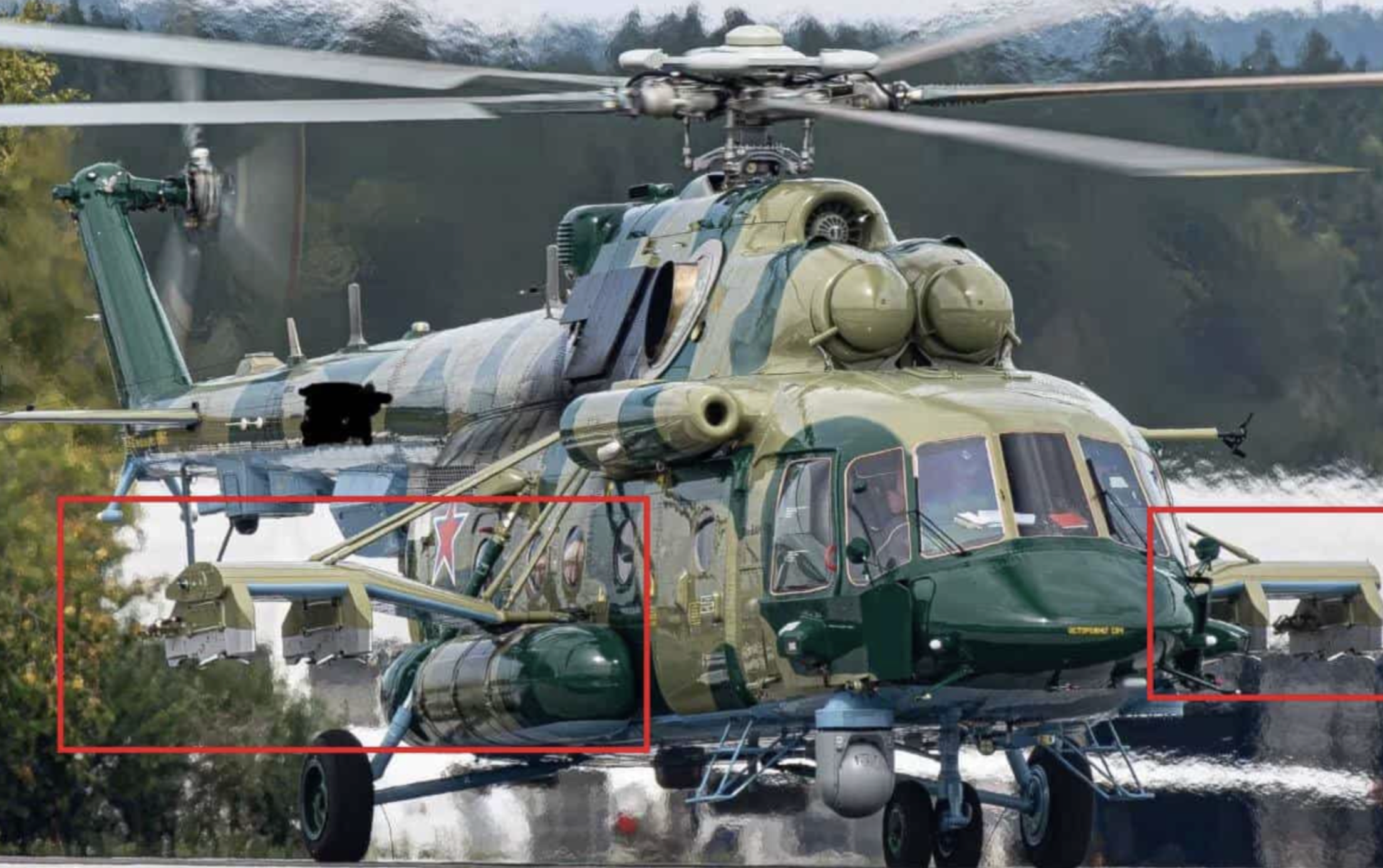
- Mi-8 Helicopters with Modified Weapon Racks: Russian special operations units are testing redesigned weapon racks on Mi-8AMTSh-VN helicopters, potentially to accommodate smaller cruise missiles and Dan-M jet-powered drones. The new configuration reduces the number of hardpoints from 6 to 4 while retaining 500 kg capacity per hardpoint, alongside improved aerodynamics. If adapted for drone launches, these helicopters could offer Russia greater flexibility in selecting airborne launch points and adjusting the range and direction of an attack. But, carrying and releasing jet-powered drones will also require suitable launch interfaces and safe separation from the helicopter.
- Jet-Powered Garpiya & Mobile Launchers: Russia's IEMZ Kupol has developed jet-powered variants of its Garpiya drone which Moscow has used against Ukraine, and insurgents in Mali. KamAZ-5350-based mobile launcher capable of releasing multiple drones in succession is also being tested. Jet propulsion can enable Garpiya variants to reach higher speeds, reducing the time available for Ukrainian air defenses to detect, track and intercept them, but not without introducing trade-offs in fuel consumption and range. Meanwhile, mobile launchers could reduce dependence on fixed launch facilities and allow Russian forces to disperse their launch assets, complicating Ukrainian efforts to locate and strike them before launches.
What We're Reading
- Posted Strike Videos May Aid Russian Drone Targeting: Ukrainian adviser Serhii “Flash” Beskrestnov warns that impact footage could help Russia assess optical-guidance performance and alleges Moscow is paying people to film strikes. (Euromaidan Press)
- U.S. Army Tests Autonomous Support for Combat Care: The 18th Theater Medical Command is experimenting with autonomous blood delivery and prolonged casualty-care technologies as vast Indo-Pacific distances complicate evacuation to surgical facilities. (Defense News)
- Ukraine Relied Heavily on Ground Robots in Operation Vivaldi: Ukraine’s Arms Monitor describes UGV logistics, evacuation and strike missions, including aerial delivery of ground robots behind Russian lines; mission totals and casualty-reduction estimates remain unit-sourced claims. (Ukraine’s Arms Monitor)
- Abrams Tanks Move Toward Onboard Drone Launches: General Dynamics and AeroVironment’s PERCH 2.0 enables Abrams and Stryker crews to launch Switchblade loitering munitions from under armor, extending reconnaissance and strike reach as prototype experimentation proceeds. (General Dynamics Land Systems)
- Ukrainian FPV Simulator Adds Shahed Interception: Remote Reaper’s full release introduces airborne Shahed targets, cooperative missions and expanded training scenarios, developed with military operator input to recreate drone handling and challenging operational conditions. (UNITED24 Media)
- Foreign Defense Firms Seek Ukraine’s Captured-Weapons Data: Ukraine says 389 foreign manufacturers have applied to TrophyLab for research on captured Russian equipment, with approved users able to review technical findings and request samples for analysis. (Ukraine’s Ministry of Defence)
- Romanian Tanker Fires Raise Black Sea Security Concerns: Vessel fires and suspected drone attacks near Romania and Bulgaria are prompting calls for stronger maritime protection, although Romanian authorities had not confirmed drones caused the latest tanker fire. (Euronews)
- Claims of Ethiopian Russian Drone Acquisitions Remains Unconfirmed: Defense Express questions claims that Ethiopia operates Russian Orion-E drones, arguing that images cited as evidence may instead show the domestically developed Negash alongside its multinational drone fleet. (Defense Express)


