


Welcome to this week’s Brief, our analysis of the most consequential developments in unmanned systems and drone warfare. Each week we track rapidly accelerating battlefield innovations, emerging doctrine, and the technologies reshaping how states and non-state actors deploy unmanned systems.
Have intelligence requirements, developments we should investigate, or perspectives to share? Contact us at info@dronesense.ai.

Deep Dive: Why is Moscow so hard to defend against Ukrainian drones?
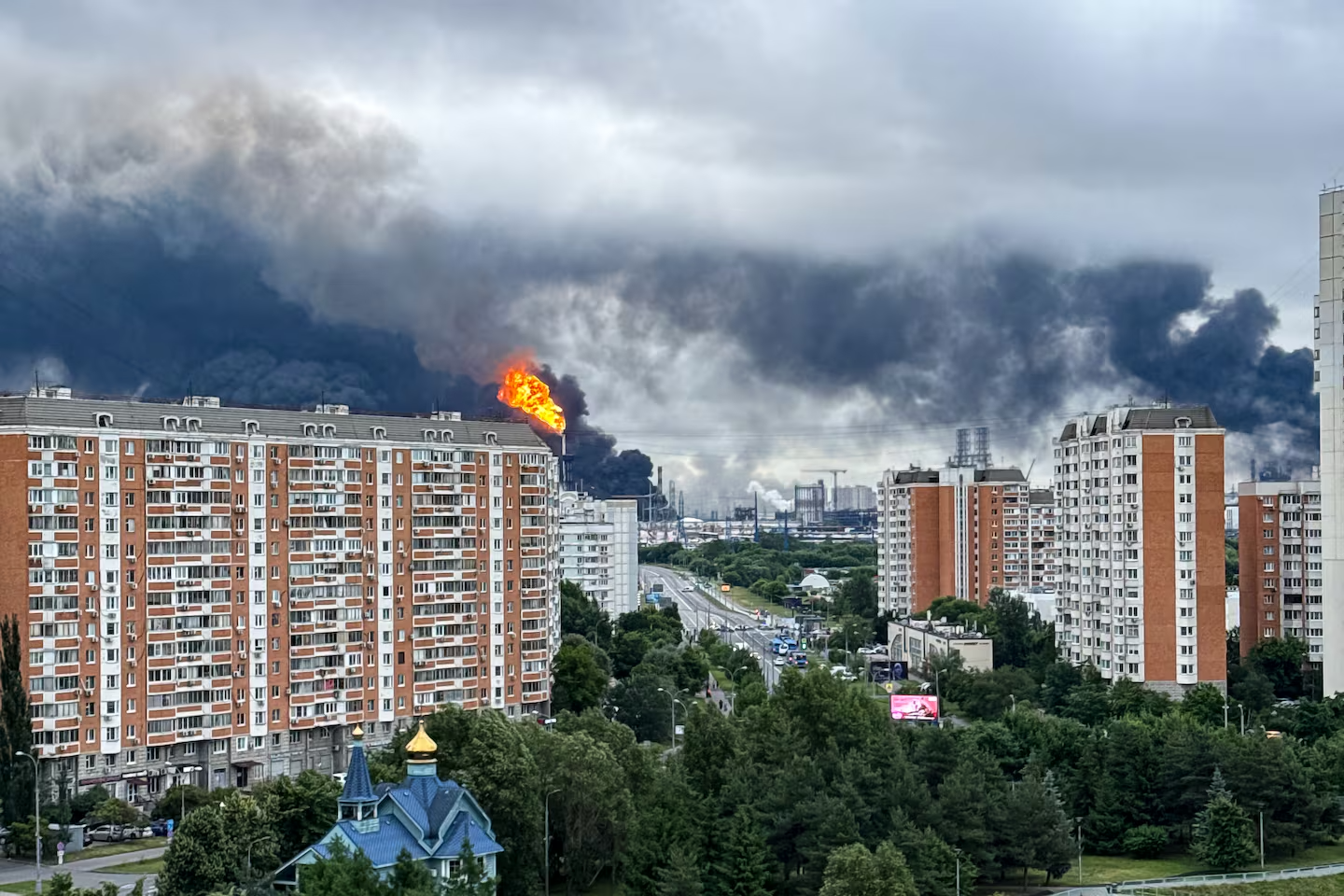
The damage caused by Ukrainian deep-strike drones in Moscow has proven that even the most advanced Russian air defenses have exploitable low-altitude gaps when stretched correctly. Several high-value targets, particularly refineries, have been repeatedly struck in the capital region, causing operational disruptions and output loss. Despite being one of the most heavily guarded cities, Moscow is failing at point-defense management against cheap one-way-attack (OWA) drones.
The idea that traditional Air Defense (AD) systems were designed to protect hundreds of fixed sites simultaneously against low-altitude threats is flawed. In fact, such a burden inherently favors the attacker for 2 reasons: (A) the offensive side only needs a handful of leakers to generate operational, economic, and political effects; (B) sustaining comprehensive coverage over a vast urban-industrial region becomes resource-intensive over time.
Beyond its symbolic significance, Moscow is vulnerable due to the region's scale and complexity. The capital contains a dense concentration of refineries, rail infrastructure, and other nodes that support economic and military operations. In reality, protecting this diverse target set requires Russia to monitor and engage with threats arriving from multiple axes, which compounds the burden on surveillance networks and expensive interceptors. Every additional site then demands more from sensors, command networks, and engagement capacity. In this sense, the geometry of the city itself is weaponized to achieve optimal strike outcomes.
The sensor-to-shooter timelines are also compressed. Drones detected late, misclassified, or handed off too slowly to reach targets before engagement decisions are completed. The complexity of operating in dense airspace aggravates the problem, as civil aviation and urban clutter can impact tracking and engagement. Maintaining continuous readiness further burdens crews, interceptors, and command networks, building fatigue. Over time, these pressures increase the probability of a small number of drones to evade the defensive architecture and produce effects disproportionate to their cost.
Ukraine's focus on refineries reflects this exact logic. Unlike military bases, refineries possess large physical footprints and interdependent components, making structural hardening difficult. They become ‘soft-targets’ despite full-force AD coverage. Alternatively, damage to fuel-processing infrastructure usually ripples through transportation networks, military sustainment, and even state revenues. The target choice therefore suggests that Ukraine is seeking to impose pressure on both Russian logistics supporting frontline operations and the revenue streams that sustain the broader war effort.
In general, these drone assaults on fixed sites are consequential. Data Centers, electricity grids, LNG terminals, refineries, ports, and logistics hubs share many of the same characteristics that make Moscow's industrial infrastructure vulnerable. Their large surface areas, dispersed layouts, and interconnected components create numerous aim points and complicate efforts to establish continuous protection. Iranian drone and missile attacks against fixed-site assets in the Gulf have demonstrated similar vulnerabilities, showing that even rich states will likely struggle to protect sprawling economic infrastructure from low-altitude threats.
Experience from these campaigns suggests that the principal challenge lies in the speed & coherence of the kill chain. Early warning, target classification, and sensor-to-shooter handoff will determine whether drones are engaged before reaching critical infrastructure. This will likely require a distributed architecture that combines conventional radars with passive RF sensors, acoustic arrays, and EO/IR systems to maintain persistent low-altitude coverage across multiple approach axes. Equally pivotal is a resilient C2 network capable of fusing these inputs, prioritizing threats, and cueing both soft-kill and hard-kill effectors without introducing delays.
China Watch: Multi-Type Trials Drive Innovation
- Hong Kong’s Development Bureau will test heavy-duty UAVs (150kg each) to carry essential items, including cement and manhole covers for construction work, across 6 sites over the next 12 months. Tasks with high safety risks and maintenance costs, such as clearing drains and cleaning building facades, will also be part of this trial project. The initiative aims to solve traditional construction logistics challenges, indicating Beijing’s growing focus on iterative drone integration for real-world use.
- China has unveiled the ‘Lijian’ series of portable high-energy anti-drone lasers, enabling a single soldier to shoot down multiple drones. It comprises a laser emitter, an air cooler and a handheld control terminal that can be carried in a bag. These systems can be fitted with small radars or integrated into wider CUAS networks through external guidance interfaces, indicating interoperability.
- Beijing recently tested two submarine-sized 45m-long underwater drones with a 10,000nm range in the South China Sea (SCS). These are considered to be the largest UUVs in the world. The drones reportedly use a diesel-electric propulsion system, with a diesel generator and large lithium-iron-phosphate battery banks. Their estimated range includes 7,000nm while running on diesel power and another 3,000nm fully submerged on batteries. This underwater endurance is roughly 6x that of a conventional diesel-electric submarine, enhancing its ability to evade anti-submarine defenses and operate in the open Pacific.
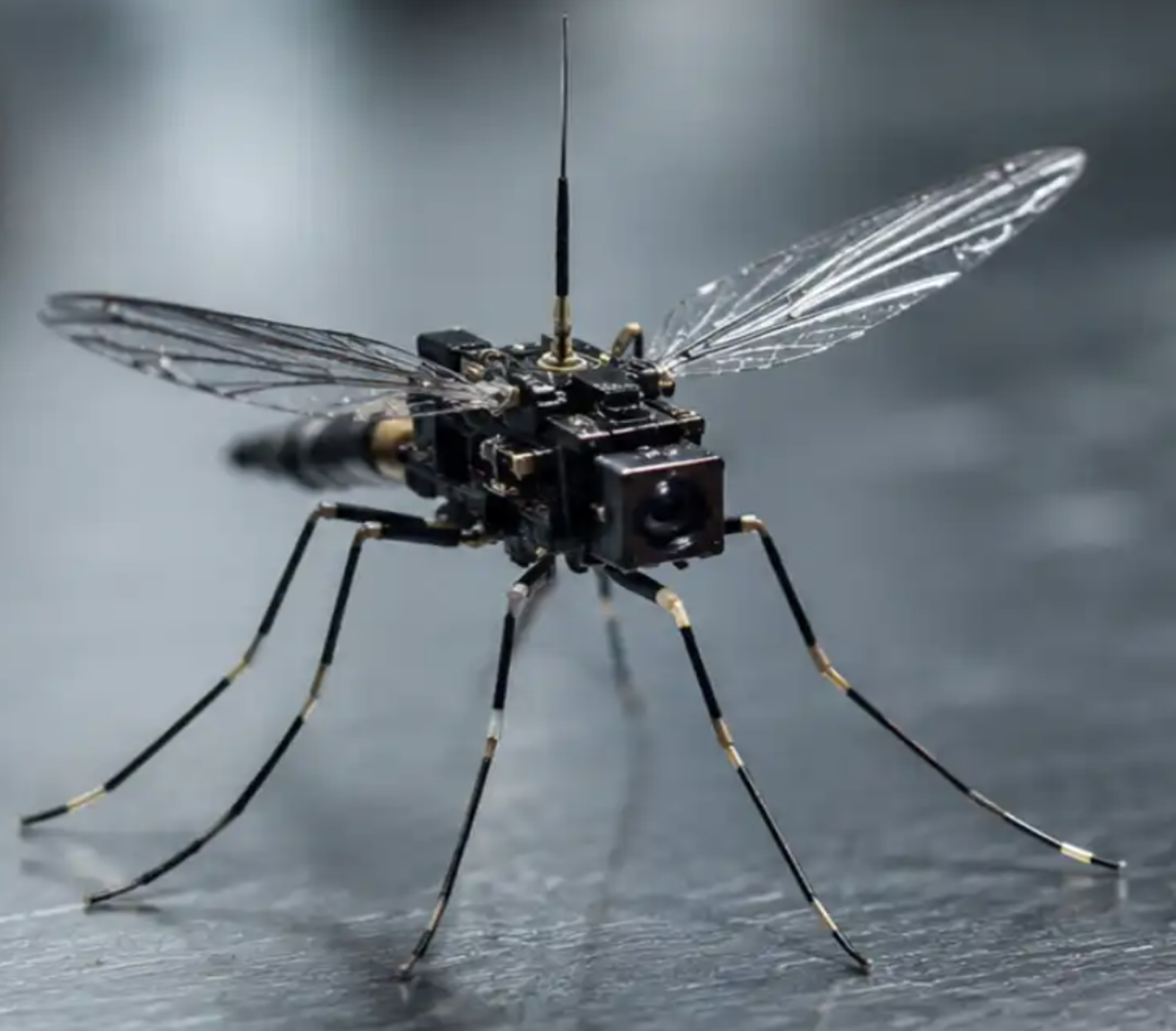
- Chinese researchers showed a prototype of a 2cm-long and around 0.3g ‘mosquito-like’ microdrone suitable for covert ISR missions by exploiting detection gaps.
- Beijing also completed full free-flight testing of its autonomous tiltrotor drone, R6000, marking progress in advanced vertical takeoff and landing (VTOL) technologies for remote island operations.
On Our Radar:
Ukraine Confirms Autonomous AI Drone Kills Without Human Intervention
A Ukrainian drone manufacturer confirmed that ten fully autonomous AI-controlled drones independently searched for, identified, and killed Russian soldiers near Bakhmut roughly two years ago, with no live footage transmitted and no human monitoring the mission in real time. The disclosure is the first confirmed account with stated outcomes, a named manufacturer, and an on-record statement despite evidence of similar strikes. Ukraine's own regulations prohibit fully autonomous lethal operation at the final stage yet when jamming severs the command link, the restriction becomes unenforceable regardless of what the policy says. (New Scientist)
Taliban Launches Drone Strikes Against Pakistani Territory in Khyber District
The Afghan Taliban has launched at least 12 commercially modified drone strikes into Pakistan's Khyber Pakhtunkhwa province since February, explicitly targeting claimed ISKP hideouts in what marks the first time the Taliban has struck alleged militant bases rather than just security posts. A state without a functional air force has now conducted a sustained cross-border strike campaign against a nuclear-armed neighbor using hardware available on the open market. Each strike lowers the evidentiary bar for the next one, and the tit-for-tat dynamic with Pakistan's own airstrikes into Afghan border provinces is building the kind of escalatory ladder that cheap, deniable systems make very difficult to descend. (ACLED)
AI Battle Management Platforms Proliferate, Will the Innovation Transfer?
Israel Aerospace Industries unveiled OPAL-NG at ILA Berlin and Ukraine's defense AI chief announced a unified battlefield operating system for the 1,200-kilometer front line in the same week, two more entries in a rapidly expanding category of AI kill-chain integration platforms. The software layer is already important and growing more critical as a competitive advantage by the week, but it remains to be seen whether best practices here will proliferate across countries and conflicts the same way they have at other levels of the autonomous warfare tech stack. (JPost, Israel Defense)
Ukraine Privatizes Its Autonomous Warfare Capability Through Defense-as-a-Service
Ukraine's defense ministry has signed up 30 private firms under a Defense-as-a-Service model to provide point air defense, and those firms have collectively destroyed over 20 Russian Shahed attack drones and Zala reconnaissance UAVs. The traditional cost-plus procurement model – which produced the F-35 at $183 billion over its original cost estimate – cannot iterate at the speed drone warfare demands, so states are beginning to rent capability rather than buy hardware. This model is replicable and will be replicated: as autonomous systems take on more of the kill chain, the security market that emerges will be enormous, and the legal exposure that comes with private entities exercising lethal force autonomously will be a constraint that no existing framework is equipped to manage. (Reuters)
Taiwan Approves 5 Year 210,000-Drone Budget as Ukraine Produces 8 Million per Year
Taiwan's cabinet approved a NT$210 billion (~$6.5 billion) special budget to acquire 210,966 unmanned systems – primarily coastal attack drones – by 2031, with an explicit goal of building a domestic supply chain free of Chinese components. Against an adversary producing at Chinese industrial scale, and in a theater where Ukraine is consuming drones at a rate exceeding 8 million units annually, 210,000 systems over six years is a political signal more than a military solution. The more consequential element of the package is the domestic manufacturing mandate: Taiwan is trying to build the industrial base, not just buy the inventory, and whether it can do that before the window closes is the real question the budget does not answer. (Yonhap)
US Air Force Deploys Drone Jammers at Minot Nuclear Missile Complex
The 91st Security Forces Group at Minot Air Force Base – which guards 150 Minuteman III ICBMs dispersed across 8,500 square miles of North Dakota – issued an urgent sole-source solicitation for handheld Dronebuster Block 4 electronic warfare systems to counter commercial off-the-shelf drone threats. The procurement is tactically straightforward, but the strategic implication runs in the opposite direction from its intent: the density and urgency of counter-UAS deployments around sensitive sites is becoming a legible indicator of facility importance, and that signal is visible to anyone with satellite access. Every base that visibly hardens against commercial drones is publishing its own target value in the process. (Defence Blog)
Hardware Innovations and Tactical Adaptations
- Starlink Jammer: Russia has reportedly developed complexes called ‘Volna Kupol Garant’ that host jammers for Starlink satellites. A single complex comprises 6 trailers equipped with satellite dishes and protects an area of 20km2. The system uses multiple satellite antennas to engage up to 8 communication channels, each with a bandwidth of 62.5 MHz. It works by directing high-power interference at a designated Starlink satellite, disrupting the communication link between the satellite and ground-based user terminals. The key downside of this innovation is likely the size of the complex, which makes it vulnerable to detection and strikes.
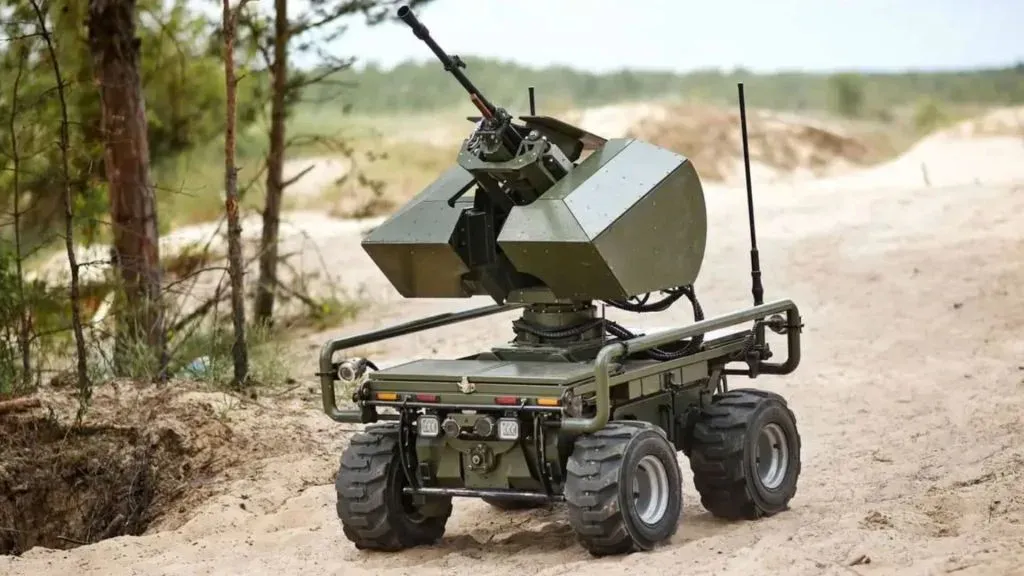
- Auto-Grenade Launcher UGVs: Russian soldiers are equipping their ‘Impuls-M’ UGVs with either AGS-30 automatic grenade launchers or Type-75 (107mm) multiple rocket launchers. Visual evidence indicates that combat modules are fitted with ballistic calculators for automatic firing solutions for both 30mm grenade rounds and 107mm rockets. The likely trigger for this is the expansion of kill zones, which has made manned operations fatally dangerous.
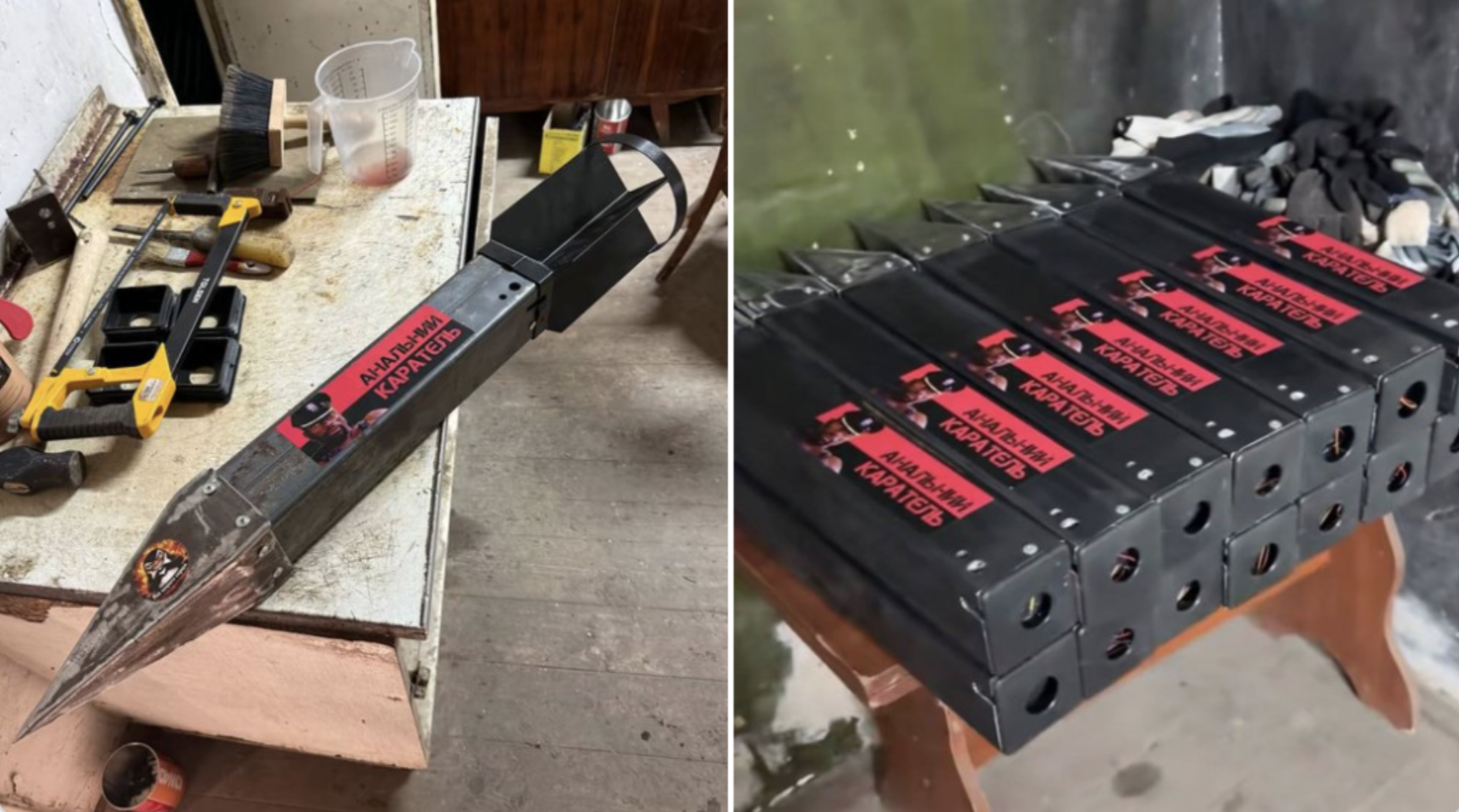
- Bunker-Buster Drone Bomb: Ukraine is strapping its heavy-bomber UAVs with a new fence-post-shaped bomb to bust bunkers and overcome nets and cages on high-value Russian assets. The drone bomb features a reinforced nose and a delayed-action fuse, enabling detonation after penetrating defensive structures. This will likely make Russian soldiers vulnerable to Ukrainian strikes even in their dugouts, trench covers and under light fortifications across logistical routes.
What We're Reading
- UK University Develops AI Drones for Landmine Detection: The integration of radar and metal detection sensors into autonomous platforms removes human operators from the most dangerous phase of post-conflict remediation. (BBC)
- China Plans to Destroy US Naval Groups with AI Swarms: Chinese military researchers have published a framework pairing autonomous drone swarms with hypersonic missiles under AI-driven coordination, targeting the specific vulnerability that carrier strike groups cannot generate enough intercept capacity to defeat simultaneous multi-vector saturation. (El Confidencial)
- High-Altitude Balloons Return for Military Reconnaissance: Modern militaries are resurrecting legacy surveillance methods to establish persistent communication relays and drone launch platforms above the reach of conventional air defenses. (81.cn)
- Firms Promote AI-Powered Autonomous Ground Vehicles: European defense contractors are marketing autonomous logistics vehicles to directly offset the severe personnel shortages facing NATO ground forces. (Stern)
- Rostec Displays Evasive AI Drone: The updated Supercam S180's autonomous evasion capabilities confirm that Russian manufacturers are designing against the specific threat of Ukrainian interceptor drones, treating evasion as a baseline specification rather than an advanced feature. (TASS)
- India Establishes Drone Warfare Hub: The creation of a national military drone technology center at IIT Kanpur confirms New Delhi is moving to reduce its reliance on foreign unmanned systems, with the counter-drone mission set as the primary near-term deliverable. (The Defense Post)
- Air Force Acquires Autonomous Deep-Strike Drone Fighters: The transition of the Collaborative Combat Aircraft program from prototype to production confirms the US Air Force is committing to a doctrine where manned fighters serve primarily as command nodes for autonomous wingmen. (Reuters)
- South Korea Targets Drone Powerhouse Status: Seoul's national strategy to integrate its semiconductor dominance into drone platforms positions South Korea to compete for the high-end autonomous systems market, where chip design and drone guidance software are converging into a single competitive advantage. (Seoul Economic Daily)
- Hyundai Rotem Unveils AI Counter-Drone System: The AI-based unmanned turret unveiled at Eurosatory confirms that South Korean manufacturers are positioning automated kinetic interception as a standard layer in base protection, rather than a specialized add-on. (Munhwa Ilbo)
- GNNs Enhance Cybersecurity, Drone Ops in Iran Conflict: The application of Graph Neural Networks to autonomous drone operations in the Israel-Iran conflict confirms that advanced algorithmic structures are moving into the primary defense layer against electronic warfare, ahead of any hardware-based solution. (Springer)
- German AI Drones Outperform in Ukraine: The success of German AI-driven drones against Russian jamming in Ukraine is driving US procurement interest, proving that combat performance in Eastern Europe is now the ultimate validation for Western defense tech. (Die Welt)
- Rheinmetall Advances Swarming Kamikaze Drones: The development of autonomous salvo-swarms with AI-assisted targeting confirms European manufacturers are preparing for conflicts where mass and algorithmic coordination outweigh individual platform survivability, and the modular containerized launcher is the delivery mechanism that makes rapid redeployment viable. (Süddeutsche Zeitung)
- Russia Trains AI Interceptor Drone Operators: The establishment of dedicated training programs for AI-assisted interceptor drones confirms that the Russian military is formalizing the role of human operators as supervisors rather than direct pilots in the kill chain. (Izvestia)
- Spain Funds Autonomous Naval Vessel AI: The selection of 13 projects for an autonomous naval vessel confirms Spain is building a domestic AI-maritime capability rather than relying on foreign procurement, with situational awareness and threat classification as the primary design requirements. (Defensa)


